


Physical activity, sleep disorders, and type of work in the prevention of cognitive function decline in patients with hypertension
- PMID: 38057774
- PMCID: PMC10699000
- DOI: 10.1186/s12889-023-17343-7
Physical activity, sleep disorders, and type of work in the prevention of cognitive function decline in patients with hypertension
Abstract
Background: Hypertensive patients are likelier to have cognitive function decline (CFD). This study aimed to explore physical activity level, sleep disorders, and type of work that influenced intervention effects on cognitive function decline in hypertensive patients and to establish a decision tree model to analyze their predictive significance on the incidence of CFD in hypertensive patients.
Methods: This cross-sectional study recruited patients with essential hypertension from several hospitals in Shandong Province from May 2022 to December 2022. Subject exclusion criteria included individuals diagnosed with congestive heart failure, valvular heart disease, cardiac surgery, hepatic and renal dysfunction, and malignancy. Recruitment is through multiple channels such as hospital medical and surgical outpatient clinics, wards, and health examination centers. Cognitive function was assessed using the Mini-Mental State Examination (MMSE), and sleep quality was assessed using the Pittsburgh Sleep Quality Index (PSQI). Moreover, we obtained information on the patients' type of work through a questionnaire and their level of physical activity through the International Physical Activity Questionnaire (IPAQ).
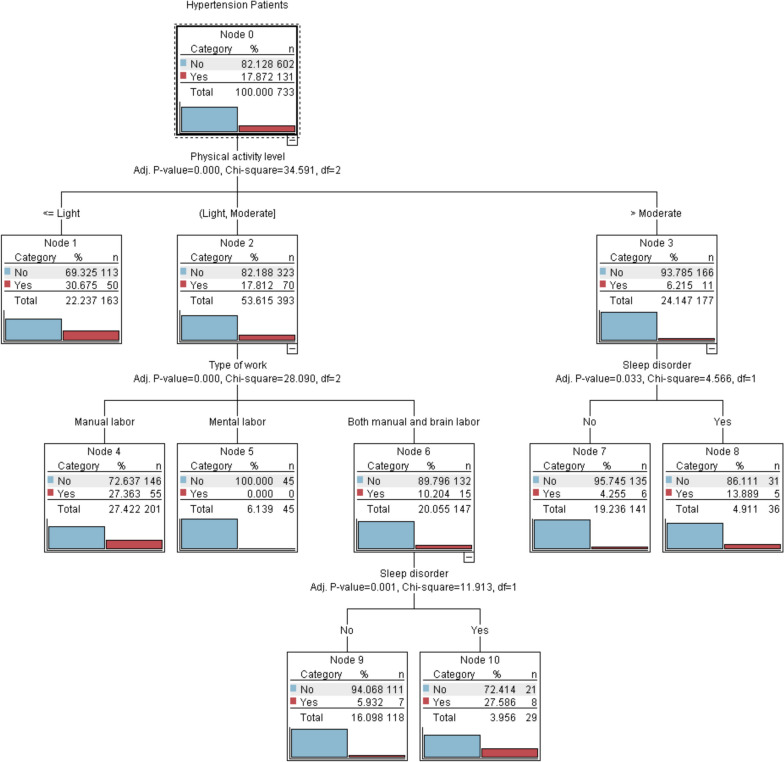
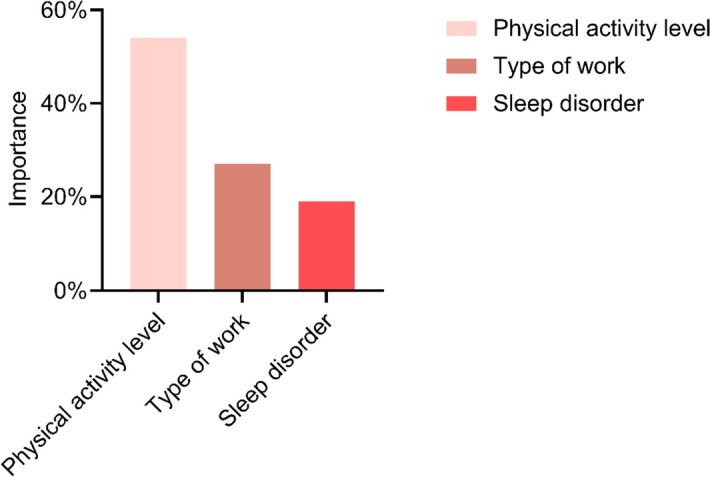
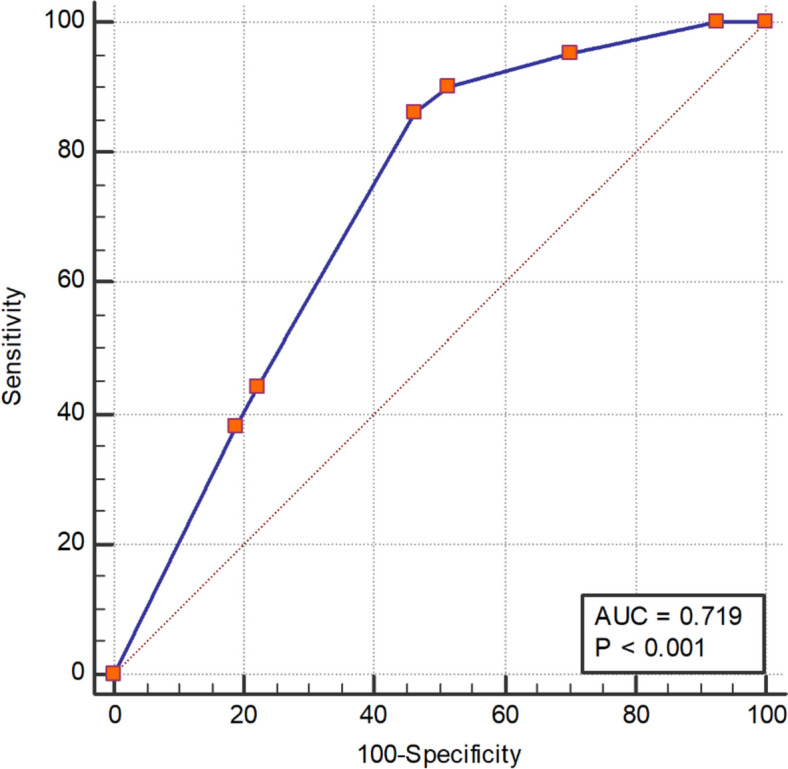
Results: The logistic regression analysis results indicate that sleep disorder is a significant risk factor for CFD in hypertension patients(OR:1.85, 95%CI:[1.16,2.94]), mental workers(OR:0.12, 95%CI: [0.04,0.37]) and those who perform both manual and mental workers(OR: 0.5, 95%CI: [0.29,0.86]) exhibit protective effects against CFD. Compared to low-intensity, moderate physical activity(OR: 0.53, 95%CI: [0.32,0.87]) and high-intensity physical activity(OR: 0.26, 95%CI: [0.12,0.58]) protects against CFD in hypertension patients. The importance of predictors in the decision tree model was ranked as follows: physical activity level (54%), type of work (27%), and sleep disorders (19%). The area under the ROC curves the decision tree model predicted was 0.72 [95% CI: 0.68 to 0.76].
Conclusion: Moderate and high-intensity physical activity may reduce the risk of developing CFD in hypertensive patients. Sleep disorders is a risk factor for CFD in hypertensive patients. Hypertensive patients who engage in mental work and high-intensity physical activity effectively mitigate the onset of CFD in hypertensive patients.
Keywords: Cognitive function decline; Hypertension; Physical activity; Sleep disorders; Type of work.
© 2023. The Author(s).
Conflict of interest statement
The authors declare no competing interests.
Figures

References
-
- Guideline for the pharmacological treatment of hypertension in adults. Geneva: World Health Organization; 2021 [cited 2023 May 14]. (WHO Guidelines Approved by the Guidelines Review Committee). Available from: http://www.ncbi.nlm.nih.gov/books/NBK573631/. - PubMed
Publication types
MeSH terms
LinkOut - more resources
Full Text Sources
Medical
Miscellaneous
