


The comparative efficacy of nerve transfer versus tendon transfer in the management of radial palsy: A systematic review and meta-analysis
- PMID: 38059217
- PMCID: PMC10696201
- DOI: 10.1016/j.jor.2023.11.026
The comparative efficacy of nerve transfer versus tendon transfer in the management of radial palsy: A systematic review and meta-analysis
Abstract
Background: There is no clear census as to which operative technique provides better recovery for radial nerve injuries. Therefore, in this systematic review, we examined the functional recovery, patient-reported outcomes, and complications of tendon transfer (TT) and nerve transfer (NT).
Methods: Five electronic databases were searched for studies (>10 cases per study) comparing NT and TT regardless of the study design (observational or experimental). Manual search was also conducted. The quality was assessed by the NIH tool. Outcomes included functional recovery, patient-reported outcomes (DASH score, satisfaction, and inability to return to work), and complications. The prevalence was pooled across studies using STATA software, and then, a subgroup analysis based on the intervention type.
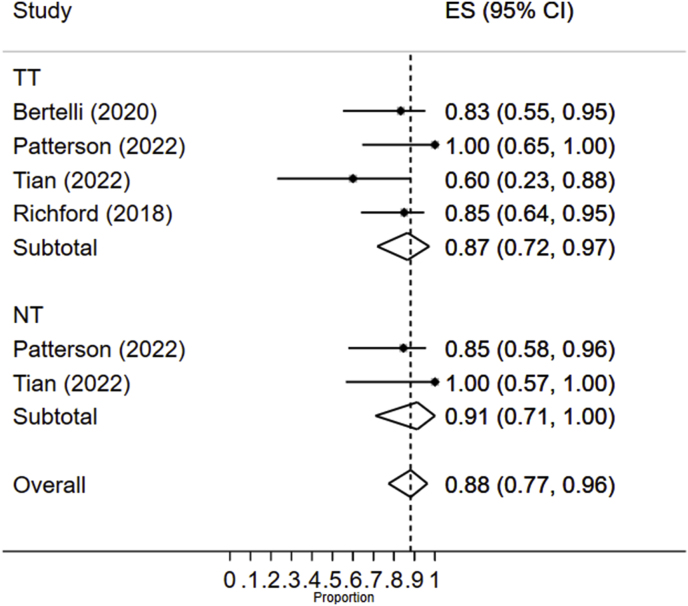
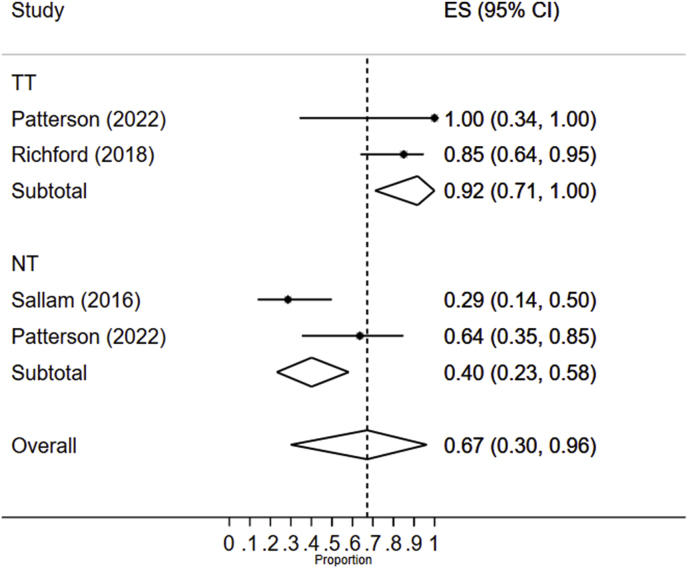
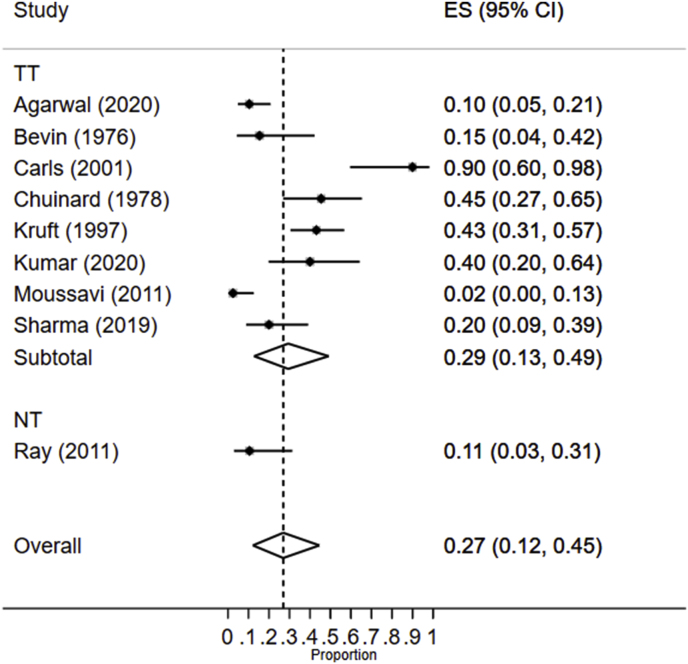
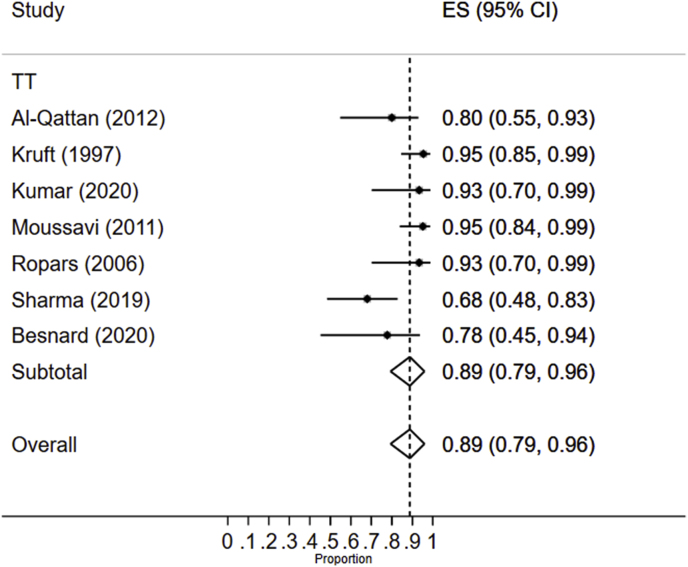
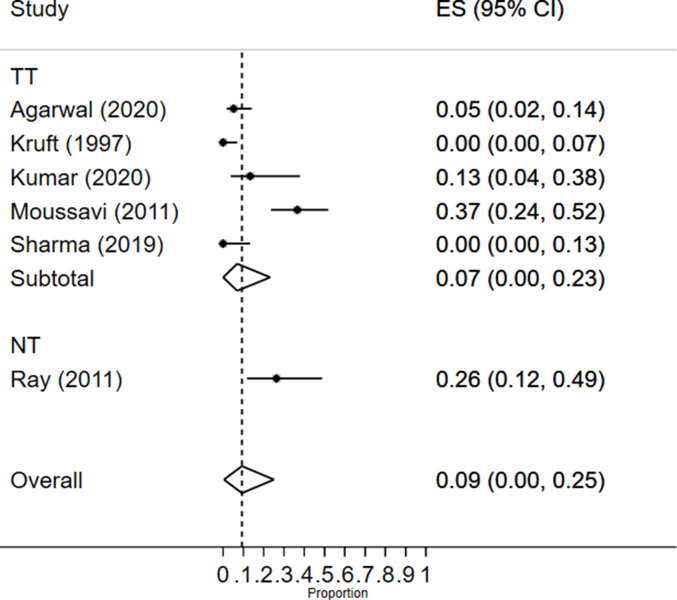
Results: Twenty-one studies (542 patients) were analyzed. Excellent recovery, assessed by the Bincaz scale, was higher in the TT group (29 % vs. 11 %) as well as failure to extend the fingers (49 % vs. 9 %). No significant difference was noted between both groups regarding DASH score (mean difference = -2.76; 95 % CI: -12.66: 6.93). Satisfaction was great in the TT group (89 %) with a limited proportion of patients unable to return to work (7 %). Complications were slightly higher in the TT group (8 % vs. 7 %) while 18 % of patients undergoing TT requiring revision surgery. Radial deviation was encountered in 18 % of patients in the TT group and 0 % in the NT group. The quality was good, fair, and poor in 2, 13, and 6, respectively.
Conclusions: In radial nerve injuries, although tendon transfer may seem to provide better functional motor recovery than nerve transfer, it is associated with a higher rate of failure to extend the finger. Given the large confidence interval, the accuracy of this finding is questioned. However, a great proportion of those patients require revision surgery afterward. Additionally, tendon transfer is associated with a greater complication rate than nerve transfer, particularly radial deviation.
Keywords: Functional recovery; Motor recovery; Nerve transfer; Radial palsy; Tendon transfer.
© 2023 Professor P K Surendran Memorial Education Foundation. Published by Elsevier B.V. All rights reserved.
Conflict of interest statement
All of the study authors declare no competing interested associated with the conduct of this research.
Figures






References
-
- Ilyas A.M., Mangan J.J., Graham J. Radial nerve palsy recovery with fractures of the humerus: an updated systematic review. J Am Acad Orthop Surg. 2020;28:e263–e269. - PubMed
-
- Gragossian A., Varacallo M. 2019. Radial Nerve Injury. - PubMed
-
- Paternostro-Sluga T., Grim-Stieger M., Posch M., et al. Reliability and validity of the Medical Research Council (MRC) scale and a modified scale for testing muscle strength in patients with radial palsy. J Rehabil Med. 2008;40:665–671. - PubMed
-
- Abrams G.D., Ward S.R., Fridén J., Lieber R.L. Pronator teres is an appropriate donor muscle for restoration of wrist and thumb extension. J Hand Surg. 2005;30:1068–1073. - PubMed
-
- Jones N.F., Machado G.R. Tendon transfers for radial, median, and ulnar nerve injuries: current surgical techniques. Clin Plast Surg. 2011;38:621–642. - PubMed
Publication types
LinkOut - more resources
Full Text Sources
Research Materials
