Protein-centric omics analysis reveals circulating complements linked to non-viral liver diseases as potential therapeutic targets
- PMID: 38061333
- PMCID: PMC10776287
- DOI: 10.3350/cmh.2023.0343
Protein-centric omics analysis reveals circulating complements linked to non-viral liver diseases as potential therapeutic targets
Abstract
Background/aims: To evaluate the causal correlation between complement components and non-viral liver diseases and their potential use as druggable targets.
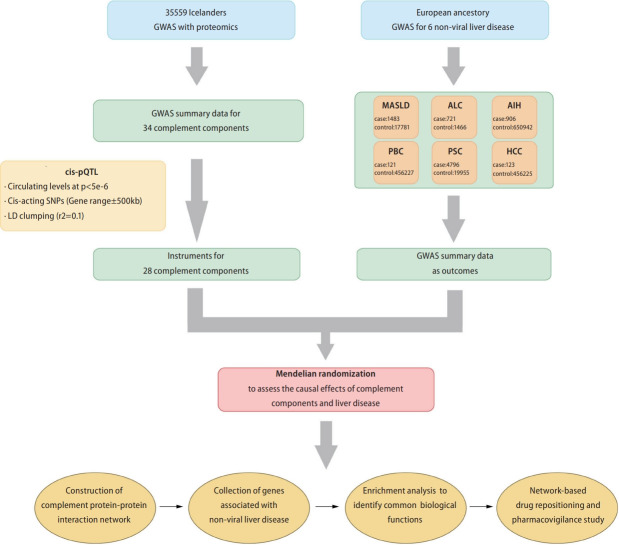
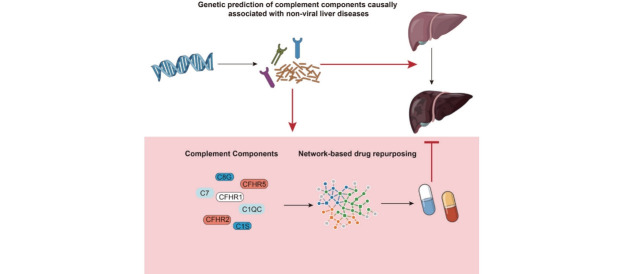
Methods: We conducted Mendelian randomization (MR) to assess the causal role of circulating complements in the risk of non-viral liver diseases. A complement-centric protein interaction network was constructed to explore biological functions and identify potential therapeutic options.
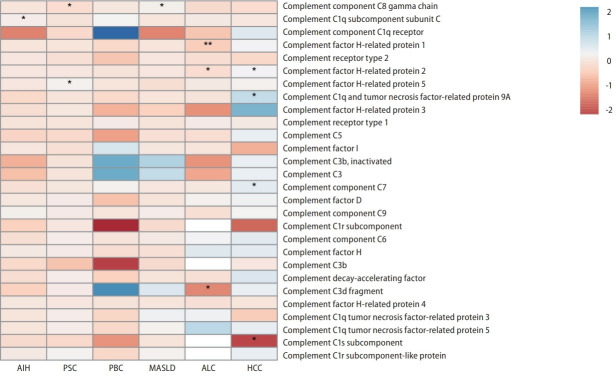
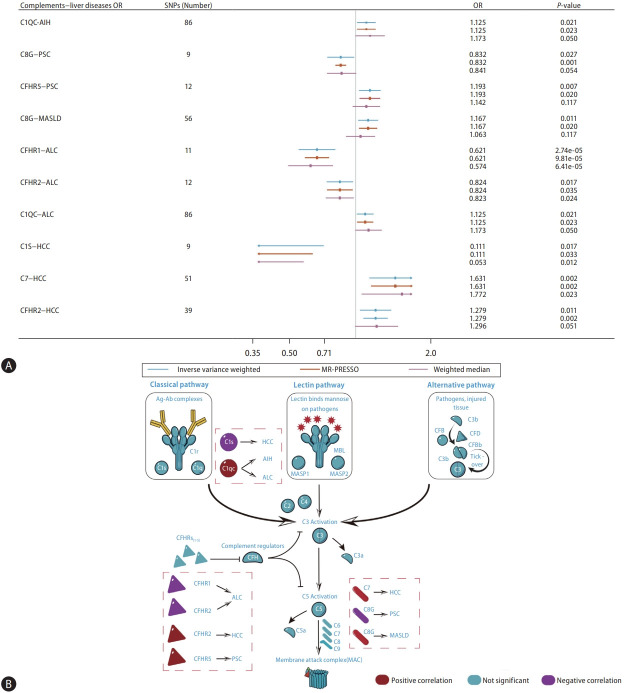
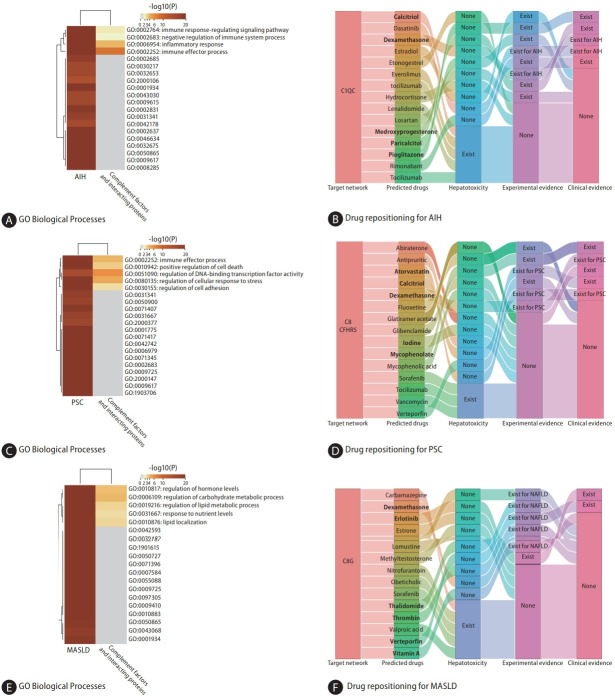
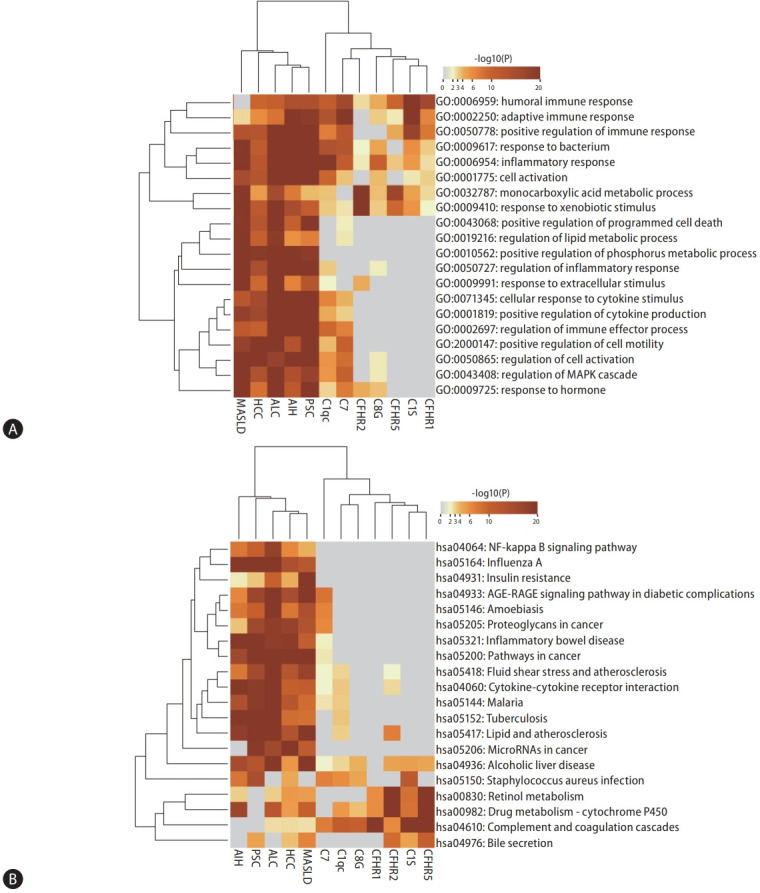
Results: In the MR analysis, genetically predicted levels of complement C1q C chain (C1QC) were positively associated with the risk of autoimmune hepatitis (odds ratio 1.125, 95% confidence interval 1.018-1.244), while complement factor H-related protein 5 (CFHR5) was positively associated with the risk of primary sclerosing cholangitis (PSC;1.193, 1.048- 1.357). On the other hand, CFHR1 (0.621, 0.497-0.776) and CFHR2 (0.824, 0.703-0.965) were inversely associated with the risk of alcohol-related cirrhosis. There were also significant inverse associations between C8 gamma chain (C8G) and PSC (0.832, 0.707-0.979), as well as the risk of metabolic dysfunction-associated steatotic liver disease (1.167, 1.036-1.314). Additionally, C1S (0.111, 0.018-0.672), C7 (1.631, 1.190-2.236), and CFHR2 (1.279, 1.059-1.546) were significantly associated with the risk of hepatocellular carcinoma. Proteins from the complement regulatory networks and various liver diseaserelated proteins share common biological processes. Furthermore, potential therapeutic drugs for various liver diseases were identified through drug repurposing based on the complement regulatory network.
Conclusion: Our study suggests that certain complement components, including C1S, C1QC, CFHR1, CFHR2, CFHR5, C7, and C8G, might play a role in non-viral liver diseases and could be potential targets for drug development.
Keywords: Complement system proteins; Drug repositioning; Liver diseases; Mendelian randomization analysis.
Conflict of interest statement
The authors have no conflicts to disclose.
Figures

Comment in
-
Starting the journey: Understanding the roles of complement proteins in liver diseases through mendelian randomization.Clin Mol Hepatol. 2024 Apr;30(2):150-153. doi: 10.3350/cmh.2024.0116. Epub 2024 Feb 22. Clin Mol Hepatol. 2024. PMID: 38385196 Free PMC article. No abstract available.
References
-
- Rinella ME, Lazarus JV, Ratziu V, Francque SM, Sanyal AJ, Kanwal F, et al. A multisociety Delphi consensus statement on new fatty liver disease nomenclature. J Hepatol. 2023;79:1542–1556. - PubMed
-
- Song SJ, Lai JC, Wong GL, Wong VW, Yip TC. Can we use old NAFLD data under the new MASLD definition? J Hepatol. 2023 Aug 2. doi: 10.1016/j.jhep.2023.07.021. - PubMed
MeSH terms
Grants and funding
LinkOut - more resources
Full Text Sources
Medical
Miscellaneous