. 2023 Dec 8;14(1):8142.
doi: 10.1038/s41467-023-43672-7.

A naturally occurring polyacetylene isolated from carrots promotes health and delays signatures of aging

Affiliations

A naturally occurring polyacetylene isolated from carrots promotes health and delays signatures of aging

Carolin Thomas et al. Nat Commun. .

Abstract

To ameliorate or even prevent signatures of aging in ultimately humans, we here report the identification of a previously undescribed polyacetylene contained in the root of carrots (Daucus carota), hereafter named isofalcarintriol, which we reveal as potent promoter of longevity in the nematode C. elegans. We assign the absolute configuration of the compound as (3 S,8 R,9 R,E)-heptadeca-10-en-4,6-diyne-3,8,9-triol, and develop a modular asymmetric synthesis route for all E-isofalcarintriol stereoisomers. At the molecular level, isofalcarintriol affects cellular respiration in mammalian cells, C. elegans, and mice, and interacts with the α-subunit of the mitochondrial ATP synthase to promote mitochondrial biogenesis. Phenotypically, this also results in decreased mammalian cancer cell growth, as well as improved motility and stress resistance in C. elegans, paralleled by reduced protein accumulation in nematodal models of neurodegeneration. In addition, isofalcarintriol supplementation to both wild-type C57BL/6NRj mice on high-fat diet, and aged mice on chow diet results in improved glucose metabolism, increased exercise endurance, and attenuated parameters of frailty at an advanced age. Given these diverse effects on health parameters in both nematodes and mice, isofalcarintriol might become a promising mitohormesis-inducing compound to delay, ameliorate, or prevent aging-associated diseases in humans.


Conflict of interest statement

Data presented in this manuscript are contained in the patent application WO2023143988A1 with ETH Zürich as applicant, and E.M.C., M.R., C.T., and R.E. as inventors. E.M.C., M.R., C.T., and R.E. declare no additional competing interest. The remaining authors declare no competing interests.

Figures
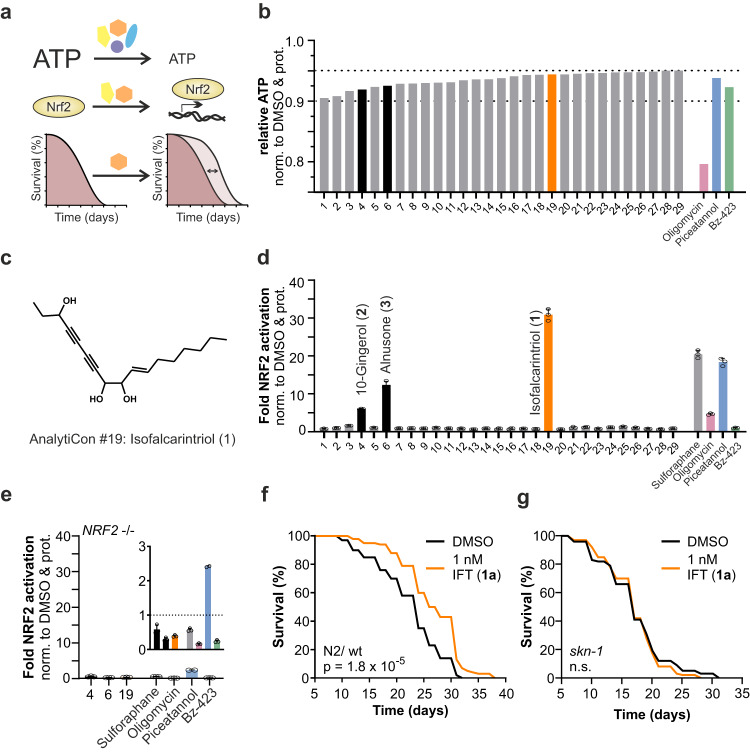
Fig. 1
Fig. 1. Identification of a natural structure, isofalcarintriol (IFT) as potent suppressor of ATP generation and activator of NRF2.
a Schematic representation of the compound screening procedure, including an initial ATP screening and NRF2 activation assay in cells, followed by lifespan assays in C. elegans, b ATP assay screening revealed 29 small-molecule candidates (5 µg/ ml) that inhibit cellular ATP levels by 5–10% (average plus SD) compared to DMSO solvent control after 15 min of incubation. 10 µM of oligomycin, piceatannol, and Bz-423 were used as positive controls. c Structure of compound AnalytiCon Discovery GmbH #19 isofalcarintriol (1) as provided by AnalytiCon Discovery GmbH after extraction of Daucus carota. d NRF2 luciferase reporter assay with top ATP inhibitors after overnight treatment in transgenic HEK293 cells. 10-gingerol (2), alnusone (3), and isofalcarintriol (1) were identified as potent NRF2 activators. Sulforaphane was used as positive control. e NRF2 activation over solvent control in a HEK293 homozygote NRF2 deletion reporter cell line, including #19 (1). f Lifespan of WT C. elegans (N2) upon treatment with (synthetic) isofalcarintriol (1a) (1 nM). g Lifespan of C. elegans when supplementing isofalcarintriol (1a) to skn-1 (NRF2) deficient nematodes. Cell data include three technical replicates and are represented as the sum of average + SD, or average + SD. C. elegans data include three biologically independent samples and are represented as average. Statistics: log-rank test, one-way ANOVA and Dunnett’s or Bartlett’s posthoc test. p < 0.0001 = ****. Source data are provided as a Source Data file.
Fig. 2
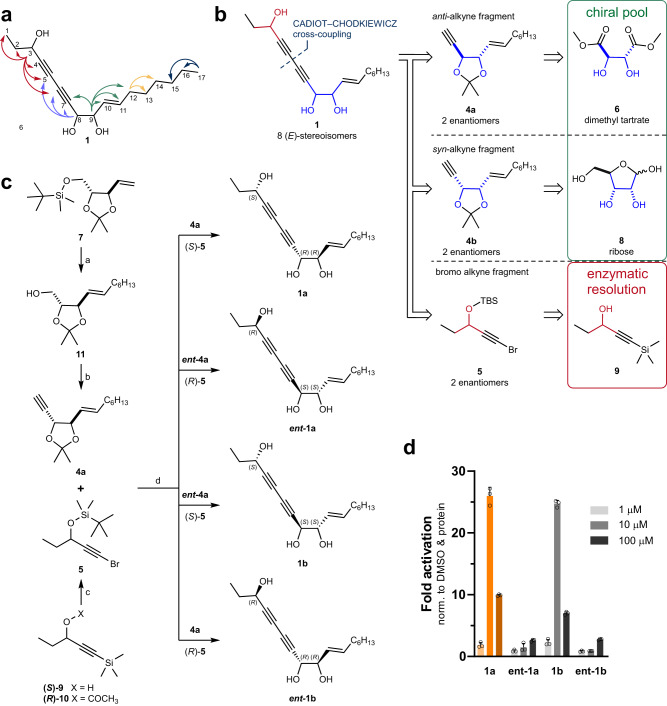
Fig. 2. Structure elucidation of isofalcarintriol by asymmetric synthesis.
a Selected 1H,13C-HMBC correlations observed in isofalcarintriol (1). b Retrosynthetic analysis of isofalcarintriol (1) tracing back to chiral pool starting materials 6, 8 and previously reported enantiopure propargylic alcohol 9. c Synthesis scheme of all four syn-1,2-diol containing isofalcarintriol (1a, b) stereoisomers. Reagents and conditions: a, 1: 1-octene, Grubbs Catalyst 2nd Generation catalytic (cat.), CH2Cl2, 40 °C; 2: tetra-n-butylammonium fluoride, THF, 0 °C to RT, 64–71% over two steps. b, 1: Dess–Martin periodinane (DMP), CH2Cl2, RT; 2: Ohira–Bestmann reagent, K2CO3, MeOH, 0 °C, 72–76% over 2 steps. c, 1: K2CO3, MeOH, 40 °C; 2: t-butyldimethylsilyl chloride (TBSCl), imidazole, CH2Cl2, 0 °C to RT; 3: N-bromosuccinimide, AgNO3 cat., acetone, RT, 38–59% over three steps. d, 1: 4a, CuCl cat., n-BuNH2 (aq.), Et2O, RT, then 5, 0 °C to RT, 61–91%; 2: CF3COOH, THF/water (4:1), 40 °C or HCl (aq.), MeOH, RT, 87–99%.d NRF2 luciferase reporter assay after overnight treatment in transgenic HEK293 cells where only (3 S,8 R,9 R)-isofalcarintriol (1a) and (3 S,8 S,9 S)-isofalcarintriol (1b) activated NRF2, underlining the importance of the configuration of the 3-hydroxy group on activity. Data include three technical replicates and are represented as average + SD. Source data are provided as a Source Data file.
Fig. 3
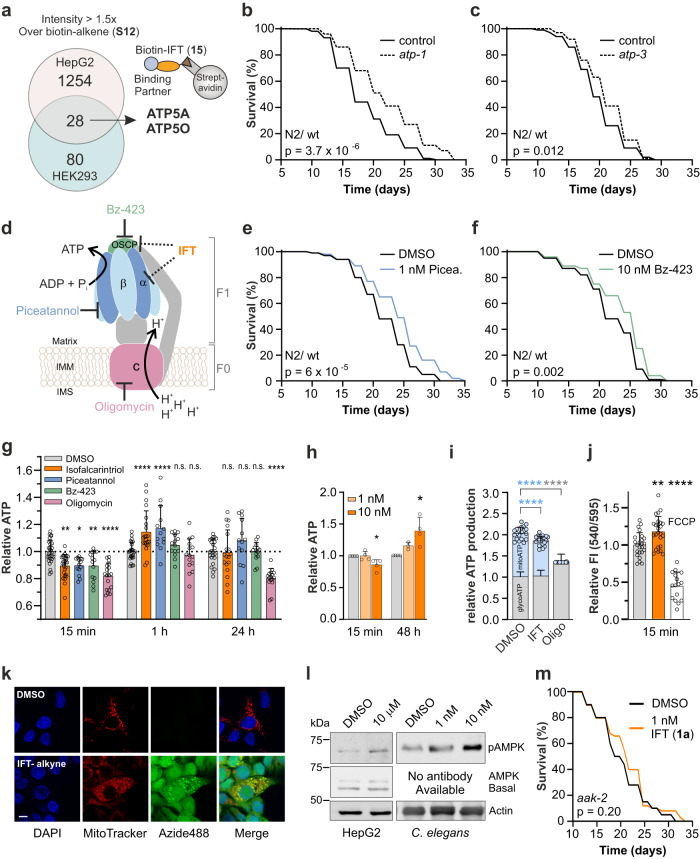
Fig. 3. Isofalcarintriol (IFT) potentially interacts with the mitochondrial ATP synthase, resulting in impaired mitochondrial ATP production and activation of AMPK.
a Biotin pulldown with HepG2 and HEK293 cells and mass spectrometric analysis identifying subunits ATP5A (α-SU) and ATP5O (OSCP) as interaction partners of biotin-isofalcarintriol (15). b, c Lifespan upon RNAi-based downregulation of C. elegans (b) α-SU = atp-1 and (c) OSCP = atp-3. d Schematic representation of the ATP synthase. IMM: Inner mitochondrial membrane; IMS: Intermembrane space. Pharmacological inhibition by (e) piceatannol (α-SU) and (f) bz-423 (OSCP) in C. elegans. g Time-response of ATP dynamics upon isofalcarintriol (1a) treatment in HepG2 at 15 min (DMSO: n = 30; IFT: n = 27) (p = 0.032), 1 h (DMSO: n = 27; IFT: n = 21) (p = <0.0001) and 24 h (DMSO: n = 23; IFT: n = 18). h Time-response of ATP dynamics upon isofalcarintriol (1a) treatment in C. elegans at 15 min (p = 0.045) and 48 h (p = 0.022) (15 min: n = 4 per condition; 48 h DMSO: n = 3; 48 h IFT: n = 4). i Real-Time ATP Rate Assay quantifying mitochondrial (p = <0.0001) and glycolytic ATP production upon injection of isofalcarintriol (1a) (n = 20 independent cell samples per condition). j Mitochondrial membrane potential upon isofalcarintriol (1a) treatment (DMSO: n = 24; IFT: n = 25) (p = 0.003). k Isofalcarintriol-alkyne localization by immunostaining of HepG2. Fluorophore-labeling of isofalcarintriol-alkyne was achieved via click chemistry using azide488, while DMSO + azide488 control treated cells did not show any signal. Scale bar: 10 µM. l Western blot of cell and C. elegans samples indicate isofalcarintriol (1a)-dependent AMPK activation by phosphorylation. Uncropped blot in Source Data. m Lifespan of Isofalcarintriol (1a) -treated lifespan in aak-2 (AMPK)-deficient nematodes. Data are represented as average or average + SD. g, h, j, k Measured in ≥ 3 independent biological experiments, respectively. Statistics: log-rank test, one-way ANOVA & Barlett’s Posthoc test, two-way ANOVA & Dunnett’s or Tukey Posthoc test. Source data are provided as a Source Data file.
Fig. 4
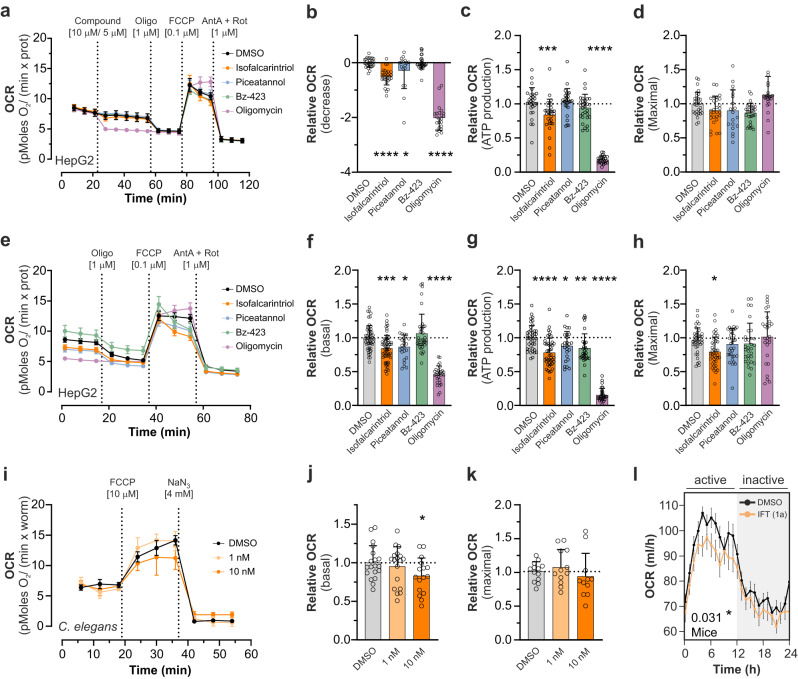
Fig. 4. Isofalcarintriol (IFT) impairs mitochondrial respiration in cells, C. elegans and mice.
a Seahorse XF Cell Mito Stress Assay showing the OCR development over time after injection of isofalcarintriol (1a) (10 µM) and positive controls in HepG2 cells (DMSO n = 12; IFT n = 11 independent cell samples per condition). Quantification of respiration parameters in a, including (b) a decrease of respiration (IFT: p < 0.0001) (c) ATP production (calculated) (IFT: p = 0.001) and (d) maximal respiration. e Seahorse XF Cell Mito Stress Assay showing the OCR development over time after overnight pre-treatment with isofalcarintriol (1a) (10 µM) and positive controls in HepG2 cells. n = 12 independent cell samples per condition. Quantification of respiration parameters in (e), including (f) basal respiration (IFT: p = 0.0003), (g) ATP production (calculated) (IFT: p < 0.0001) and (h) maximum respiration (IFT: p = 0.016). i Seahorse XF Cell Mito Stress Assay showing the OCR development over time after overnight pre-treatment of isofalcarintriol (1a) (1 nM, 10 nM) in C. elegans (DMSO and IFT 1 nM: n = 7; IFT 10 nM: n = 5 biologically independent samples per condition. Quantification of respiration parameters, including (j) basal respiration (IFT 10 nM: p = 0.038) and (k) maximal respiration. l Indirect calorimetry of female C57BL/6NRj mice (DMSO: n = 10; IFT: n = 11 mice) on chow diet, and quantification of OCR upon treatment with isofalcarintriol (1a) (0.1 mg/kg body weight) (p = 0.031). Data are represented as average ± SD, + SD or ± SEM (l), and (b)–(d), (f)–(h), and (j)–(k) were measured in ≥ 3 independent experiments. Statistics: one-way ANOVA with or without Dunnett’s or Bonferroni’s post-hoc test. Source data are provided as a Source Data file.
Fig. 5
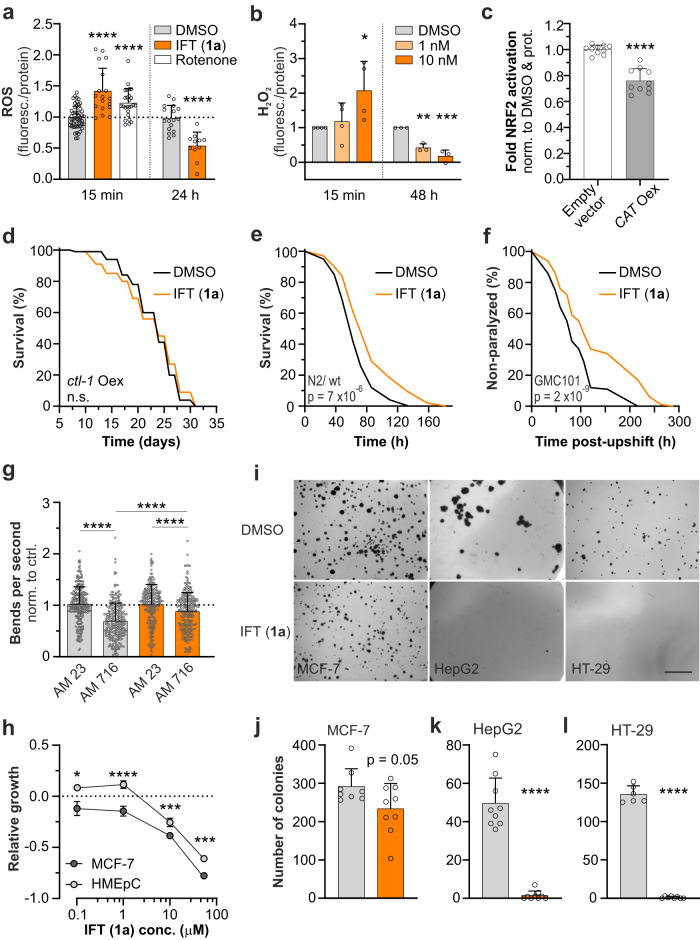
Fig. 5. Isofalcarintriol promotes oxidative stress resistance and targets age-related pathologies.
a DCF-DA and (b) AmplexRed determination of ROS dynamics in HepG2 (15 min DMSO n = 50; 15 min IFT: n = 18; 24 h DMSO: n = 17; 24 h IFT: n = 11 independent cell samples per condition) (15 min: p < 0.0001); 24 h: p < 0.0001) and C. elegans (15 min: n = 4; 48 h: n = 3 biologically independent samples per condition) (15 min: p = 0.018; 48 h: p = 0.002 for 1 nM and p = 0.0003 for 10 nM), respectively. c NRF2 luciferase reporter activation in cells overexpressing human catalase (CAT Oex) upon isofalcarintriol (1a) treatment (10 µM) compared to empty vector control (n = 10 independent cell samples per condition) (p < 0.0001). d Lifespan of ctl-1 (cytosolic catalase)-overexpressing nematodes. e Paraquat stress assay (10 mM paraquat) of C. elegans treated with isofalcarintriol (1a) (1 nM) compared to DMSO control. f Paralysis assay with GMC101 nematodes, a protein aggregation model of Alzheimer’s disease upon Isofalcarintriol (1a) treatment. g Motility assay with AM23 (control strain) and AM176 (CAG repeat strain) nematodes, as a protein aggregation model of Huntington’s disease (AM23 DMSO: n = 277; AM23 IFT: n = 258; AM716 DMSO: n = 276; AM716 IFT: n = 277 nematodes per condition in two independent experiments, p < 0.0001 for each comparison). h Proliferation assay with MCF-7 and its non-tumor control cells, HMEpC (MCF-7 0.1 and 50 µM: n = 6; MCF-7 1 and 10 µM: n = 3; HMEpC: n = 3 independent cell samples per condition) after 96 h treatment with of isofalcarintriol (1a) (0.1 µM: p = 0.01; 1 µM: p < 0.0001, 10 µM: p = 0.0006, 50 µM: p = 0.0005). i Soft agar colony formation assay. j MCF-7 (p = 0.05) (DMSO: n = 8; IFT: n = 9 independent cell samples per condition), k HepG2 (p < 0.0001) (n = 9 independent cell samples per condition), and l HT-29 (p < 0.0001) when treated with isofalcarintriol (1a) (DMSO: n = 6; IFT: n = 8 independent cell samples per condition). Scale bar: 1 mm. Data are represented as average or average ± SD or + SD. Data shown in (a), (b), (h), (i), and (j) were measured in ≥ 3 independent experiments. Statistics: log-rank test, two-sided unpaired student’s t-test, one-way ANOVA and Dunnett’s posthoc test, two-way ANOVA and Sidak’s post-hoc test. Source data are provided as a Source Data file.
Fig. 6
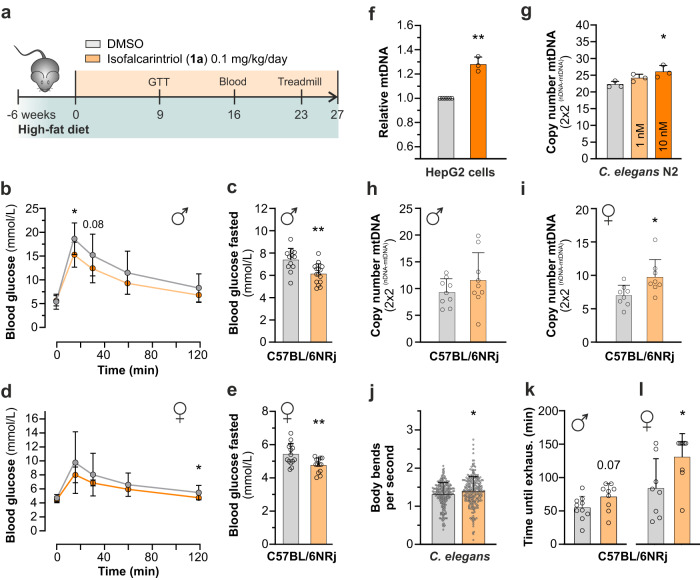
Fig. 6. Isofalcarintriol improves glucose metabolism in obese mice and acts as exercise mimetic though increased mitochondrial biogenesis.
a Schematic overview of isofalcarintriol (1a) supplementation study with C57BL/6NRj mice on high-fat diet. b Glucose tolerance test with male mice (DMSO: n = 12 mice; IFT: n = 15 mice) (15 min: p = 0.01). c Fasted blood glucose level in male mice (DMSO: n = 12 mice; IFT: n = 15 mice) upon isofalcarintriol (1a) supplementation after 16 weeks (p = 0.0022). d Glucose tolerance test with female mice (n = 14 mice per treatment) after 9 weeks of treatment (120 min: p = 0.02). e Fasted blood glucose level in female mice (DMSO: n = 14 mice; IFT: n = 13 mice) upon isofalcarintriol (1a) supplementation (p = 0.0048). f–i Mitochondrial mass (mtDNA/nDNA ratio) after supplementation of isofalcarintriol (1a) in (f) HepG2 cells (DMSO: n = 6; IFT: n = 3 independent cell samples) (p = 0.0014). g C. elegans (n = 3 biologically independent samples per condition) (10 nM: p = 0.0238), and (h) male (n = 9 mice per treatment) and (i) female (n = 8 mice per treatment) high-fat diet mouse muscle tissue (M. gastrocnemius) (p = 0.0222). j Thrashing assay quantifying motility of C. elegans on day 5 of adulthood (DMSO: n = 221; IFT = 248 nematodes in two independent experiments) (p = 0.0134). Treadmill exercise with C57BL/6NRj (k) male (DMSO: n = 10; IFT: n = 9 mice) (p = 0.07) and (l) female mice (DMSO: n = 8; IFT: n = 9 mice) (p = 0.0318) on high-fat diet. All data are represented as average + SD or ± SD. Statistics: two-sided unpaired student’s t-test; two-way repeated measures ANOVA; one-way ANOVA and Dunnett’s post-hoc test. Source data are provided as a Source Data file.
Fig. 7
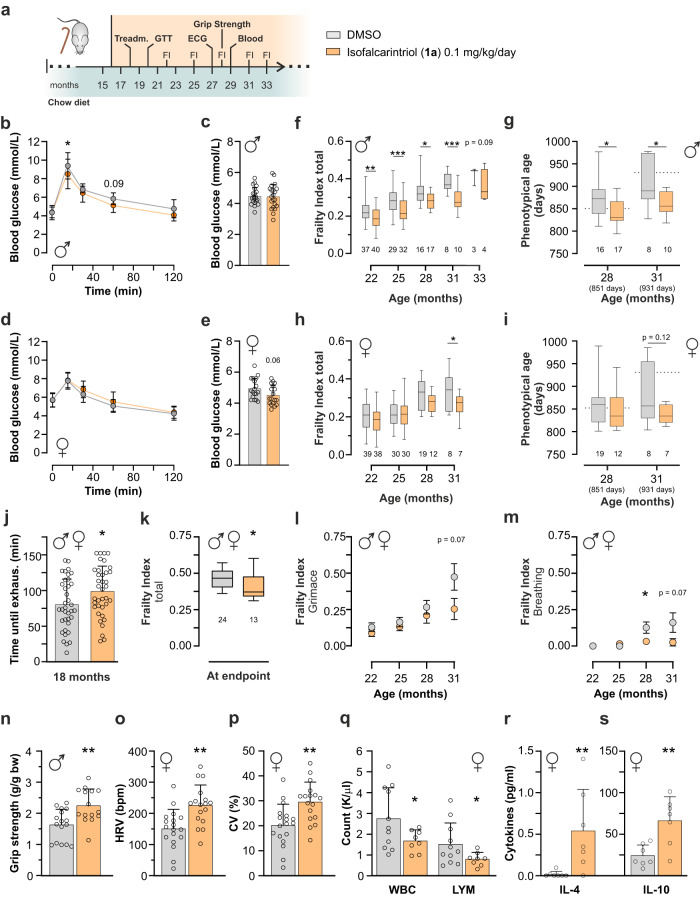
Fig. 7. Effects of isofalcarintriol in aged mice on glucose sensitivity, exercise capacity, and parameters of frailty.
a Schematic overview of isofalcarintriol (1a) supplementation study with aged C57BL/6NRj mice on chow diet. b Glucose tolerance test 20-month-old male mice (DMSO: n = 10; IFT: n = 11 mice; 15 min: p = 0.03) and (c) fasted blood glucose levels at 29 months of age (n = 21 mice per treatment). d Glucose tolerance test in 20-month-old female mice (n = 12 per treatment) and (e) fasted blood glucose levels at 29 months of age (n = 18 mice per treatment). Total frailty index (FI) score of (f) male (22 months: p = 0.0078; 25 months: p = 0.0005; 28 months: p = 0.0254, 31 months: p = 0.0007) and (h) female mice (p = 0.03) (n = as indicated below bars). Calculated phenotypical age based on FI scores, (g) of male mice (28 months: p = 0.0169; 31 months: p = 0.0246) and (i) of female mice (n = as indicated in panels). Sex-independent frailty parameters, shown as males and females combined, including (j) endurance capacity (p = 0.03) (n = 37 mice per treatment), (k) total frailty index score at individual endpoints (p = 0.01), as well as (l) grimace and (m) breathing scores (28 months: p = 0.0378). Sex-dependent health parameters in either male or female mice, including (n) grip strength of male mice (month 28) (DMSO: n = 16; IFT: n = 15 mice) (p = 0.0036), o heart rate variability (HRV) (p = 0.0014) and p coefficient of variation (CV) (p = 0.002) as measured via electrocardiogram (ECG) in female mice (month 27) (DMSO: n = 18; IFT: n = 17 mice), q White blood cell count (WBC) (p = 0.04), and number of lymphocytes (LYM) (p = 0.048) (DMSO: n = 11; IFT: n = 8) as well as concentration of anti-inflammatory cytokines (r) IL-4 (p = 0.0064) and (s) IL-10 (p = 0.0070) in female plasma (month 29) (n = 7 mice per treatment). Data in (b)–(e), (j), and (n)–(r) are represented as average + SD or ± SD. Box plots indicate median (middle line), 25th, 75th percentile (box) and min, max values (whiskers). Data in (l) and (m) show the average ± SEM. Statistics: two-sided unpaired student’s t-test; two-way repeated measures ANOVA; mixed effects analysis; Mann–Whitney test. Source data are provided as a Source Data file.

References

    1. MacNee W, Rabinovich RA, Choudhury G. Ageing and the border between health and disease. Eur. Respir. J. 2014;44:1332–1352. doi: 10.1183/09031936.00134014. - DOI - PubMed
    1. Lopez-Otin C, Blasco MA, Partridge L, Serrano M, Kroemer G. The hallmarks of aging. Cell. 2013;153:1194–1217. doi: 10.1016/j.cell.2013.05.039. - DOI - PMC - PubMed
    1. Fontana L, Partridge L, Longo VD. Extending healthy life span-from yeast to humans. Science. 2010;328:321–326. doi: 10.1126/science.1172539. - DOI - PMC - PubMed
    1. Zheng J, Ramirez VD. Inhibition of mitochondrial proton F0F1-ATPase/ATP synthase by polyphenolic phytochemicals. Br. J. Pharmacol. 2000;130:1115–1123. doi: 10.1038/sj.bjp.0703397. - DOI - PMC - PubMed
    1. Gledhill JR, Montgomery MG, Leslie AG, Walker JE. Mechanism of inhibition of bovine F1-ATPase by resveratrol and related polyphenols. Proc. Natl. Acad. Sci. USA. 2007;104:13632–13637. doi: 10.1073/pnas.0706290104. - DOI - PMC - PubMed

Publication types