


Snack Talk: Effects of a Naturalistic Visual Communication Support on Increasing Conversation Engagement for Adults with Disabilities
- PMID: 38076735
- PMCID: PMC10700260
- DOI: 10.1007/s40617-023-00775-3
Snack Talk: Effects of a Naturalistic Visual Communication Support on Increasing Conversation Engagement for Adults with Disabilities
Abstract
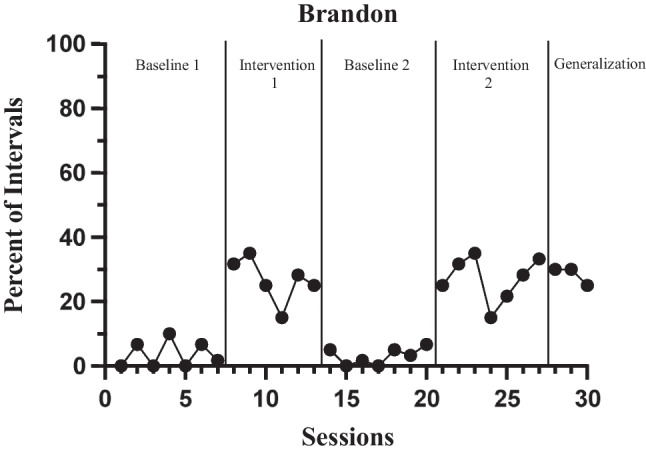
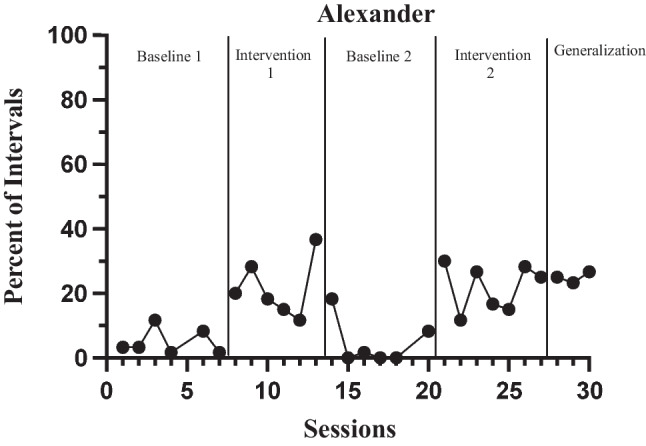
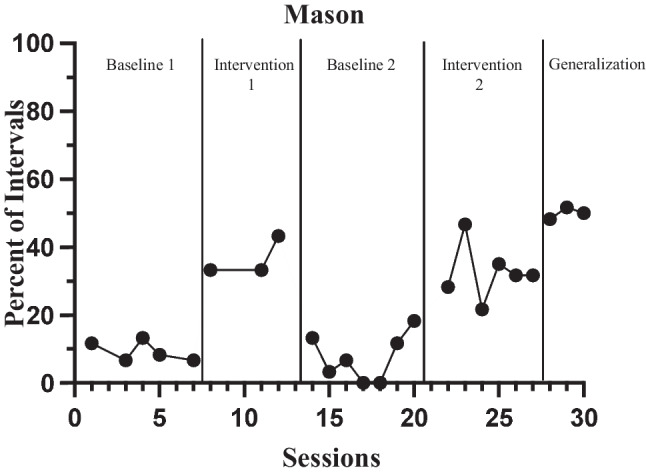
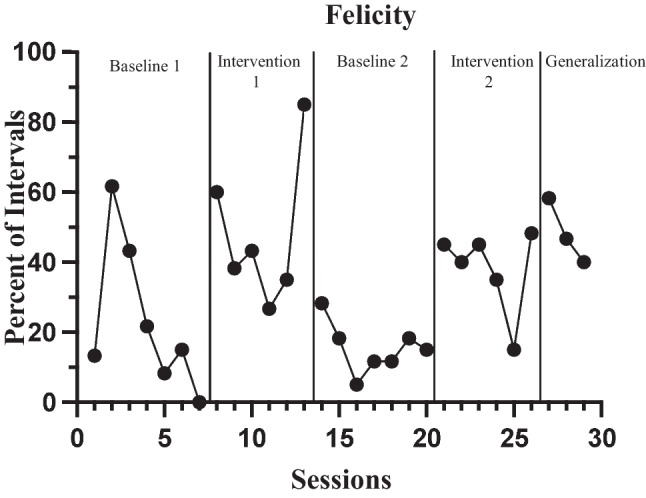
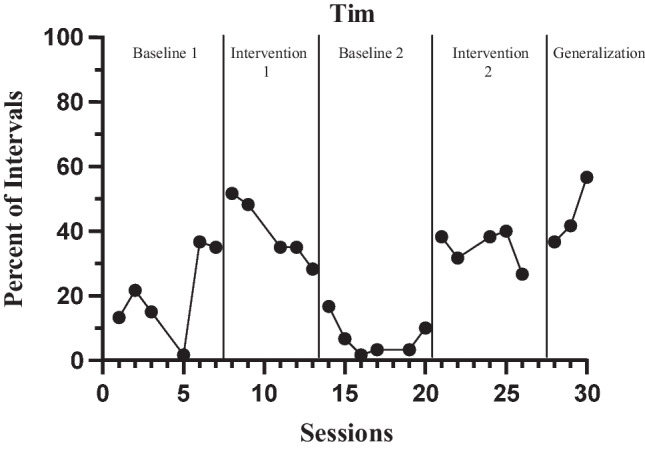
Adults with intellectual and developmental disabilities frequently experience poor life outcomes, with individuals reporting lower levels of social support, relationships, gainful employment, and satisfaction in their quality of life. To ameliorate these outcomes, social skills and social communication interventions aligned with the needs of adults are warranted. This study examined the efficacy of Snack Talk, a supplemental naturalistic visual communication support, with five adults with intellectual and developmental disabilities. Snack Talk was implemented during the midday mealtime, with the goal of increasing conversation engagement. A withdrawal design across participants was used. Results demonstrated increases in conversation engagement and showed meaningful gains for participants in the intervention and postintervention phase compared to baseline.
Keywords: Communication; Intellectual and developmental disabilities; Mealtimes; Social skills.
© Association for Behavior Analysis International 2023. Springer Nature or its licensor (e.g. a society or other partner) holds exclusive rights to this article under a publishing agreement with the author(s) or other rightsholder(s); author self-archiving of the accepted manuscript version of this article is solely governed by the terms of such publishing agreement and applicable law.
Conflict of interest statement
Conflict of InterestThe authors declare that they have no conflict of interest.
Figures
References
-
- Aguirre A, O’Neill J, Rehfeldt RA, Boyer V. Behavioral interventions for complex communication and social skills in adults with autism spectrum disorders. In: Tincani M, Bondy A, editors. Autism spectrum disorders in adolescents and adults: Evidence-based and promising interventions. Guilford Press; 2015. pp. 93–117.
-
- Association of Professional Behavior Analysts. (2019). Clarifications regarding applied behavior analysis treatment of autism spectrum disorder: practice guidelines for healthcare funders and managers (2nd ed.). Highlands Ranch, CO: Author. Retrieved from: https://www.apbahome.net/page/practiceguidelines
-
- Autism Speaks. (2020). State regulated health benefit plans. https://www.autismspeaks.org/state-regulated-health-benefit-plans. Accessed 22 Feb 2022.
-
- Baio, J., Wiggins, L., Christensen, D. L., Maenner, M. J., Daniels, J., Warren, Z., ... & Durkin, M. S. (2018). Prevalence of autism spectrum disorder among children aged 8 years—Autism and developmental disabilities monitoring network, 11 sites, United States, 2014. MMWR Surveillance Summaries, 67(6), 1–23. 10.15585/mmwr.ss6706a1 - PMC - PubMed
Grants and funding
LinkOut - more resources
Full Text Sources
