


This is a preprint.
Unlocking the Role of sMyBP-C: A Key Player in Skeletal Muscle Development and Growth
- PMID: 38076858
- PMCID: PMC10705270
- DOI: 10.1101/2023.10.23.563591
Unlocking the Role of sMyBP-C: A Key Player in Skeletal Muscle Development and Growth
Abstract
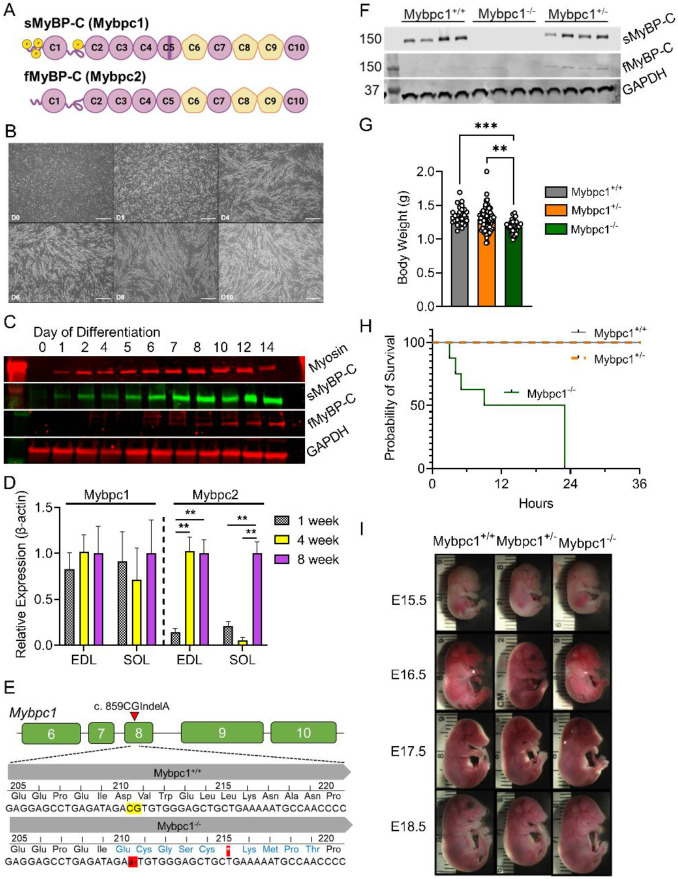
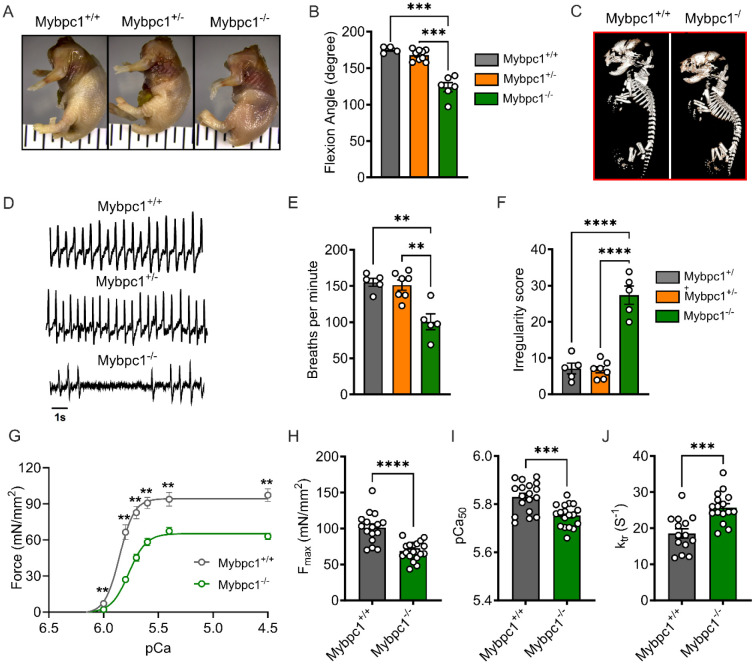
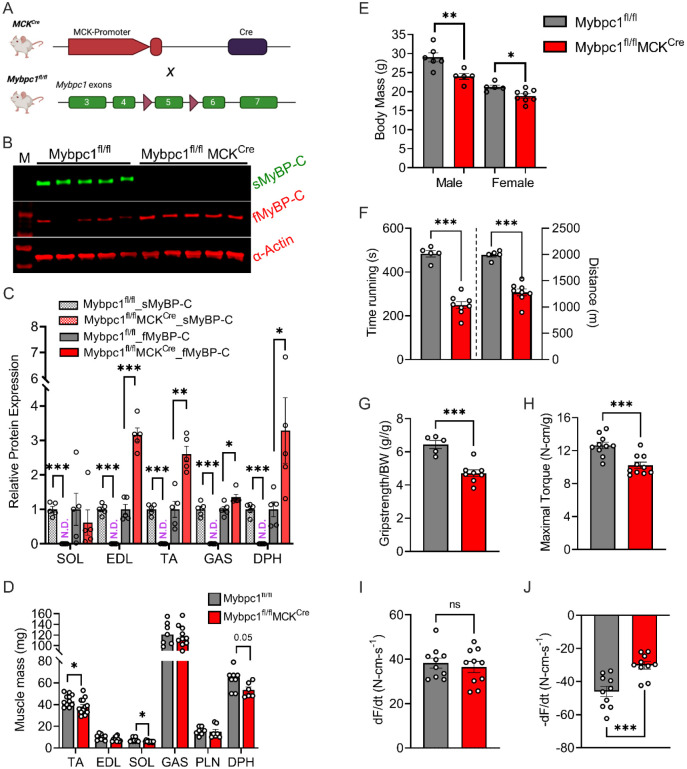
Skeletal muscle is the largest organ in the body, responsible for gross movement and metabolic regulation. Recently, variants in the MYBPC1 gene have been implicated in a variety of developmental muscle diseases, such as distal arthrogryposis. How MYBPC1 variants cause disease is not well understood. Here, through a collection of novel gene-edited mouse models, we define a critical role for slow myosin binding protein-C (sMyBP-C), encoded by MYBPC1, across muscle development, growth, and maintenance during prenatal, perinatal, postnatal and adult stages. Specifically, Mybpc1 knockout mice exhibited early postnatal lethality and impaired skeletal muscle formation and structure, skeletal deformity, and respiratory failure. Moreover, a conditional knockout of Mybpc1 in perinatal, postnatal and adult stages demonstrates impaired postnatal muscle growth and function secondary to disrupted actomyosin interaction and sarcomere structural integrity. These findings confirm the essential role of sMyBP-C in skeletal muscle and reveal specific functions in both prenatal embryonic musculoskeletal development and postnatal muscle growth and function.
Conflict of interest statement
Conflict of Interest: S.S provides consulting and collaborative research studies to the Leducq Foundation (CURE-PLAN), Red Saree Inc., Greater Cincinnati Tamil Sangam, Affinia Therapeutics Inc., Cosmogene Skincare Private Limited, Amgen and AstraZeneca, but such work is unrelated to the content of this article. J.R.P. provides consulting to Kate Therapeutics, but such work is unrelated to the content of this article.
Figures



References
-
- Gautel M., Furst D. O., Cocco A., Schiaffino S., Isoform transitions of the myosin binding protein C family in developing human and mouse muscles: lack of isoform transcomplementation in cardiac muscle. Circ Res 82, 124–129 (1998). - PubMed
Publication types
Grants and funding
LinkOut - more resources
Full Text Sources
Other Literature Sources
