


Healthcare providers' knowledge and clinical practice surrounding shigellosis - DocStyles Survey, 2020
- PMID: 38087210
- PMCID: PMC10717126
- DOI: 10.1186/s12875-023-02213-3
Healthcare providers' knowledge and clinical practice surrounding shigellosis - DocStyles Survey, 2020
Abstract
Background: Shigellosis is an acute diarrheal disease transmitted through contaminated food, water, objects, poor hand hygiene, or sexual activity. Healthcare providers (HCP) may not be aware of the multiple routes of Shigella transmission, populations at increased risk, or importance of antibiotic susceptibility testing (AST). This study assessed HCP knowledge and clinical practices regarding shigellosis and antibiotic resistance.
Methods: Porter Novelli Public Services administered a web-based survey (Fall DocStyles 2020) to HCP in the United States. Pediatricians, primary care physicians, nurse practitioners, and physician assistants completed questions about knowledge and clinical practice of acute diarrhea and shigellosis.
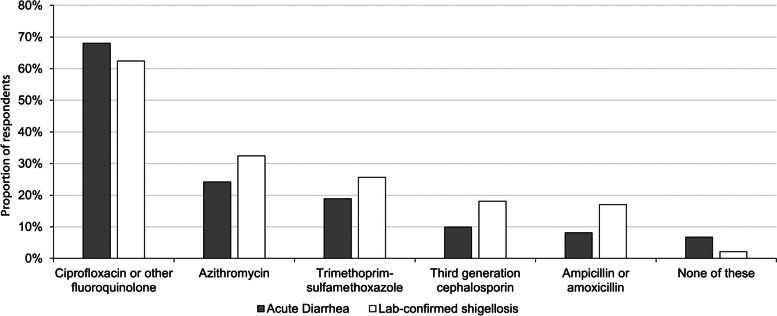
Results: Of 2196 HCP contacted, 1503 responded (68% response rate). Most identified contaminated food (85%) and water (79%) as routes of Shigella transmission; fewer recognized person-to-person contact (40%) and sexual activity (18%). Men who have sex with men (MSM) were identified as being at risk for shigellosis by 35% of respondents. Most reported counseling patients to wash hands (86%) and avoid food preparation (77%) when ill with shigellosis; 29% reported recommending avoiding sex. Many HCP reported treating shigellosis empirically with ciprofloxacin (62%) and azithromycin (32%), and 29% reported using AST to guide treatment.
Conclusions: We identified several gaps in shigellosis knowledge among HCP including MSM as a risk group, person-to-person transmission, and appropriate antibiotic use. Improving HCP education could prevent the spread of shigellosis, including drug-resistant infections, among vulnerable populations.
Keywords: Health care provider education; Shigella; Transmission.
© 2023. This is a U.S. Government work and not under copyright protection in the US; foreign copyright protection may apply.
Conflict of interest statement
The authors whose names are listed on this manuscript certify that they have no affiliations with any organization with a direct or indirect financial interest in the subject matter discussed in the manuscript.
Figures
References
-
- Centers for Disease Control and Prevention (CDC). Information for Healthcare Professionals (Shigella-Shigellosis). 2021. https://www.cdc.gov/shigella/audience-medical-professionals.html.
-
- Centers for Disease Control and Prevention (CDC). National Outbreak Reporting System Dashboard Atlanta, GA: U.S. Department of Health and Human Services, CDC. 2021. www.n.cdc.gov/norsdashboard.
-
- Centers for Disease Control and Prevention (CDC). National Enteric Disease Surveillance: Shigella Annual Report, 2016. Centers for Disease Control and Prevention. 2018. https://www.cdc.gov/nationalsurveillance/pdfs/LEDS-Shig-2016-REPORT-508.pdf.
MeSH terms
Substances
LinkOut - more resources
Full Text Sources
Miscellaneous