Identification of an unusual cluster of human granulocytic anaplasmosis in the Estrie region, Québec, Canada in 2021
- PMID: 38090114
- PMCID: PMC10712899
- DOI: 10.14745/ccdr.v48i05a02
Identification of an unusual cluster of human granulocytic anaplasmosis in the Estrie region, Québec, Canada in 2021
Abstract
Background: Human granulocytic anaplasmosis (HGA) is a potentially severe tick-borne infection caused by the bacterium Anaplasma phagocytophilum (A. phagocytophilum) of the genus Rickettsia. Here, we describe the epidemiological and clinical characteristics of an unusual cluster of HGA cases detected in the Estrie region in Québec, Canada, during the 2021 transmission season.
Methods: Confirmed cases of HGA were defined as individuals with typical clinical manifestations and a positive polymerase chain reaction assay. The cases were interviewed using a structured questionnaire and clinical data was obtained from medical records.
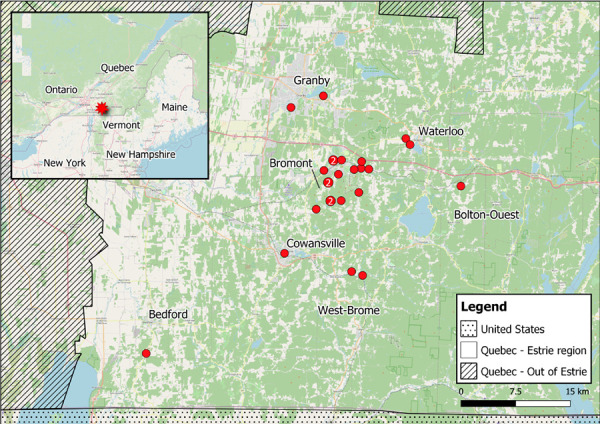
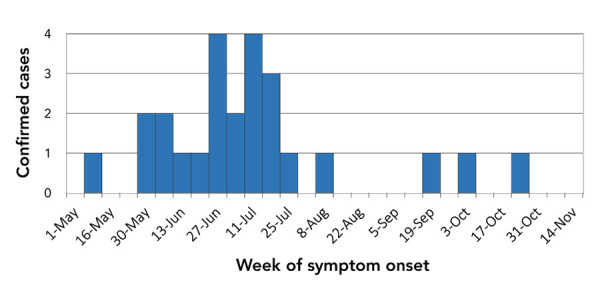
Results: A total of 25 confirmed cases were identified during the 2021 transmission season, thus constituting the largest known cluster of HGA in Canada. The most common symptoms reported were fever, fatigue and headaches. Laboratory investigations found that 20 (80%) of the patients had thrombocytopenia and 18 (72%) had leukopenia at presentation. Almost half of the patients required hospitalization (n=11, 44%), with a median duration of four days (interquartile range [IQR] 2.5-5 days), including one patient who required intensive care. No deaths were recorded during the study. Epidemiological investigation found that all cases were domestically acquired, and yard maintenance was the most prevalent at-risk activity identified. Only seven (28%) cases had been aware of a tick bite in the previous two weeks.
Conclusion: Detection of this unusual cluster of HGA cases provides further evidence that A. phagocytophilum may now be established along the southern border of Québec. Clinicians should consider HGA when assessing patients with typical symptoms and recent exposure to high-risk environments for tick bite.
Keywords: :Anaplasma phagocytophilum; human granulocytic anaplasmosis; tick-borne disease; zoonosis.
Conflict of interest statement
Competing interests: None.
Figures
References
-
- Dumler JS, Walker DH. Ehrlichia chaffeensis (Human Monocytotropic Ehrlichiosis), Anaplasma phagocytophilum (Human Granulocytotropic Anaplasmosis), and Other Anaplasmataceae. Mandell, Douglas, and Bennett’s Principles and Practice of Infectious Diseases. 2014;2:2227-33.e3. http://www.scopus.com/inward/record.url?scp=84944627061&partnerID=8YFLogxK
-
- Center for Disease Control and Prevention. Anaplasmosis: Epidemiology and Statistics. Atlanta (GA): CDC; 2021 (accessed 2022-01-25). https://www.cdc.gov/anaplasmosis/stats/index.html
-
- Government of Manitoba. Manitoba Health. Tick-Borne Diseases (accessed 2022-01-25). https://www.gov.mb.ca/health/publichealth/cdc/tickborne/index.html