


#HowNotToDoPatientEngagement: the engaging with purpose patient engagement framework based on a twitter analysis of community perspectives on patient engagement
- PMID: 38093323
- PMCID: PMC10717861
- DOI: 10.1186/s40900-023-00527-1
#HowNotToDoPatientEngagement: the engaging with purpose patient engagement framework based on a twitter analysis of community perspectives on patient engagement
Abstract
Background: Evaluation of patient engagement practices are frequently researcher-driven, researcher-funded, and asymmetric in power dynamics. Little to no literature on patient experiences in patient engagement exist that is are not framed by institutionally-driven research inquiries (i.e., from the lens of a research team lead, or healthcare administrative setting). Understanding these perspectives can help us understand: (i)what matters to patients when they are engaged in research; (ii)why it matters to them, and(iii) how to improve patient engagement practices, so that the needs and priorities of patients are consistently met.
Methods: This is a patient partner-initiated study. Study authors (including patient partners) conducted a conventional and summative content analysis of textual data retrieved from a highly engaged conversation on Twitter regarding the hashtags #HowNotToDoPatientEngagement and #HowToDoPatientEngagement posted between February 2018 to June 2021. Twitter is a microblogging platform that allows for free-flowing discussions between users not pre-bound by specific community groupings (like within that of Facebook).
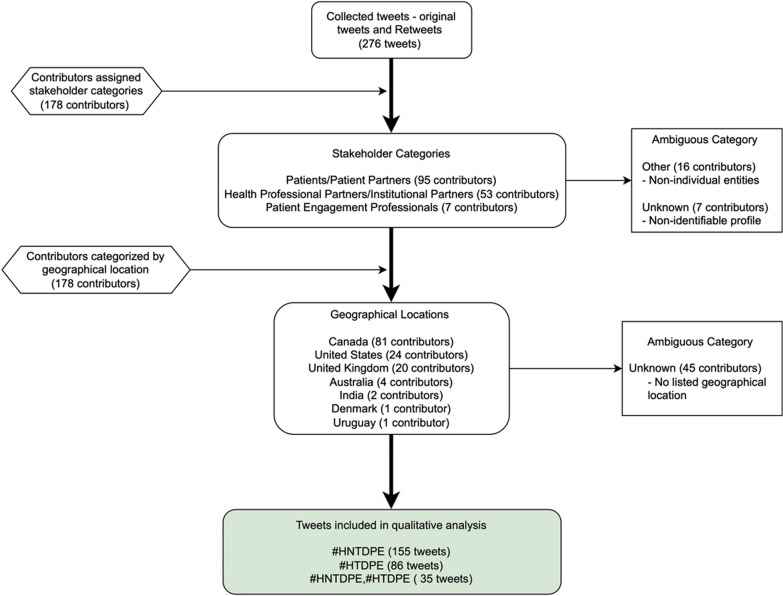
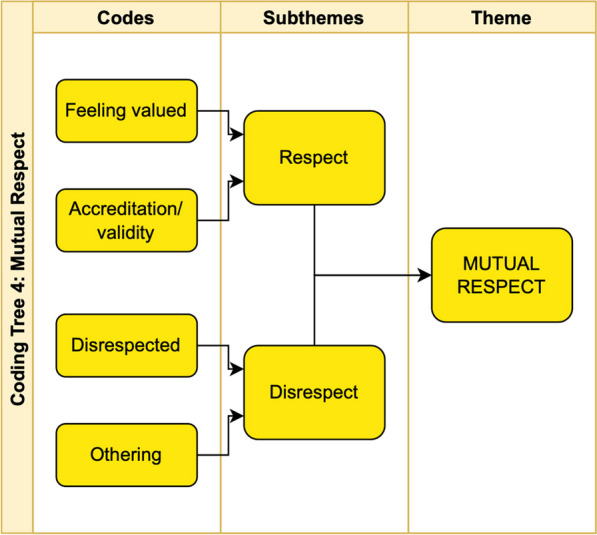
Results: A total of 276 tweets were retrieved from 178 separate contributors across seven geographical locations. Four stakeholder groups were identified. We generated 24 codes, nine subthemes and five overarching themes: respect, support, collaboration, inclusivity and impact. Four of these themes are closely aligned with the Strategy for Patient Oriented (SPOR) Patient Engagement framework. We identify impact as a separate and new theme.
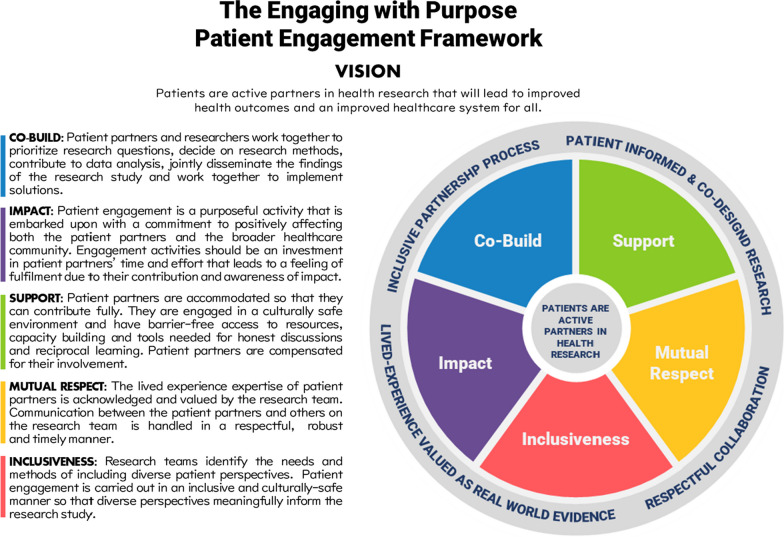
Interpretation: Based on our findings we offer the Engaging with Purpose Patient Engagement Framework that defines and describes respect, support, collaboration, inclusivity and impact as five key pillars of meaningful patient engagement.
Keywords: Framework; Patient advisory; Patient engagement; Patient engagement framework; Patient perspective.
Plain language summary
Patient engagement in research is an important aspect of healthcare, but most studies on the topic are driven by researchers and healthcare settings. We wanted to understand patient experiences of patient engagement from the lens of patient partners that occurred outside the traditional norms of evaluating such engagements. To do this, we analyzed data from Twitter, a platform where users freely share their thoughts and opinions. Posts that included the hashtags #HowNotToDoPatientEngagement and #HowToDoPatientEngagement were of focus because they resonated with members of the online patient partner community who wanted to improve the current state of patient partnership. We identified 276 tweets from 178 contributors across seven geographic locations. Five themes emerged from the study: respect, support, collaboration, inclusivity, and impact which led to the development of the Engaging with Purpose Patient Engagement Framework. This framework highlights respect, support, collaboration, inclusivity, and impact as the five essential pillars of meaningful patient engagement in research. By understanding and implementing these pillars, researchers and institutions can improve patient engagement practices and ensure that the needs and priorities of patients are effectively addressed.
© 2023. The Author(s).
Conflict of interest statement
The authors have no conflicts of interest to declare.
Figures
References
-
- Government of Canada CI of HR. Strategy for Patient-Oriented Research - Patient Engagement Framework - CIHR [Internet]. 2014 [cited 2022 Jul 9]. https://cihr-irsc.gc.ca/e/48413.html#a7
-
- Government of Canada CI of HR. Strategy for Patient-Oriented Research [Internet]. 2018 [cited 2023 Jan 14]. https://cihr-irsc.gc.ca/e/41204.html
-
- Harrison JD, Anderson WG, Fagan M, Robinson E, Schnipper J, Symczak G, et al. Patient and family advisory councils (PFACs): Identifying challenges and solutions to support engagement in research. Patient Patient Cent Outcomes Res. 2018;11(4):413–423. doi: 10.1007/s40271-018-0298-4. - DOI - PMC - PubMed
Grants and funding
LinkOut - more resources
Full Text Sources
Miscellaneous
