


Development and internal validation of a clinical prediction model for spontaneous abortion risk in early pregnancy
- PMID: 38103265
- PMCID: PMC10770515
- DOI: 10.1016/j.clinsp.2023.100318
Development and internal validation of a clinical prediction model for spontaneous abortion risk in early pregnancy
Abstract
Objective: This study aimed to develop and internally validate a prediction model for estimating the risk of spontaneous abortion in early pregnancy.
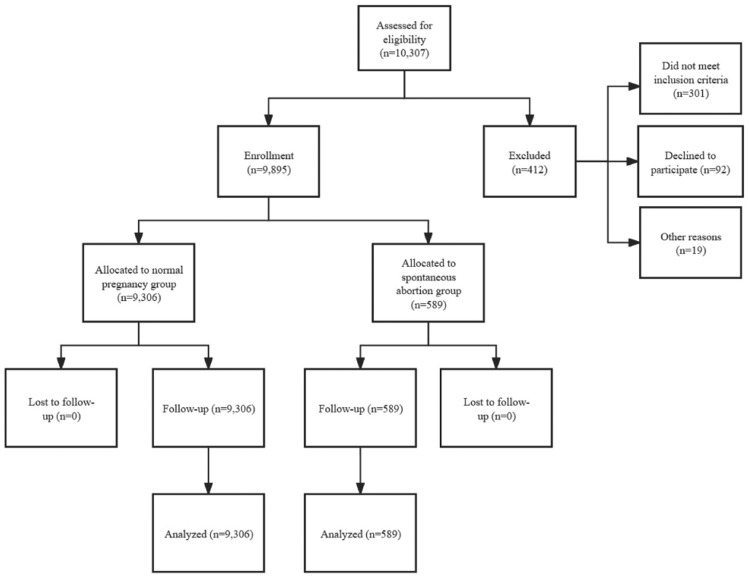
Methods: This prospective cohort study included 9,895 pregnant women who received prenatal care at a maternal health facility in China from January 2021 to December 2022. Data on demographics, medical history, lifestyle factors, and mental health were collected. A multivariable logistic regression analysis was performed to develop the prediction model with spontaneous abortion as the outcome. The model was internally validated using bootstrapping techniques, and its discrimination and calibration were assessed.
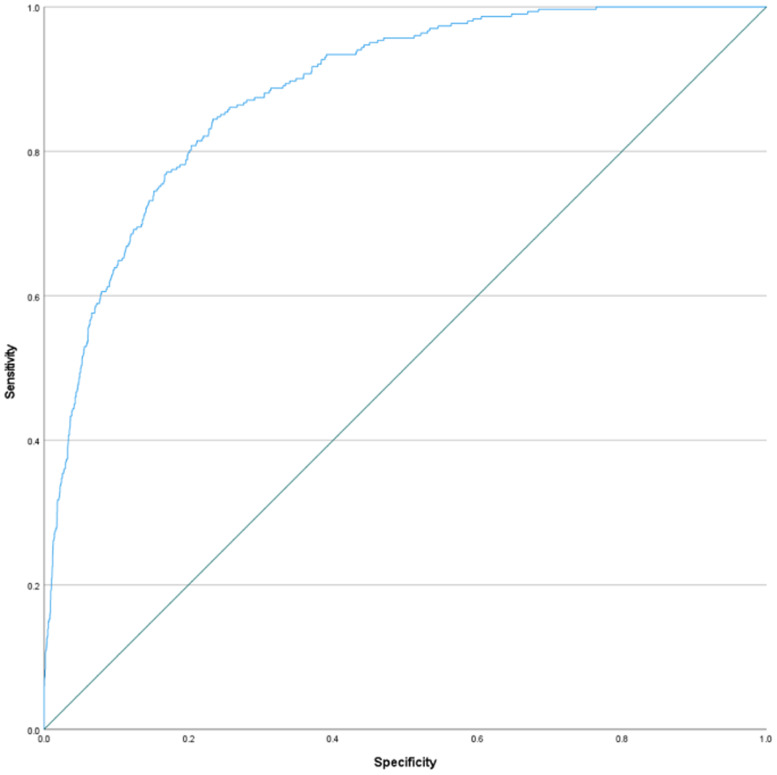
Results: The spontaneous abortion rate was 5.95% (589/9,895) 1. The final prediction model included nine variables: maternal age, history of embryonic arrest, thyroid dysfunction, polycystic ovary syndrome, assisted reproduction, exposure to pollution, recent home renovation, depression score, and stress score 1. The model showed good discrimination with a C-statistic of 0.88 (95% CI 0.87‒0.90) 1, and its calibration was adequate based on the Hosmer-Lemeshow test (p = 0.27).
Conclusions: The prediction model demonstrated good performance in estimating spontaneous abortion risk in early pregnancy based on demographic, clinical, and psychosocial factors. Further external validation is recommended before clinical application.
Keywords: COVID-19; Prediction model; Prospective study; Risk factors; Spontaneous abortion.
Copyright © 2023 HCFMUSP. Published by Elsevier España, S.L.U. All rights reserved.
Conflict of interest statement
Declaration of Competing Interest The authors declare no conflicts of interest.
Figures
References
-
- Quenby S, Gallos ID, Dhillon-Smith RK, Podesek M, Stephenson MD, Fisher J, et al. Miscarriage matters: the epidemiological, physical, psychological, and economic costs of early pregnancy loss. Lancet. 2021;397(10285):1658–1667. - PubMed
-
- Hu C-Y, Yang X-J, Hua X-G, Jiang W, Huang K, Chen H-B, et al. Risk factors for spontaneous abortion from a prevention perspective in rural China: a population-based follow-up study. J Matern Fetal Neonatal Med. 2021;34(16):2583–2591. - PubMed
-
- Consensus of Chinese experts on the diagnosis and treatment of spontaneous abortion Chinese. J Pract Gynecol Obs. 2020;36(11):1082–1090.
-
- Andersen LB, Jørgensen JS, Jensen TK, et al. Vitamin D insufficiency is associated with increased risk of first-trimester miscarriage in the Odense child cohort. Am J Clin Nutr. 2015;102(3):633–638. - PubMed
Publication types
MeSH terms
LinkOut - more resources
Full Text Sources
Medical
