


Battle of the biopsies: Role of tissue and liquid biopsy in hepatocellular carcinoma
- PMID: 38104635
- PMCID: PMC10923008
- DOI: 10.1016/j.jhep.2023.11.030
Battle of the biopsies: Role of tissue and liquid biopsy in hepatocellular carcinoma
Abstract
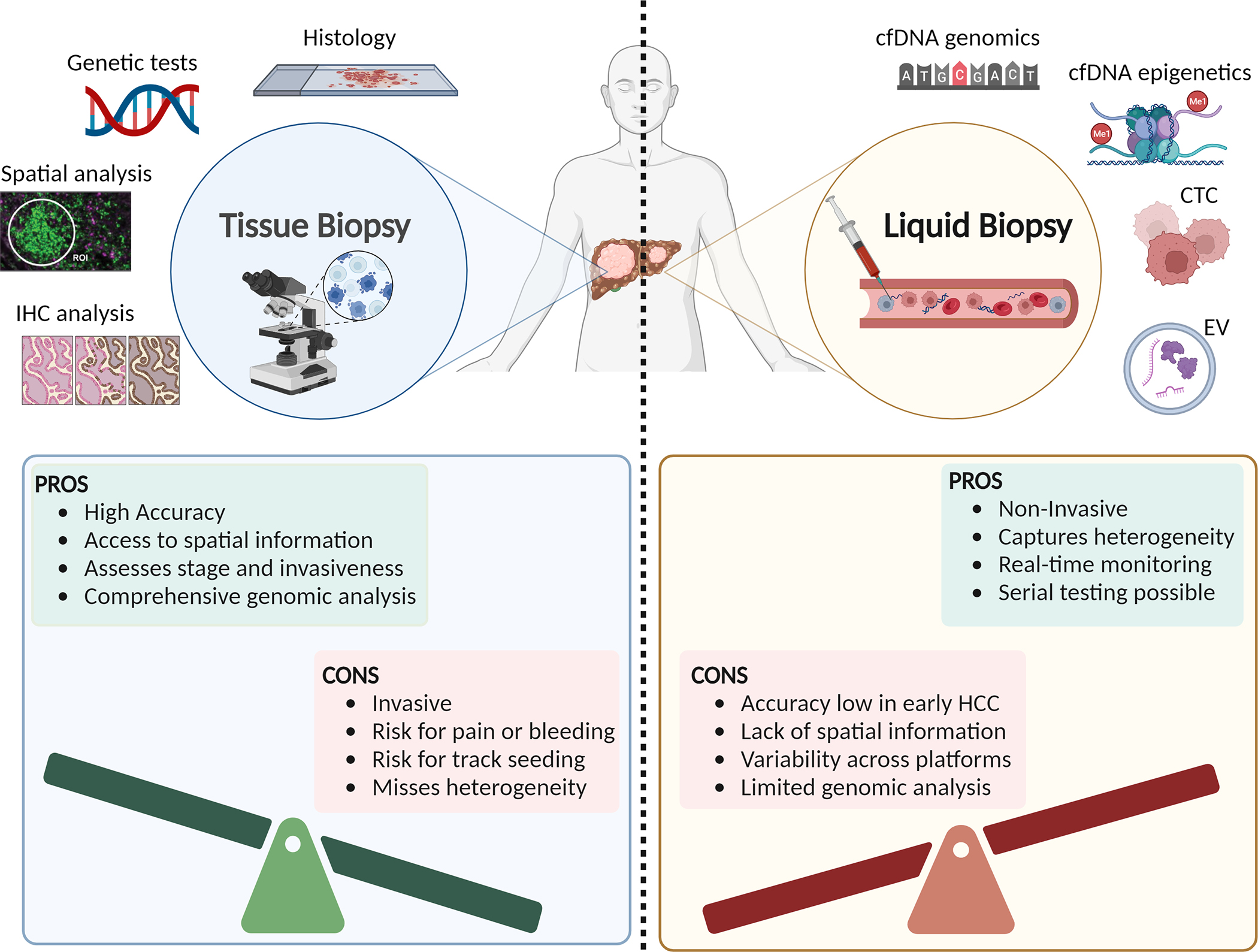
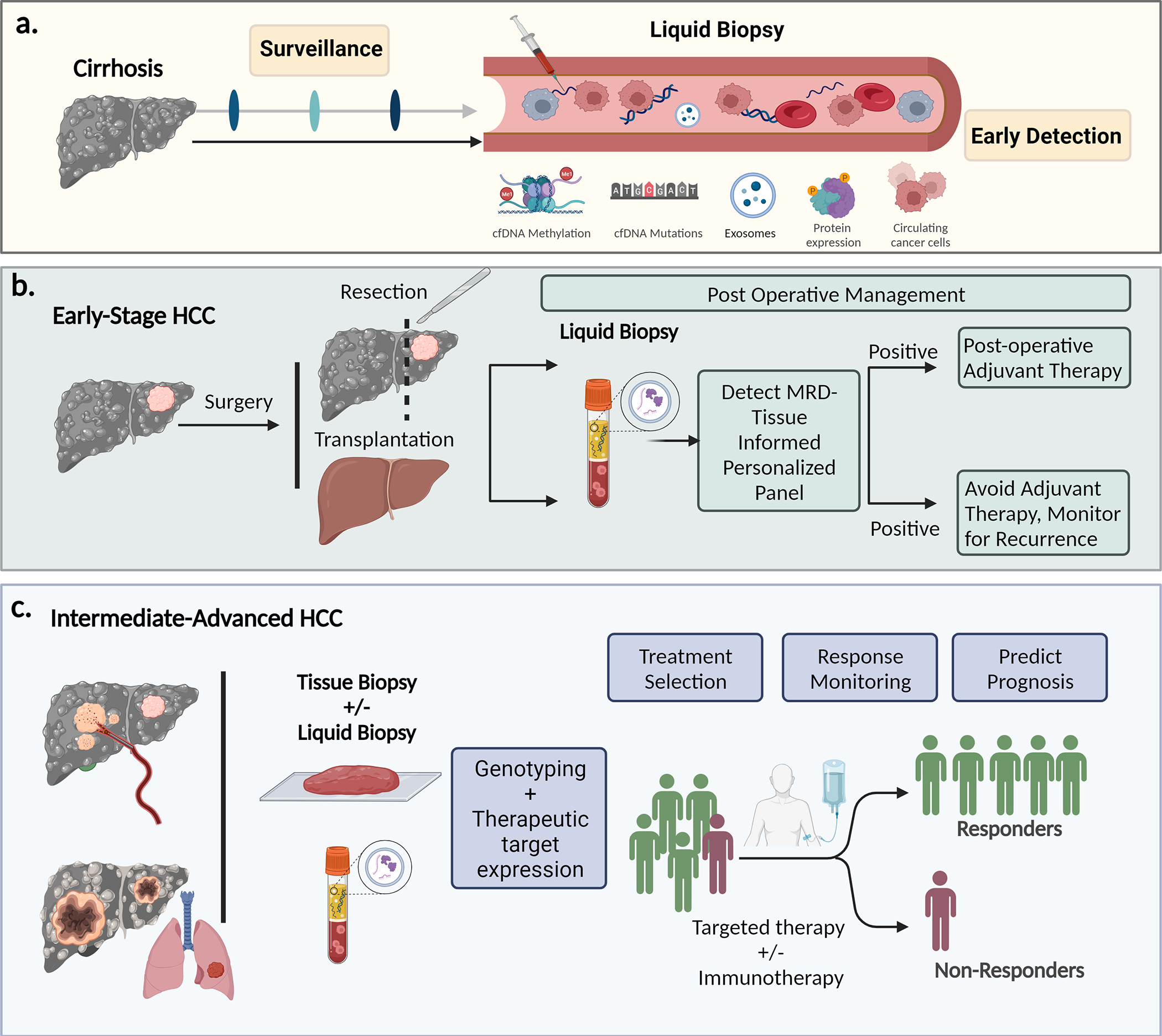
The diagnosis and management of hepatocellular carcinoma (HCC) have improved significantly in recent years. With the introduction of immunotherapy-based combination therapy, there has been a notable expansion in treatment options for patients with unresectable HCC. Simultaneously, innovative molecular tests for early detection and management of HCC are emerging. This progress prompts a key question: as liquid biopsy techniques rise in prominence, will they replace traditional tissue biopsies, or will both techniques remain relevant? Given the ongoing challenges of early HCC detection, including issues with ultrasound sensitivity, accessibility, and patient adherence to surveillance, the evolution of diagnostic techniques is more relevant than ever. Furthermore, the accurate stratification of HCC is limited by the absence of reliable biomarkers which can predict response to therapies. While the advantages of molecular diagnostics are evident, their potential has not yet been fully harnessed, largely because tissue biopsies are not routinely performed for HCC. Liquid biopsies, analysing components such as circulating tumour cells, DNA, and extracellular vesicles, provide a promising alternative, though they are still associated with challenges related to sensitivity, cost, and accessibility. The early results from multi-analyte liquid biopsy panels are promising and suggest they could play a transformative role in HCC detection and management; however, comprehensive clinical validation is still ongoing. In this review, we explore the challenges and potential of both tissue and liquid biopsy, highlighting that these diagnostic methods, while distinct in their approaches, are set to jointly reshape the future of HCC management.
Keywords: HCC; cfDNA; extracellular vesicles; liquid biopsy; liver cancer; precision medicine; tissue biopsy.
Copyright © 2023 European Association for the Study of the Liver. Published by Elsevier B.V. All rights reserved.
Conflict of interest statement
Conflict of interest
The authors of this study declare that they do not have any conflict of interest.
Please refer to the accompanying ICMJE disclosure forms for further details.
Figures
References
Publication types
MeSH terms
Substances
Grants and funding
LinkOut - more resources
Full Text Sources
Medical
