


Self-collection of samples for group B streptococcus testing during pregnancy: a systematic review and meta-analysis
- PMID: 38110910
- PMCID: PMC10729404
- DOI: 10.1186/s12916-023-03186-x
Self-collection of samples for group B streptococcus testing during pregnancy: a systematic review and meta-analysis
Abstract
Background: Sample self-collection for reproductive tract infection diagnosis has been found to offer greater convenience, privacy, autonomy, and expanded access to testing in non-pregnant adults. This review aimed to determine whether sample self-collection is as accurate as provider-collection for detection of group B streptococcus colonisation in pregnancy and whether a strategy of self-collection compared to provider-collection might improve maternal and neonatal health outcomes.
Methods: We searched CINAHL Plus, Medline, EMBASE, Maternity and Infant Care Database, Cochrane Central Register of Controlled Trials, and Cochrane Database of Systematic Reviews in June 2022. Eligible studies compared self-collected and provider-collected samples taken from the same participants or participants randomised to either self-collection or provider-collection for reproductive tract infection testing using the same test and testing method in pregnant individuals. We included trials and observational studies. Reviewers assessed risk of bias using the QUADAS-2 checklist and independently extracted data. Sensitivity and specificity for group B streptococcus colonisation of self-collected compared to provider-collected samples were pooled using a bivariate, random-effects, meta-analytic model. This review was registered with PROSPERO (CRD42023396573).
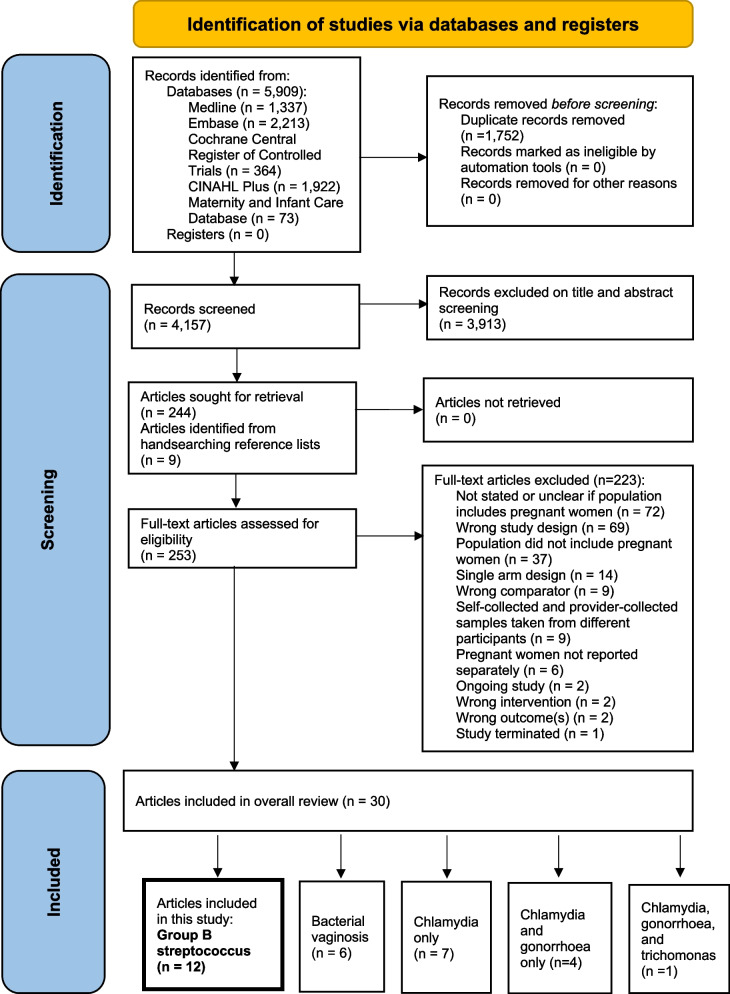
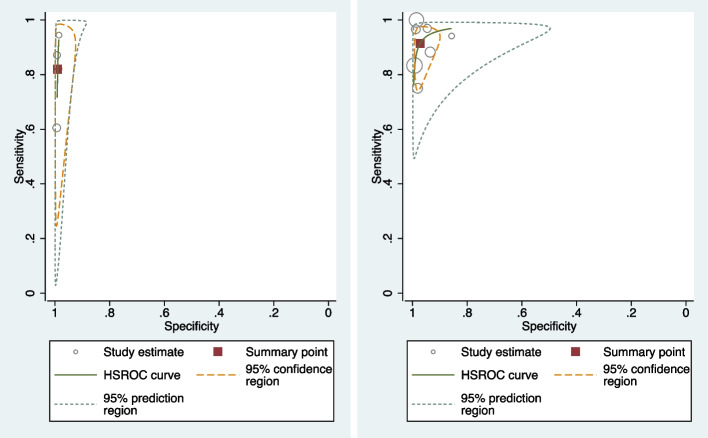
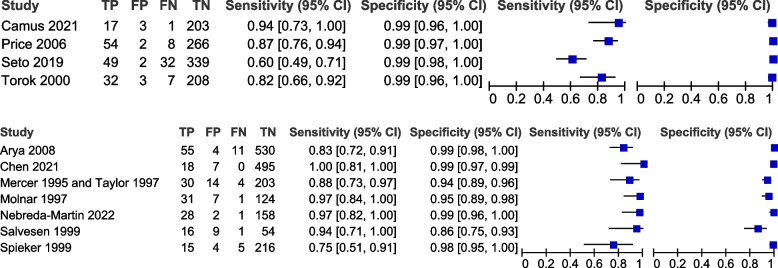
Results: The search identified 5909 references, of which eleven diagnostic accuracy group B streptococcus studies were included (n = 3269 participants). No studies assessed the effects of self-collection in pregnancy on health outcomes. All studies had high or unclear risk of bias. Pooled sensitivities of self-collected samples for group B streptococcus detection were 82% (95% CI: 66-91%; I2 = 68.85%) in four trials (n = 1226) and 91% (95% CI: 83-96%; I2 = 37.38%) in seven non-randomised studies (n = 2043). Pooled specificities were 99% (95% CI: 98-99%; I2 = 12.08%) and 97% (95% CI: 94-99%; I2 = 72.50%), respectively.
Conclusions: Self-collected samples for group B streptococcus detection in pregnancy had high specificity compared to provider-collection, but lower sensitivity, particularly for included trials. Studies investigating the effect of self-collection on health outcomes, and further higher quality trials comparing accuracy of self-collection to provider-collection, are required.
Keywords: Antenatal; Diagnostic accuracy; GBS; Group B strep; Group B streptococcal infection; Group B streptococcus; Pregnancy; Self-care; Self-care intervention; Self-sampling.
© 2023. The Author(s).
Conflict of interest statement
The authors declare that they have no competing interests.
Figures
References
-
- World Health Organization . WHO recommendations for prevention and treatment of maternal peripartum infections. Geneva: World Health Organization; 2015. - PubMed
-
- Hasperhoven GF, Al-Nasiry S, Bekker V, Villamor E, Kramer B. Universal screening versus risk-based protocols for antibiotic prophylaxis during childbirth to prevent early-onset group B streptococcal disease: a systematic review and meta-analysis. BJOG. 2020;127(6):680–691. doi: 10.1111/1471-0528.16085. - DOI - PMC - PubMed
Publication types
MeSH terms
LinkOut - more resources
Full Text Sources
