


Physician experiences with teleconsultations amidst conflict in Sudan
- PMID: 38114741
- PMCID: PMC10730898
- DOI: 10.1038/s41598-023-49967-5
Physician experiences with teleconsultations amidst conflict in Sudan
Abstract
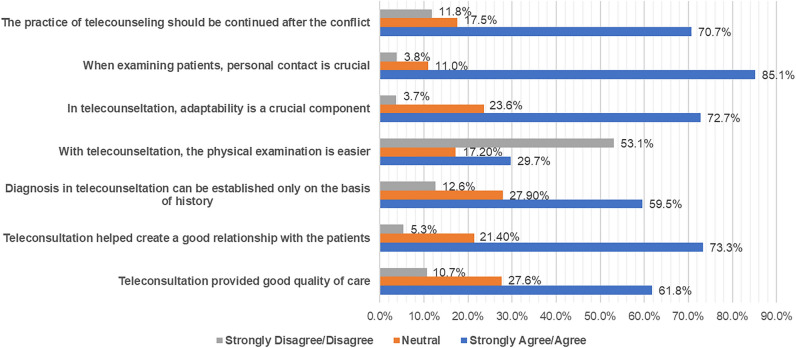
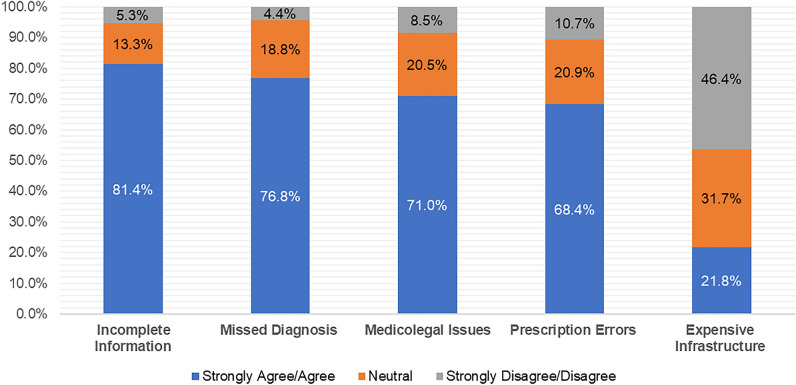
The current conflict in Sudan severely hinders the accessibility of health services across the country. To address this, several initiatives were proposed including offering services using teleconsultations. This study aimed to assess Sudanese doctors' teleconsultation experience, perception, and concerns during the recent conflict. This cross-sectional survey focused on Sudanese medical officers, residents, specialists, and consultants living inside or outside the country having a practice license from the Sudan Medical Council and conducting teleconsultations with Sudanese patients during the conflict period. The questionnaire was distributed to personal and professional contacts and via social media platforms in the English language among doctors who provided teleconsultation during the conflict. Data analysis was performed using the Statistical Package for Social Sciences software version 26. The study enrolled 2463 clinicians from 17 different specialties, and females represented more than half the sample (56.8%). Internal medicine was the most frequent specialty (36.1%) and the majority (68.7%) of clinicians had less than 5 years of work experience. Voice call was the most frequent platform (50.1%) used for teleconsultation during the conflict and had the highest convenience score (p < 0.01), whereas messaging platforms had the lowest score. Most clinicians (73.3%) agreed that teleconsultations created a trusted patient-physician relationship and provided good-quality care (61.8%). However, 85.1% highlighted the importance of physical touch in medical practice. Clinicians were concerned that incomplete information (81.4%), missed diagnosis (76.8%), medicolegal problems (71.0%), and prescription errors (68.4%) could arise with teleconsultations. Most respondents (70.7%) emphasized the importance of continuing to offer teleconsultation even after the war abated. In conclusion, physicians who participated in the current study agreed that teleconsultation provided quality care even in this dire crisis in Sudan. Based on our study findings, we recommend upscaling telemedicine interventions including teleconsultations at the national level. This would require unified coordination efforts of a wide mix of stakeholders to address concerns identified in the current study.
© 2023. The Author(s).
Conflict of interest statement
The authors declare no competing interests.
Figures
References
-
- Ryu, S. Telemedicine: Opportunities and Developments in Member States: Report on the Second Global Survey on eHealth 2009 (Global Observatory for eHealth Series, Volume 2), Vol. 18, 153–5 (Healthcare Informatics Research, 2012).
-
- Kamal SA, Shafiq M, Kakria P. Investigating acceptance of telemedicine services through an extended technology acceptance model (TAM) Technol. Soc. 2020;60:101212. doi: 10.1016/j.techsoc.2019.101212. - DOI
MeSH terms
LinkOut - more resources
Full Text Sources
Medical
Miscellaneous
