


The brain-liver cholinergic anti-inflammatory pathway and viral infections
- PMID: 38115148
- PMCID: PMC10731847
- DOI: 10.1186/s42234-023-00132-3
The brain-liver cholinergic anti-inflammatory pathway and viral infections
Abstract
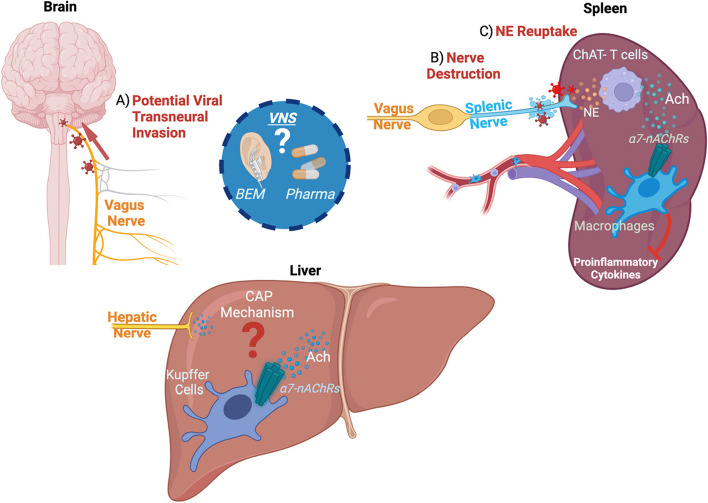
Efferent cholinergic signaling is a critical and targetable source of immunoregulation. The vagus nerve (VN) is the primary source of cholinergic signaling in the body, and partially innervates hepatic functionality through the liver-brain axis. Virus-induced disruption of cholinergic signaling may promote pathogenesis in hepatotropic and neurotropic viruses. Therefore, restoring VN functionality could be a novel therapeutic strategy to alleviate pathogenic inflammation in hepatotropic and neurotropic viral infections alike. In this minireview, we discuss the physiological importance of cholinergic signaling in maintaining liver-brain axis homeostasis. Next, we explore mechanisms by which the VN is perturbed by viral infections, and how non-invasive restoration of cholinergic signaling pathways with bioelectronic medicine (BEM) might ameliorate hepatic inflammation and neuroinflammation in certain viral infections.
Keywords: Bioelectronic medicine; Cholinergic signaling; Liver-brain axis; Vagus nerve; Viral infection.
© 2023. The Author(s).
Conflict of interest statement
The authors have no conflicts of interest to disclose.
No competing interests.
Figures
References
Publication types
LinkOut - more resources
Full Text Sources