


Low body temperature and mortality in critically ill patients with coronary heart disease: a retrospective analysis from MIMIC-IV database
- PMID: 38124189
- PMCID: PMC10731844
- DOI: 10.1186/s40001-023-01584-8
Low body temperature and mortality in critically ill patients with coronary heart disease: a retrospective analysis from MIMIC-IV database
Abstract
Background: This study was aimed to investigate the correlation between low body temperature and outcomes in critically ill patients with coronary heart disease (CHD).
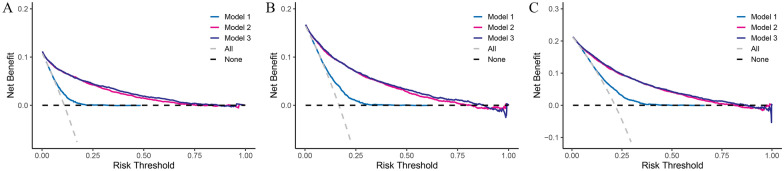
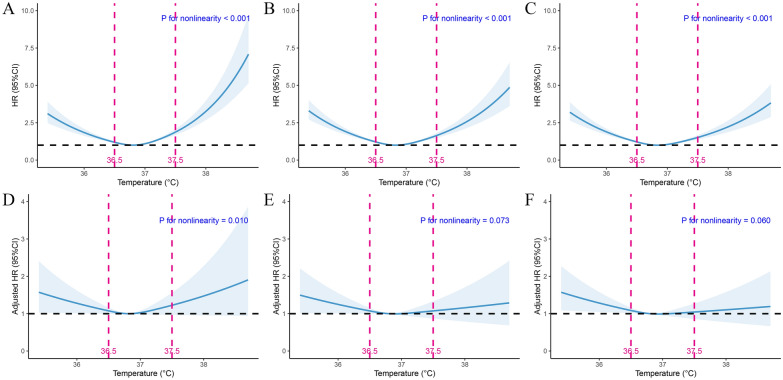
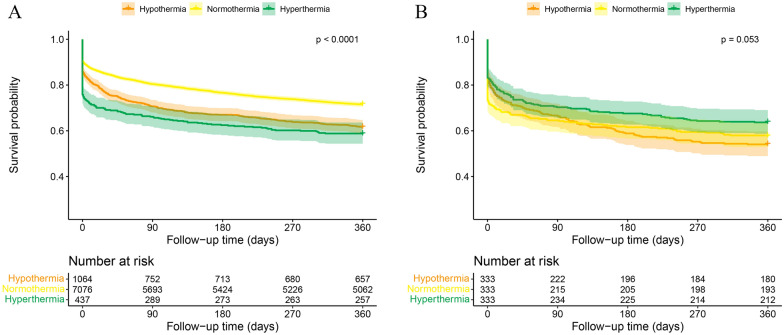
Methods: Participants from the Medical Information Mart for Intensive Care (MIMIC)-IV were divided into three groups (≤ 36.5 ℃, 36.6-37.4 ℃, ≥ 37.5 ℃) in accordance with body temperature measured orally in ICU. In-hospital, 28-day and 90-day mortality were the major outcomes. Multivariable Cox regression, decision curve analysis (DCA), restricted cubic splines (RCS), Kaplan-Meier curves (with or without propensity score matching), and subgroup analyses were used to investigate the association between body temperature and outcomes.
Results: A total of 8577 patients (65% men) were included. The in-hospital, 28-day, 90-day, and 1-year overall mortality rate were 10.9%, 16.7%, 21.5%, and 30.4%, respectively. Multivariable Cox proportional hazards regression analyses indicated that patients with hypothermia compared to the patients with normothermia were at higher risk of in-hospital [adjusted hazard ratios (HR) 1.23, 95% confidence interval (CI) 1.01-1.49], 28-day (1.38, 1.19-1.61), and 90-day (1.36, 1.19-1.56) overall mortality. For every 1 ℃ decrease in body temperature, adjusted survival rates were likely to eliminate 14.6% during the 1-year follow-up. The DCA suggested the applicability of the model 3 in clinical practice and the RCS revealed a consistent higher mortality in hypothermia group.
Conclusions: Low body temperature was associated with increased mortality in critically ill patients with coronary heart disease.
Keywords: Body temperature; Clinical outcome; Coronary heart disease; Intensive care unit.
© 2023. The Author(s).
Conflict of interest statement
The authors declare that they have no competing interests.
Figures
References
MeSH terms
Grants and funding
LinkOut - more resources
Full Text Sources
Medical
