


BLM mutation is associated with increased tumor mutation burden and improved survival after immunotherapy across multiple cancers
- PMID: 38124443
- PMCID: PMC10807622
- DOI: 10.1002/cam4.6716
BLM mutation is associated with increased tumor mutation burden and improved survival after immunotherapy across multiple cancers
Abstract
Background: BLM encodes a RecQ DNA helicase that regulates genomic stability, and its mutations are associated with increased cancer susceptibility. Here, we show a multifaceted role of BLM mutations in tumorigenesis and immunotherapy.
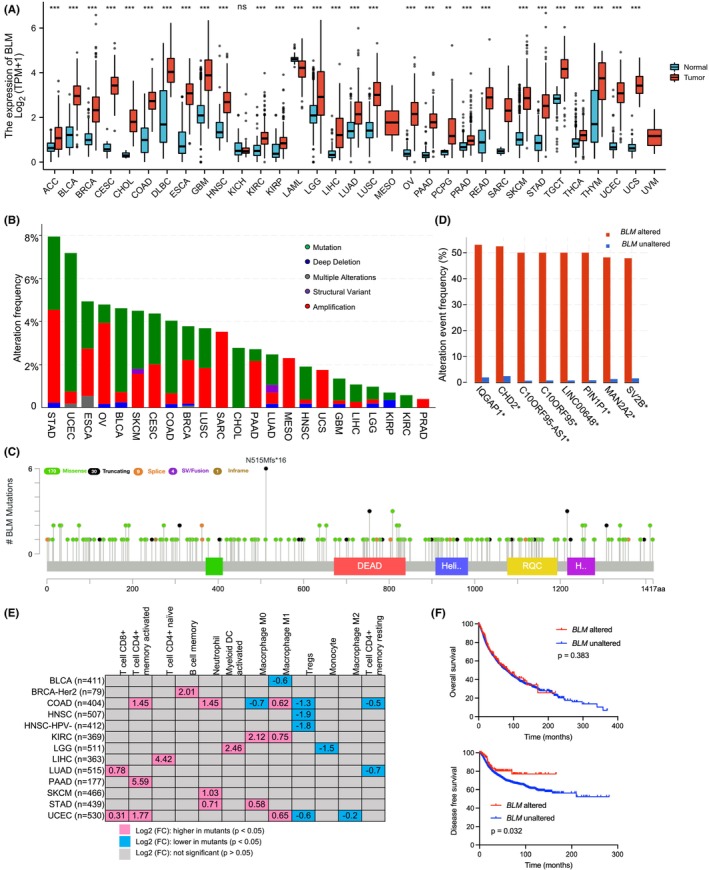
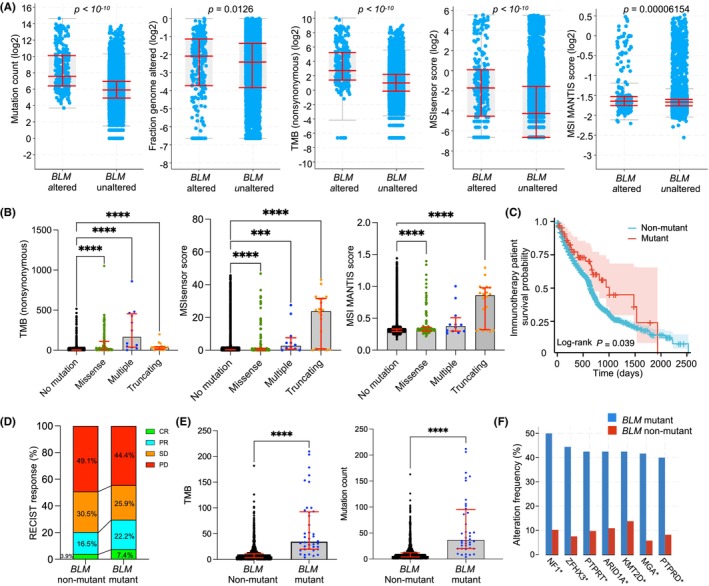
Methods and results: A total of 10,967 cancer samples from the cancer genome atlas database were analyzed, 1.6% of which harbored BLM somatic mutations. BLM mutation was found to be associated with increased tumor mutation burden and more immune-active tumor microenvironment in these patients. Moreover, clinical data of 2785 patients from nine immunotherapy studies were analyzed to study BLM mutations' impact on immunotherapy. Among them, 69 patients harbored BLM mutations, and interestingly, they had significantly higher survival probability than patients without BLM mutations. Cancer patients with BLM mutations had higher complete response and partial response rates, but lower progressive disease rate than BLM nonmutant patients.
Conclusion: Our study shows that BLM mutation is related to improved survival after immunotherapy across multiple cancers.
Keywords: BLM mutation; immunotherapy; survival; tumor mutation burden.
© 2023 The Authors. Cancer Medicine published by John Wiley & Sons Ltd.
Conflict of interest statement
The authors declare no competing interests.
Figures
References
Publication types
MeSH terms
Substances
Grants and funding
LinkOut - more resources
Full Text Sources
Medical
