


Genetic diversity of Mycobacterium tuberculosis isolates from the central, eastern and southeastern Ethiopia
- PMID: 38125463
- PMCID: PMC10731068
- DOI: 10.1016/j.heliyon.2023.e22898
Genetic diversity of Mycobacterium tuberculosis isolates from the central, eastern and southeastern Ethiopia
Abstract
Introduction: The population structure of Mycobacterium tuberculosis complex (MTBC) in Ethiopia is diverse but dominated by Euro-American (Lineage 4) and East-African-Indian (Lineage 3) lineages. The objective of this study was to describe the genetic diversity of MTBC isolates in Central, Eastern and Southeastern Ethiopia.
Methods: A total of 223 MTBC culture isolates obtained from patients referred to Adama and Harar TB reference laboratories were spoligotyped. Demographic and clinical characteristics were collected.
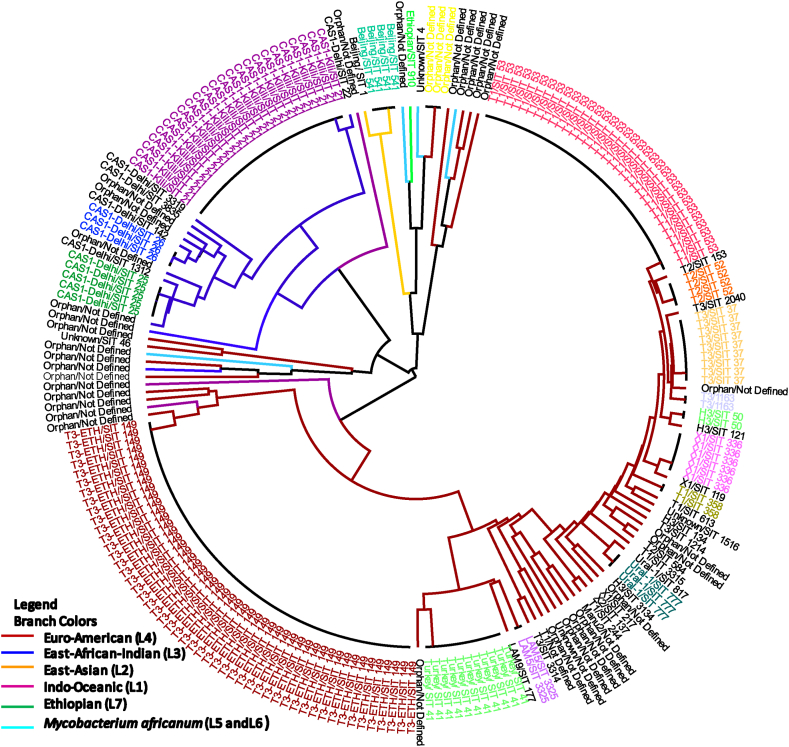
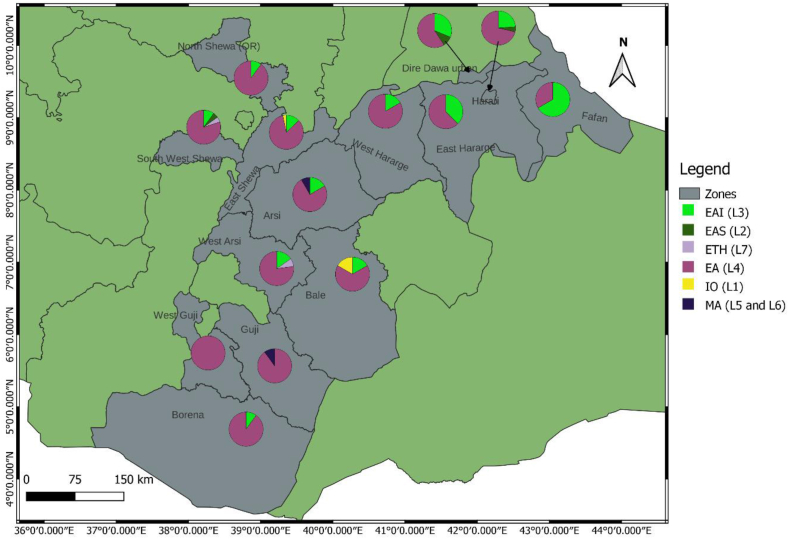
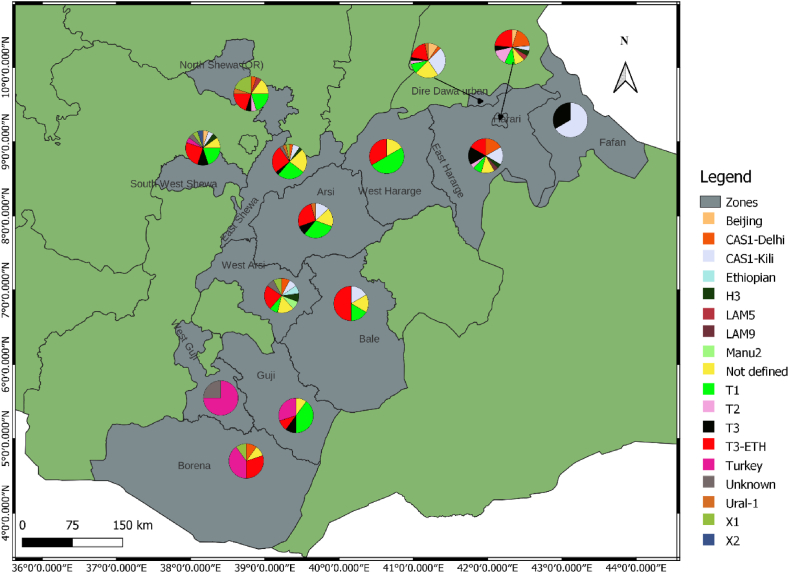
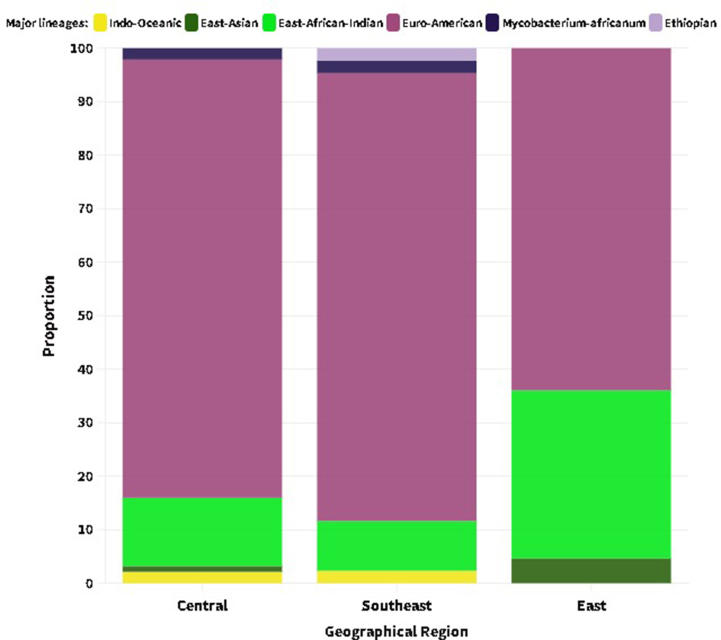
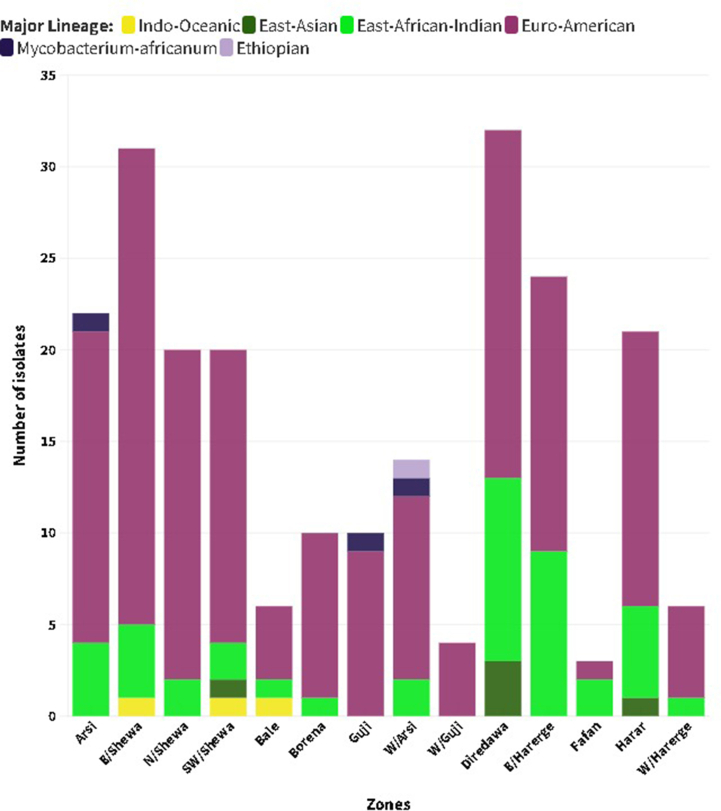
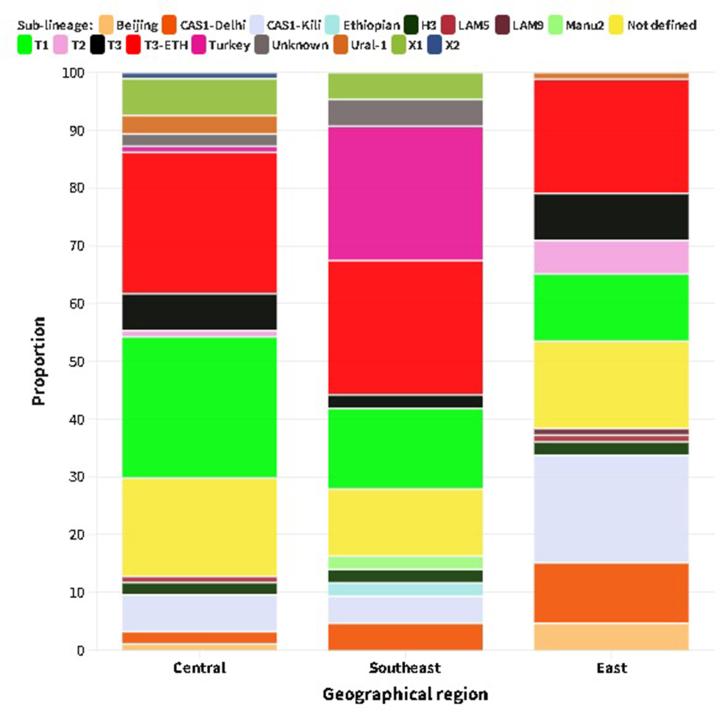
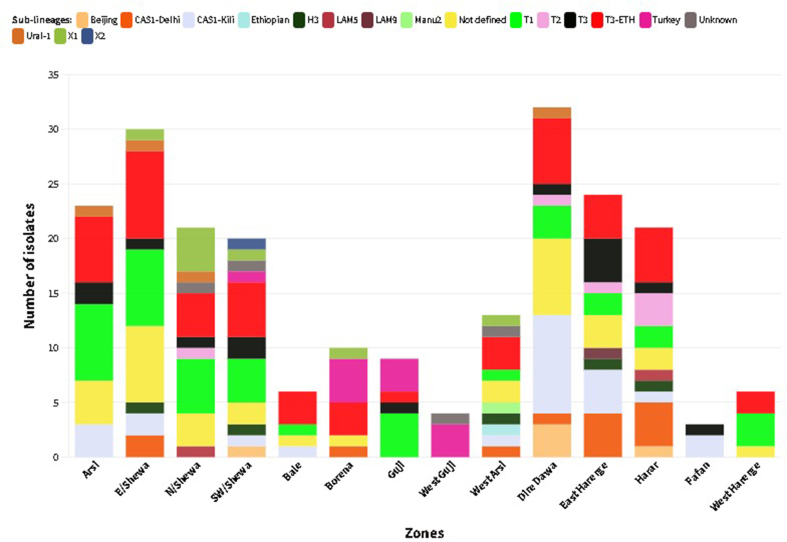
Results: Six major lineages: Euro-American (Lineage 4), East-African-Indian (Lineage 3), East Asian (Lineage 2), Indo-Oceanic (Lineage 1), Mycobacterium africanum (Lineage 5 and Lineage 6) and Ethiopian (Lineage 7) were identified. The majority (94.6 %) of the isolates were Euro-American and East-African-Indian, with proportions of 75.3 % and 19.3 %, respectively. Overall, 77 different spoligotype patterns were identified of which 42 were registered in the SITVIT2 database. Of these, 27 spoligotypes were unique, while 15 were clustered with 2-49 isolates. SIT149/T3_ETH (n = 49), SIT53/T1 (n = 33), SIT21/CAS1_Kili (n = 24) and SIT41/Turkey (n = 11) were the dominant spoligotypes. A rare Beijing spoligotype pattern, SIT541, has also been identified in Eastern Ethiopia. The overall clustering rate of sub-lineages with known SIT was 71.3 %. Age group (25-34) was significantly associated with clustering.
Conclusion: We found a heterogeneous population structure of MTBC dominated by T and CAS families, and the Euro-American lineage. The identification of the Beijing strain, particularly the rare SIT541 spoligotype in Eastern Ethiopia, warrants a heightened surveillance plan, as little is known about this genotype. A large-scale investigation utilizing a tool with superior discriminatory power, such as whole genome sequencing, is necessary to gain a thorough understanding of the genetic diversity of MTBC in the nation, which would help direct the overall control efforts.
Keywords: Ethiopia; Genetic diversity; Lineage; Mycobacterium tuberculosis complex; Spoligotyping; Sub-lineage.
© 2023 The Authors.
Conflict of interest statement
The authors declare that they have no known competing financial interests or personal relationships that could have appeared to influence the work reported in this paper.
Figures
References
-
- World Health Organization . World Health Organization; Geneva: 2021. Global Tuberculosis Report 2021.https://apps.who.int/iris/handle/10665/346387
-
- Brites D., Loiseau C., Menardo F., Borrell S., Boniotti M.B., Warren R., Dippenaar A., Parsons S.D.C., Beisel C., Behr M.A., Fyfe J.A., Coscolla M., Gagneux S. A new phylogenetic framework for the animal-adapted Mycobacterium tuberculosis complex. Front. Microbiol. 2018;9:2820. doi: 10.3389/fmicb.2018.02820. - DOI - PMC - PubMed
LinkOut - more resources
Full Text Sources
Research Materials
