


Hemangiosarcoma in dogs as a potential non-rodent animal model for drug discovery research of angiosarcoma in humans
- PMID: 38130992
- PMCID: PMC10733437
- DOI: 10.3389/fonc.2023.1250766
Hemangiosarcoma in dogs as a potential non-rodent animal model for drug discovery research of angiosarcoma in humans
Abstract
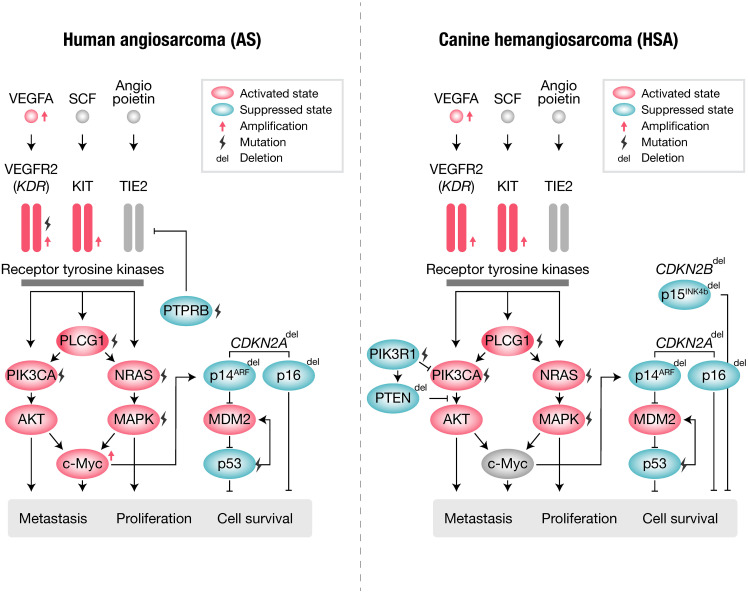
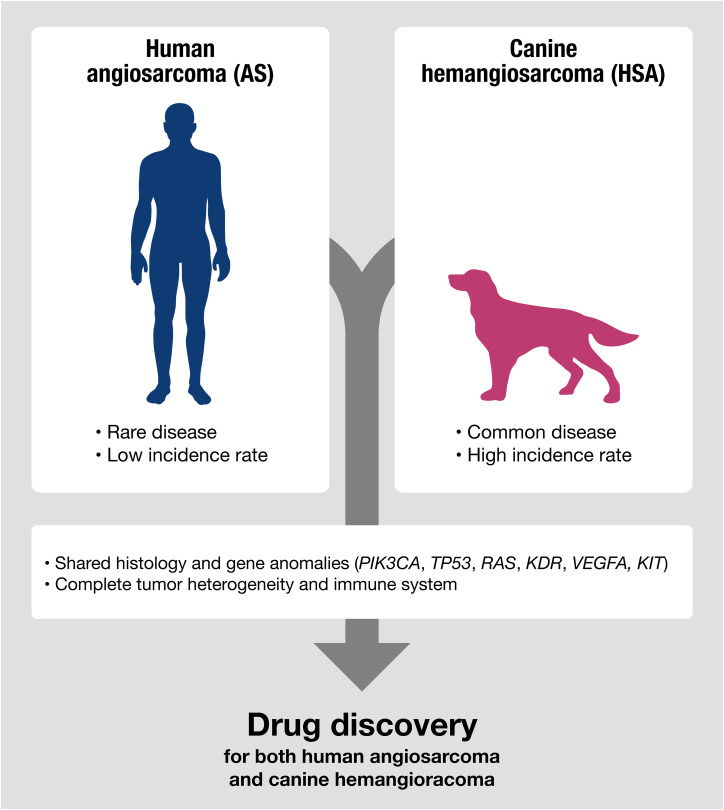
Since the domestication of dogs 10,000 years ago, they have shared their living environment with humans and have co-evolved. The breeding process that dogs have undergone in only a few centuries has led to a significant accumulation of specific genetic alterations that could induce particular diseases in certain breeds. These canine diseases are similar to what is found in humans with several differences; therefore, comparing such diseases occurring in humans and dogs can help discover novel disease mechanisms, pathways, and causal genetic factors. Human angiosarcoma (AS) and canine hemangiosarcoma (HSA), which are sarcomas originating from endothelium, are examples of diseases shared between humans and dogs. They exhibit similar characteristics and clinical behaviors, although with some critical differences resulting from evolution. In this review, we will describe the similarities and differences in terms of clinical and molecular characteristics between human AS and canine HSA, and discuss how these similarities and differences can be applied to advance the treatment of these diseases.
Keywords: angiosarcoma; cancer heterogeneity; drug discovery; hemangiosarcoma; non-conventional animal model.
Copyright © 2023 Heishima, Aketa, Heishima and Kawachi.
Conflict of interest statement
The authors declare that the research was conducted in the absence of any commercial or financial relationships that could be construed as a potential conflict of interest.
Figures
References
-
- Davis SJ, Valla FR. Evidence for domestication of the dog 12,000 years ago in the Natufian of Israel. Nature (1978) 276(5688):608–10. doi: 10.1038/276608a0 - DOI
Publication types
LinkOut - more resources
Full Text Sources
Research Materials
