Review
. 2023 Nov 24;15(1):77-94.
doi: 10.1039/d3sc04580c. eCollection 2023 Dec 20.

Improved transition metal photosensitizers to drive advances in photocatalysis

Affiliations
Review

Improved transition metal photosensitizers to drive advances in photocatalysis

Dooyoung Kim et al. Chem Sci. .

Abstract

To function effectively in a photocatalytic application, a photosensitizer's light absorption, excited-state lifetime, and redox potentials, both in the ground state and excited state, are critically important. The absorption profile is particularly relevant to applications involving solar harvesting, whereas the redox potentials and excited-state lifetimes determine the thermodynamics, kinetics, and quantum yields of photoinduced redox processes. This perspective article focuses on synthetic inorganic and organometallic approaches to optimize these three characteristics of transition-metal based photosensitizers. We include our own work in these areas, which has focused extensively on exceptionally strong cyclometalated iridium photoreductants that enable challenging reductive photoredox transformations on organic substrates, and more recent work which has led to improved solar harvesting in charge-transfer copper(i) chromophores, an emerging class of earth-abundant compounds particularly relevant to solar-energy applications. We also extensively highlight many other complementary strategies for optimizing these parameters and highlight representative examples from the recent literature. It remains a significant challenge to simultaneously optimize all three of these parameters at once, since improvements in one often come at the detriment of the others. These inherent trade-offs and approaches to obviate or circumvent them are discussed throughout.


Conflict of interest statement

There are no conflicts to declare.

Figures

Fig. 1
Fig. 1. Summary of the three aspects of photosensitizer performance that serve as the basis of this perspective article.
Fig. 2
Fig. 2. Summary of heteroleptic Cu(N^N)(NacNacR) complexes and their frontier orbital energy levels. Frontier orbital energies were determined by DFT.
Fig. 3
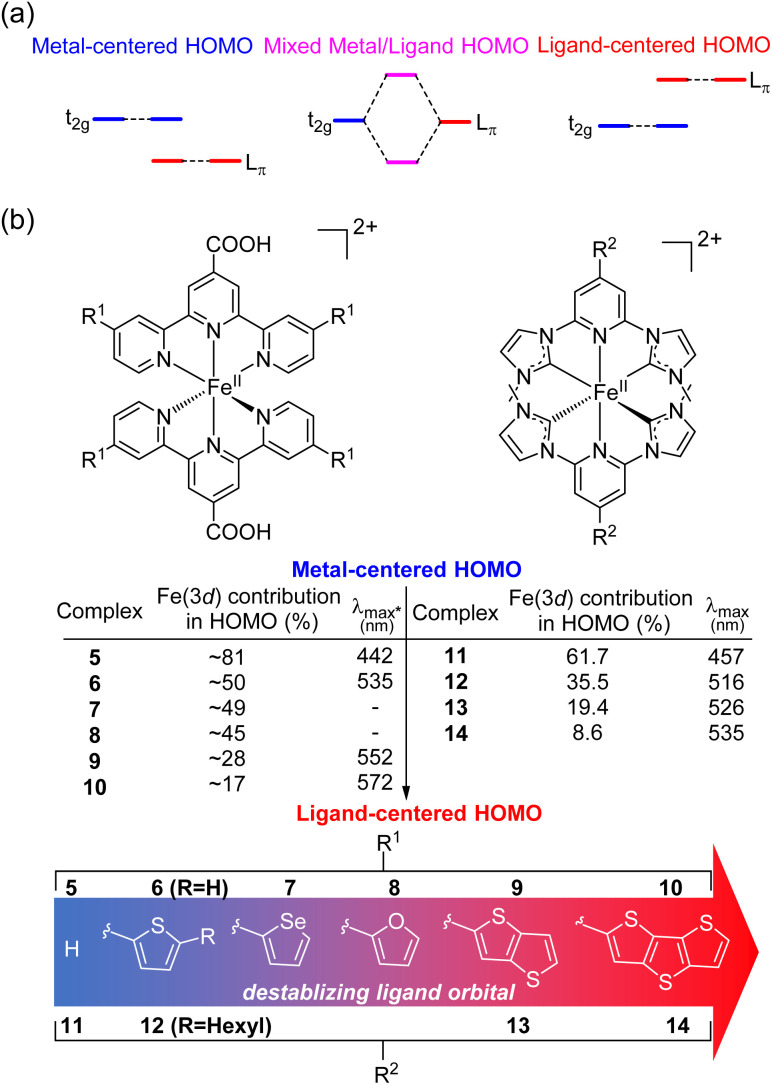
Fig. 3. (a) Simplified HOMO energy levels depicting the “HOMO inversion” strategy. (b) Summary of representative bis(tridentate) iron(ii) complexes, demonstrating the correlation between the substitution of the strong donor group with enhanced conjugation and the resultant absorption wavelength. *The λmax values in the table are the calculated values for complexes 5–10.
Fig. 4
Fig. 4. Photocatalysis via conventional S0 to S1 absorption and spin-forbidden S0 to T1 absorption (ISC = intersystem crossing and IC = internal conversion).
Fig. 5
Fig. 5. The improvement of light absorption via introducing a strong σ-donor ligand into osmium(ii) complexes.
Fig. 6
Fig. 6. Summary of strategies for achieving longer wavelengths in the activation of photoreactions through multiphoton absorption. (a) Two-photon absorption. (b) Dual photoredox catalysis. (c) Triplet–triplet annihilation upconversion. (PS = photosensitizer, Sen = sensitizer, An = annihilator, ISC = intersystem crossing, and IC = internal conversion, and PS1 and PS2 can be the same or different photosensitizers).
Fig. 7
Fig. 7. The improvement of the TTA cross section of tungsten complexes via modifications to aryl isocyanide ligands.
Fig. 8
Fig. 8. The control of output light via changing the sensitizers and annihilators. (a) NIR to orange upconversion. (b) NIR to blue upconversion. (c) NIR to violet upconversion.
Fig. 9
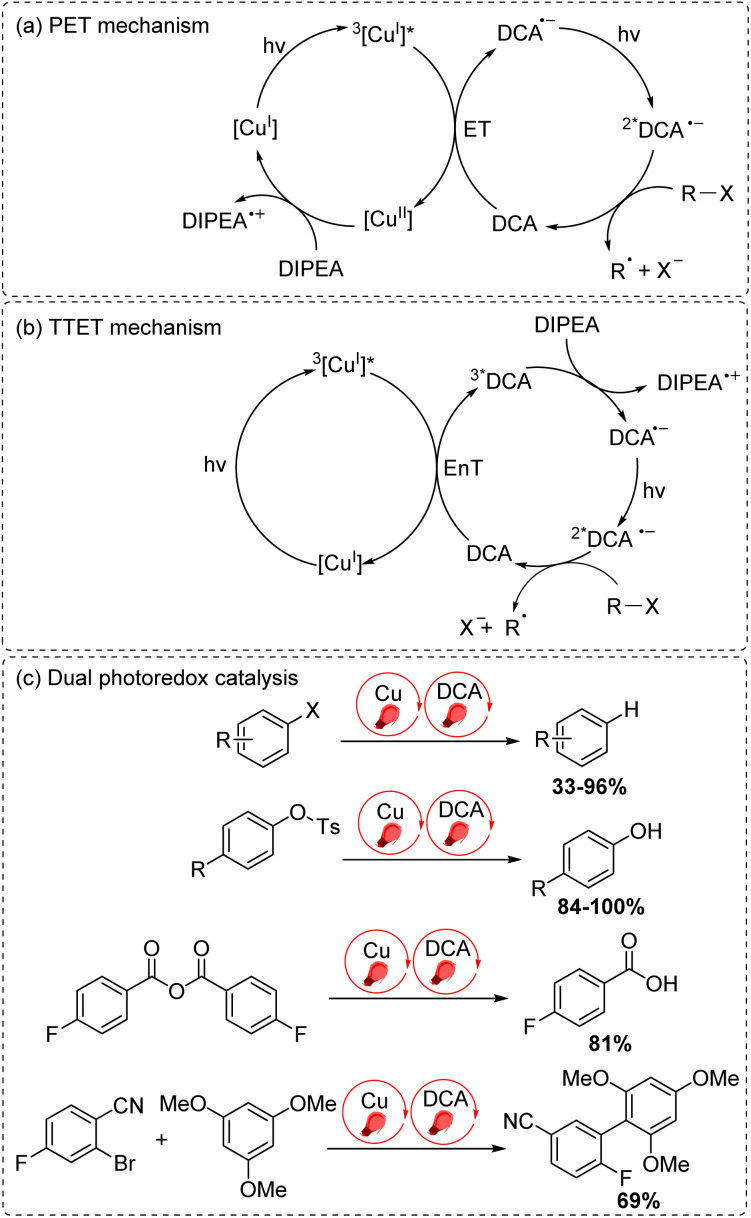
Fig. 9. Dual photoredox catalysis driven by red light (632 nm). (a) PET mechanism. (b) TTET mechanism. (c) Dual photoredox catalysis.
Fig. 10
Fig. 10. Summary of methodological approaches to access powerful visible-light photoreductants. (a) Photoelectrochemical activation. (b) Sequential 2-photon activation. (c) Ejection of solvated electrons.
Fig. 11
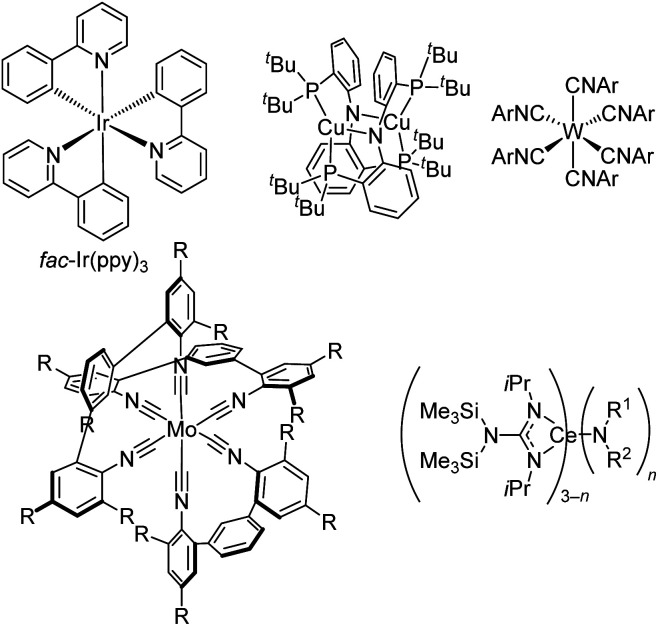
Fig. 11. Representative examples of powerful visible-light photoreductants.
Fig. 12
Fig. 12. Summary of representative Ir(C^Y)2(NacNac) photosensitizers, demonstrating structure–property relationships involving Eox (red lines) and E0,0 (blue lines). The Eox values are referenced to the ferrocene couple, and the vertical arrows represent the absolute value of *Eox, as per eqn (1).
Fig. 13
Fig. 13. Possible excited-state decay pathways.
Fig. 14
Fig. 14. General structures of copper(i) complexes.
Fig. 15
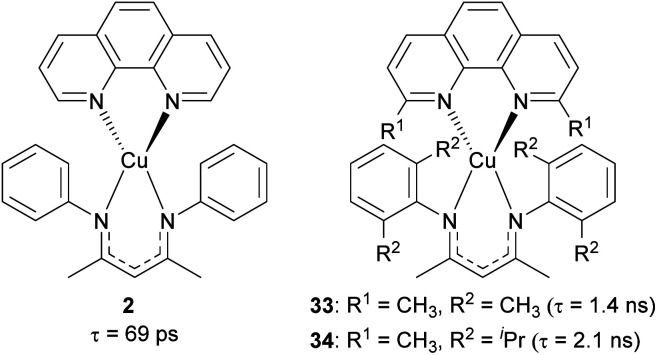
Fig. 15. Structures of Cu(N^N)(NacNacR) complexes.
Fig. 16
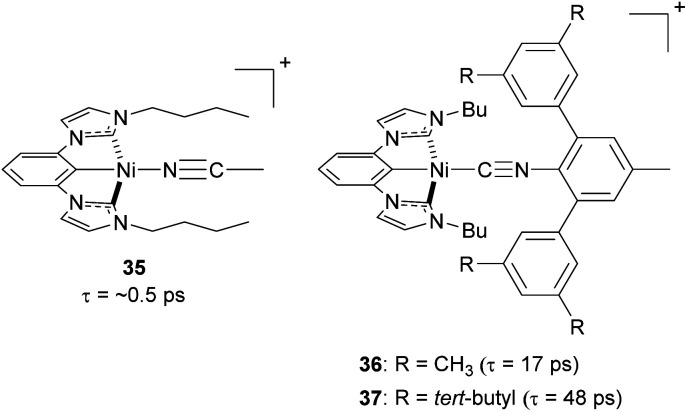
Fig. 16. Structures of Ni(ii) complexes.
Fig. 17
Fig. 17. Simplified qualitative energy level diagrams illustrating the triplet reservoir effect. (a) Typical situation with 3MLCT below 3(π → π*). (b) Triplet equilibrium between 3MLCT and 3(π → π*). (c) Quenching of 3MLCT by lower-energy 3(π → π*).
Fig. 18
Fig. 18. Osmium(ii) and iridium(iii) complexes with pendant organic chromophores.
Fig. 19
Fig. 19. Simplified Jablonski diagram representing radiative processes of the spin-flip emitter. (ISC = Intersystem crossing, bISC = back-intersystem crossing, and VC = vibrational cooling).
Fig. 20
Fig. 20. General structure of tridentate chelating ligands used to prepare homoleptic or heteroleptic chromium(iii) complexes.
Fig. 21
Fig. 21. (a) Simplified potential energy surface diagrams of six-coordinate Ru(ii) and Fe(ii) complexes. (b) Strategies to achieve a larger energy barrier between MLCT and MC states.
Fig. 22
Fig. 22. (a) Structures of Fe(ii) complexes with halogen-substituted terpyridine and the energy levels of MLCT and MC states. (b) Structures of cyclometalated Fe(ii) complexes.

References

    1. Polgar A. M. Hudson Z. M. Chem. Commun. 2021;57:10675–10688. doi: 10.1039/D1CC04593H. - DOI - PubMed
    1. V. Gold, The IUPAC Compendium of Chemical Terminology: The Gold Book, International Union of Pure and Applied Chemistry (IUPAC), Research Triangle Park, NC, 4th edn, 2019
    1. Wu Y. Kim D. Teets T. S. Synlett. 2021:1390–9065.
    1. Juris A. Balzani V. Barigelletti F. Campagna S. Belser P. von Zelewsky A. Coord. Chem. Rev. 1988;84:85–277. doi: 10.1016/0010-8545(88)80032-8. - DOI
    1. Teets T. S. and Wu Y., in Comprehensive Organometallic Chemistry IV, Elsevier, 2022. 284–338