Review
. 2023 Dec 14;12(12):2112.
doi: 10.3390/antiox12122112.

Oleocanthal, an Antioxidant Phenolic Compound in Extra Virgin Olive Oil (EVOO): A Comprehensive Systematic Review of Its Potential in Inflammation and Cancer

Affiliations
Review

Oleocanthal, an Antioxidant Phenolic Compound in Extra Virgin Olive Oil (EVOO): A Comprehensive Systematic Review of Its Potential in Inflammation and Cancer

María González-Rodríguez et al. Antioxidants (Basel). .

Abstract

Background: The Mediterranean diet is linked to various health benefits, especially the consumption of olive oil as a key component. Multiple studies highlight its advantages, particularly due to its fatty acid composition and additional components like phenolic compounds. A significant antioxidant compound, oleocanthal, known for its antioxidant properties, has gained attention in the pharmaceutical industry for its anti-inflammatory and antiproliferative effects. It shows promise in addressing cardiovascular diseases, metabolic syndrome, and neuroprotection. This systematic review aims to evaluate the existing literature on oleocanthal, examining its role in biological processes and potential impact on conditions like inflammation and cancer.

Methods: We performed several searches in PubMed (MEDLINE), Web of Science (WOS), and Cochrane based on the terms "Oleocanthal", "Cancer", and "Inflammation". The inclusion criteria were as follows: studies whose main topics were oleocanthal and cancer or inflammation. On the other hand, the exclusion criteria were studies that were not focused on oleocanthal, reviews, or editorial material. Given that these findings are explanatory rather than derived from clinical trials, we refrained from employing methods to assess potential bias. This systematic review did not receive any external funding.

Results: We found 174 records from these searches, where we discarded reviews and editorial material, duplicated articles, and 1 retracted article. Finally, we had 53 reports assessed for eligibility that were included in this review.

Discussion: OC exhibits promising therapeutic potential against both inflammation and cancer. We addressed its ability to target inflammatory genes and pathways, offering potential treatments for conditions like rheumatic diseases by regulating pathways such as NF-kB and MAPK. Additionally, OC's anticancer properties, particularly its notable inhibition of c-Met signaling across various cancers, highlight its efficacy, showcasing promise as a potential treatment.

Keywords: cancer; extra virgin olive oil (EVOO); inflammation; oleocanthal; polyphenolic compounds.


Conflict of interest statement

The authors declare no conflict of interest.

Figures
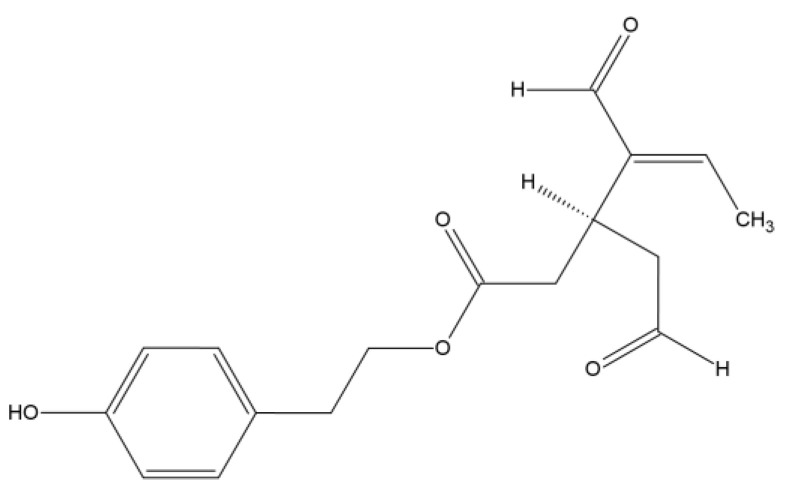
Figure 1
Figure 1
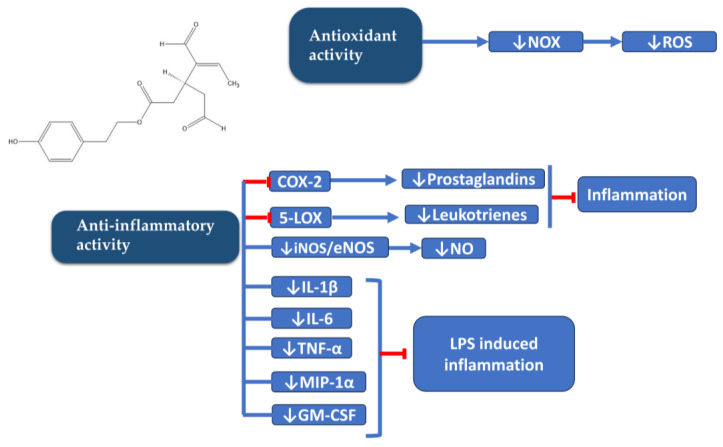
Structure of oleocanthal.
Figure 2
Figure 2
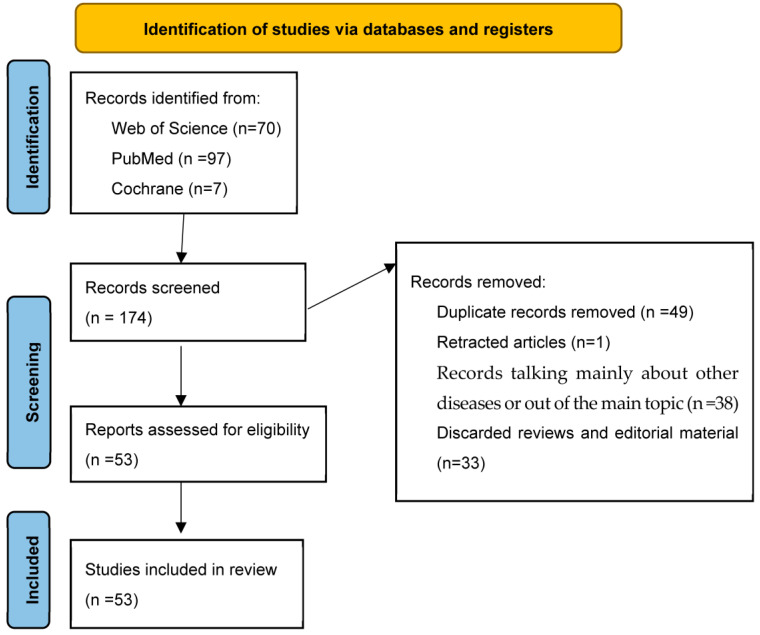
PRISMA 2020 flow chart. This figure summarizes the various stages of this systematic review. The data were collected from September to October 2023 and reviewed in November 2023.
Figure 3
Figure 3
Schematic diagram of anti-inflammatory and antioxidant properties of OC. 5-LOX (5-lipoxygenase); COX 1/2 (Cyclooxygenase 1/2); eNOS (Endothelial Nitric Oxide Synthase); GFAP (Glial Fibrillary Acidic Protein); GM-CSF (Granulocyte-Macrophage Colony-Stimulating Factor); iNOS (Inducible Nitric Oxide Synthase); IL-1β (Interleukin-1β); IL-6 (Interleukin-6); LPS (Lipopolysaccharide); MIP-1α (Macrophage Inflammatory Protein-1α); NO (Nitric Oxide); NOX (Nicotinamide Adenine Dinucleotide Phosphate Oxidase); ROS (Reactive Oxygen Species); TNF-α (Tumor Necrosis Factor-α).
Figure 4
Figure 4
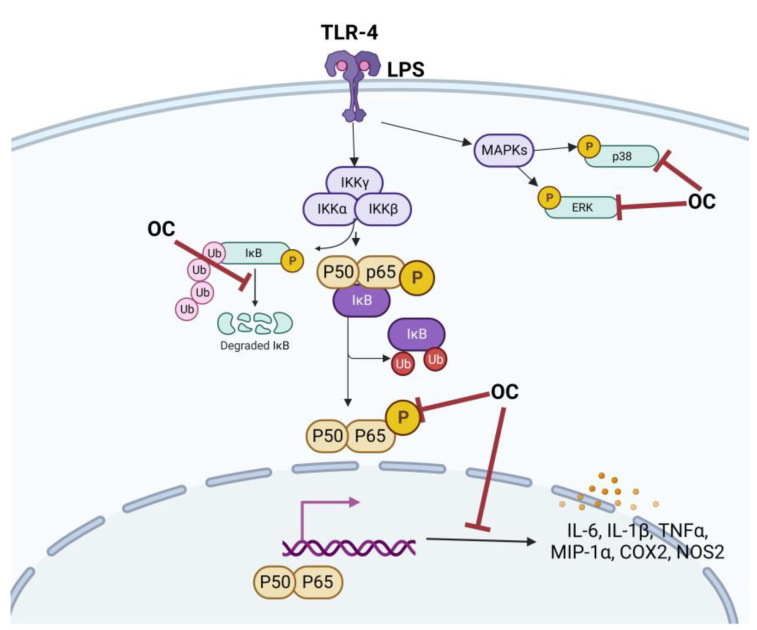
Schematic diagram of anti-inflammatory properties of OC in LPS-induced inflammation. COX-2 (Cyclooxygenase-2); ERK (Extracellular Signal-Regulated Kinase); IL-6 (Interleukin-6); LPS (Lipopolysaccharide); MAPKs (Mitogen-Activated Protein Kinases); MIP-1α (Macrophage Inflammatory Protein-1 alpha); NOS2 (Nitric Oxide Synthase 2); OC (Oleocanthal); p38 (p38 Mitogen-Activated Protein Kinase); TLR4 (Toll-like receptor 4); TNF-α (Tumor Necrosis Factor-alpha); Ub (Ubiquitin).
Figure 5
Figure 5
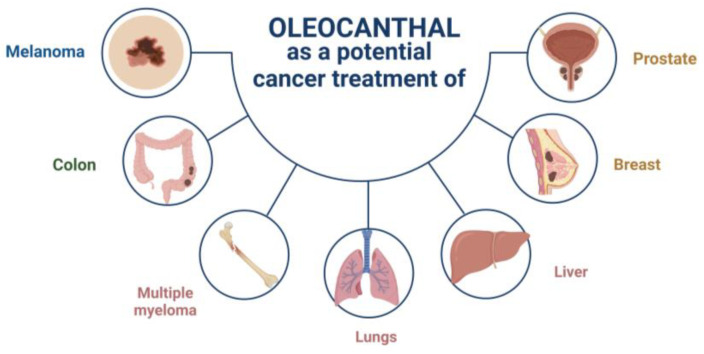
Diagram illustrating various cancers studied and potentially treatable with OC.
Figure 6
Figure 6
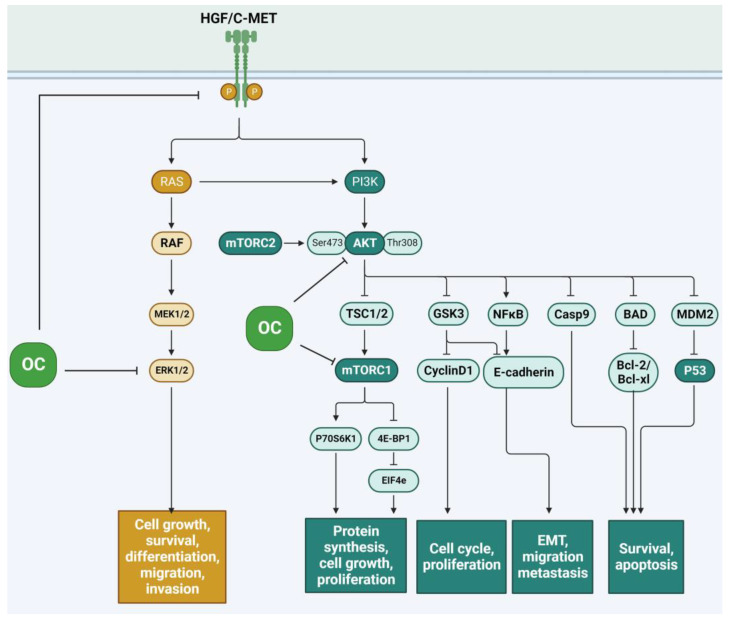
Schematic representation of the inhibition of OC in the HGF/c-Met signaling pathway.

References

    1. Ros E., Martínez-González M.A., Estruch R., Salas-Salvadó J., Fitó M., Martínez J.A., Corella D. Mediterranean diet and cardiovascular health: Teachings of the PREDIMED study. Adv. Nutr. 2014;5:330S–336S. doi: 10.3945/an.113.005389. - DOI - PMC - PubMed
    1. Aparicio-Soto M., Sánchez-Hidalgo M., Rosillo M.Á., Castejón M.L., Alarcón-de-la-Lastra C. Extra virgin olive oil: A key functional food for prevention of immune-inflammatory diseases. Food Funct. 2016;7:4492–4505. doi: 10.1039/C6FO01094F. - DOI - PubMed
    1. Wongwarawipat T., Papageorgiou N., Bertsias D., Siasos G., Tousoulis D. Olive Oil-related Anti-inflammatory Effects on Atherosclerosis: Potential Clinical Implications. Endocr. Metab. Immune Disord. Drug Targets. 2018;18:51–62. doi: 10.2174/1871530317666171116103618. - DOI - PubMed
    1. Escrich E., Moral R., Solanas M. Olive oil, an essential component of the Mediterranean diet, and breast cancer. Public Health Nutr. 2011;14:2323–2332. doi: 10.1017/S1368980011002588. - DOI - PubMed
    1. Casamenti F., Stefani M. Olive polyphenols: New promising agents to combat aging-associated neurodegeneration. Expert Rev. Neurother. 2017;17:345–358. doi: 10.1080/14737175.2017.1245617. - DOI - PubMed

LinkOut - more resources