


Antimicrobial Activity of Stilbenes from Bletilla striata against Cutibacterium acnes and Its Effect on Cell Membrane
- PMID: 38138103
- PMCID: PMC10746055
- DOI: 10.3390/microorganisms11122958
Antimicrobial Activity of Stilbenes from Bletilla striata against Cutibacterium acnes and Its Effect on Cell Membrane
Abstract
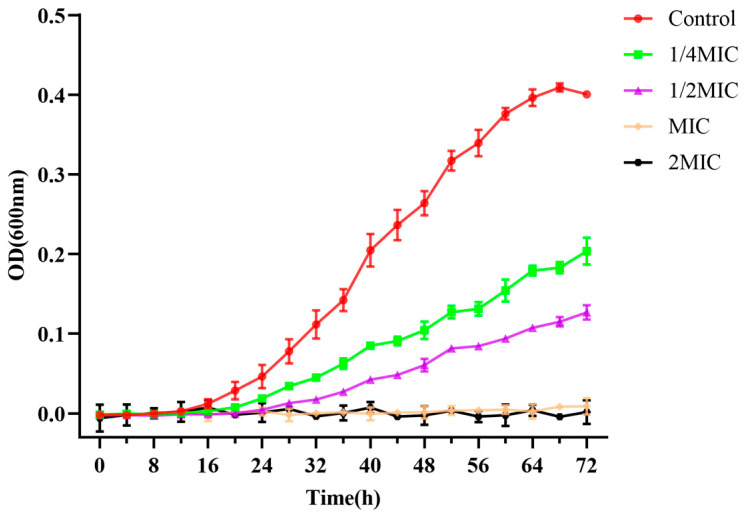
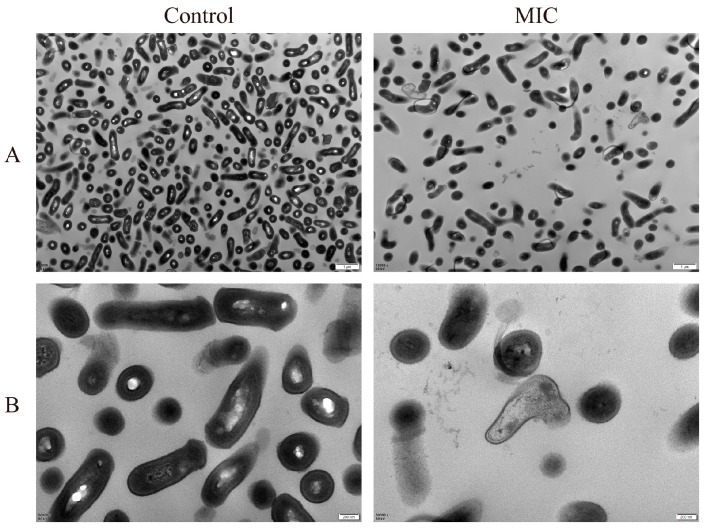
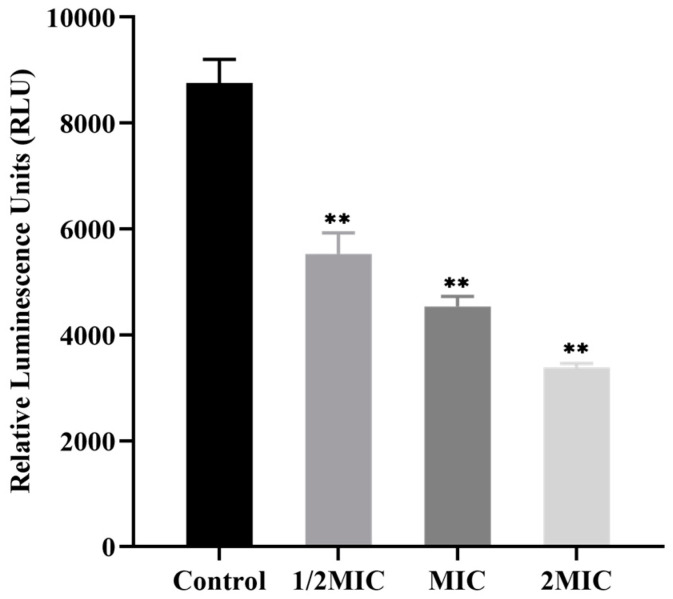
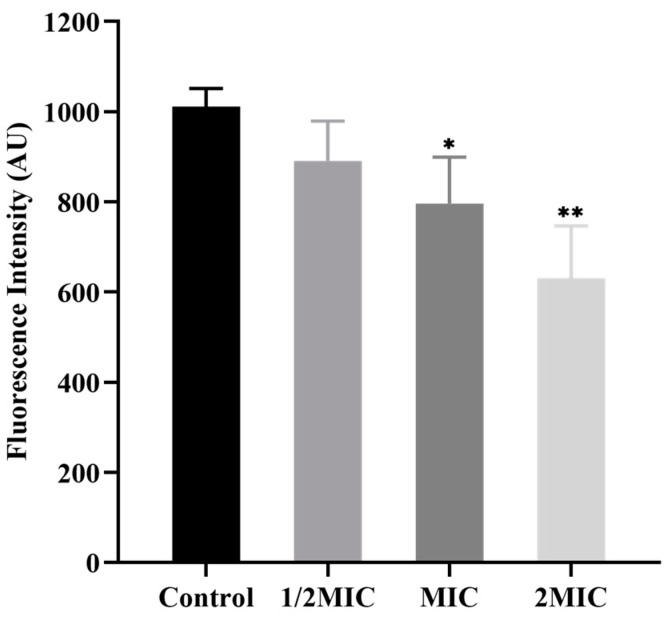
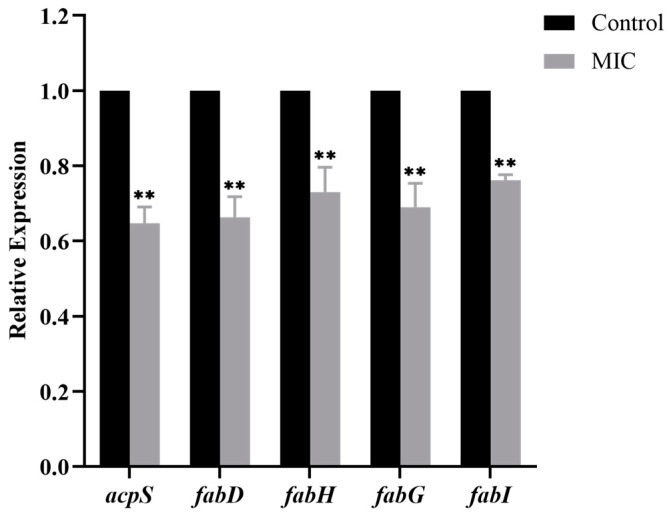
The abnormal proliferation of Cutibacterium acnes is the main cause of acne vulgaris. Natural antibacterial plant extracts have gained great interest due to the efficacy and safety of their use in skin care products. Bletilla striata is a common externally used traditional Chinese medicine, and several of its isolated stilbenes were reported to exhibit good antibacterial activity. In this study, the antimicrobial activity of stilbenes from B. striata (BSS) against C. acnes and its potential effect on cell membrane were elucidated by determining the minimum inhibitory concentration (MIC), minimum bactericidal concentration (MBC), bacterial growth curve, adenosine triphosphate (ATP) levels, membrane potential (MP), and the expression of genes related to fatty acid biosynthesis in the cell membrane. In addition, the morphological changes in C. acnes by BSS were observed using transmission electron microscopy (TEM). Experimentally, we verified that BSS possessed significant antibacterial activity against C. acnes, with an MIC and MBC of 15.62 μg/mL and 62.5 μg/mL, respectively. The growth curve indicated that BSS at 2 MIC, MIC, 1/2 MIC, and 1/4 MIC concentrations inhibited the growth of C. acnes. TEM images demonstrated that BSS at an MIC concentration disrupted the morphological structure and cell membrane in C. acnes. Furthermore, the BSS at the 2 MIC, MIC, and 1/2 MIC concentrations caused a decrease in the intracellular ATP levels and the depolarization of the cell membrane as well as BSS at an MIC concentration inhibited the expression of fatty acid biosynthesis-associated genes. In conclusion, BSS could exert good antimicrobial activity by interfering with cell membrane in C. acnes, which have the potential to be developed as a natural antiacne additive.
Keywords: Bletilla striata; Cutibacterium acnes; antibacterial activity; cell membrane; stilbenes.
Conflict of interest statement
The authors declare no conflict of interest.
Figures

References
Grants and funding
- 2022C001/Multi-dimensional Evaluation and Product Development Innovation Team of Characteristic Chinese Medicine Resources in Southwest China
- ZYYCXTD-D-202209/National Interdisciplinary Innovation Team of Traditional Chinese Medicine
- 81891012/National Natural Science Foundation of China Major Project Subject
- U19A2010/Key Project of the National Natural Science Foundation of China for Regional Innovative Development
LinkOut - more resources
Full Text Sources
Molecular Biology Databases
