


BNT162b2 Booster Dose Elicits a Robust Antibody Response in Subjects with Abdominal Obesity and Previous SARS-CoV-2 Infection
- PMID: 38140200
- PMCID: PMC10747120
- DOI: 10.3390/vaccines11121796
BNT162b2 Booster Dose Elicits a Robust Antibody Response in Subjects with Abdominal Obesity and Previous SARS-CoV-2 Infection
Abstract
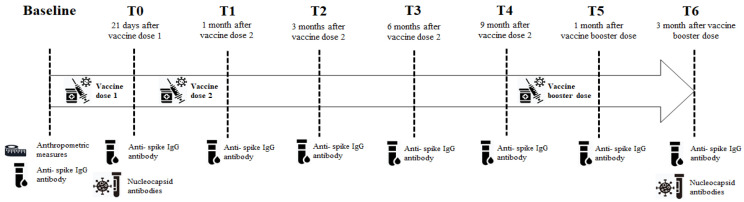
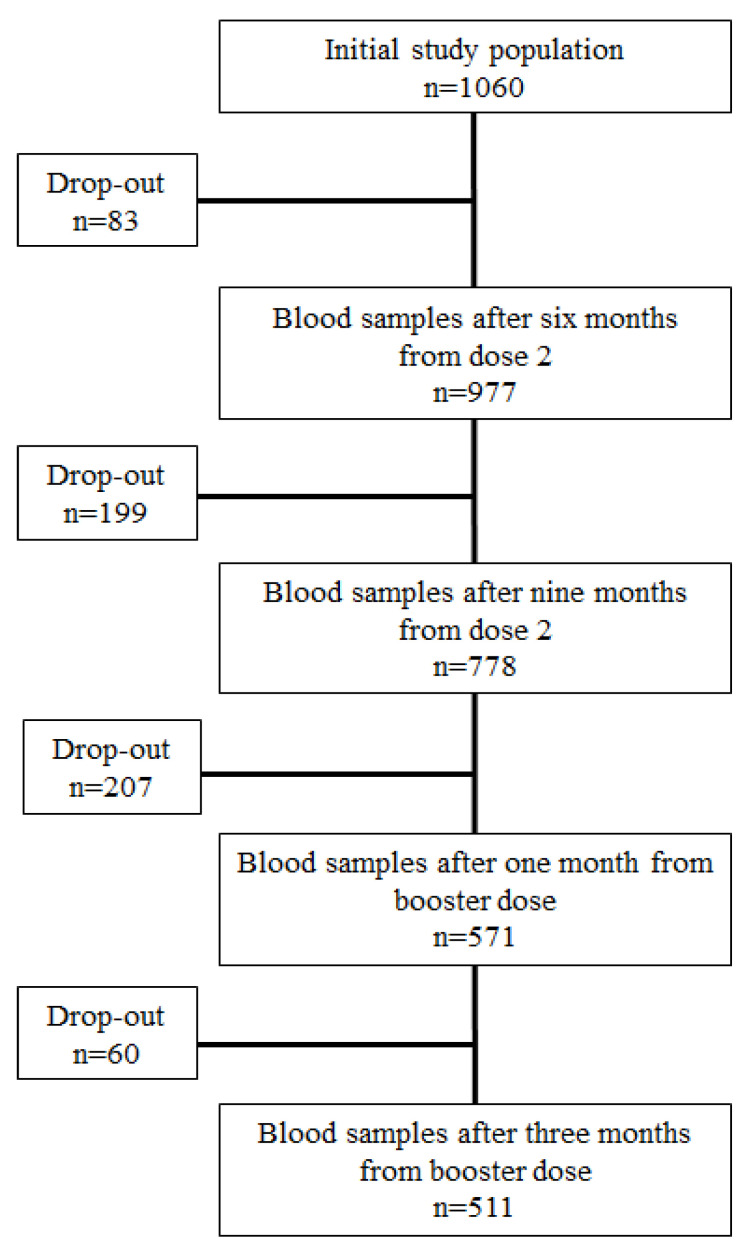
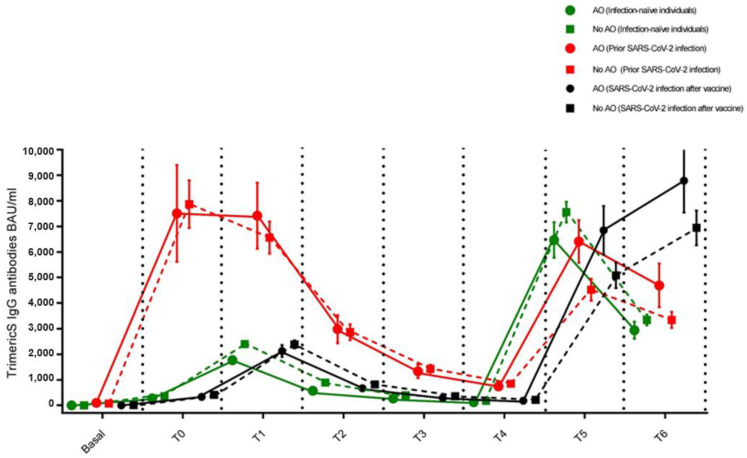
Little is known about the long-term durability of the induced immune response in subjects with obesity, particularly in those with an abdominal distribution of adipose tissue. We evaluated SARS-CoV-2-specific antibody responses after BNT162b2 vaccine booster dose, comparing individuals with and without abdominal obesity (AO), discerning between individuals previously infected or not. IgG-TrimericS were measured in 511 subjects at baseline, on the 21st day after vaccine dose 1, and at 1, 3, 6, and 9 months from dose 2, and at 1 and 3 months following the booster dose. To detect SARS-CoV-2 infection, nucleocapsid antibodies were measured at baseline and at the end of the study. Multivariable linear regression evaluated the three-month difference in the absolute variation in IgG-TrimericS levels from booster dose, showing AO and SARS-CoV-2 infection status interactions (p = 0.016). Regardless of possible confounding factors and IgG-TrimericS levels at the booster dose, AO is associated with a higher absolute change in IgG-TrimericS in prior infected individuals (p = 0.0125). In the same regression model, no interaction is highlighted using BMI (p = 0.418). The robust response in the development of antibodies after booster dose, observed in people with AO and previous infection, may support the recommendations to administer a booster dose in this population group.
Keywords: BMI; BNT162b2 mRNA vaccine; COVID-19; IgG-TrimericS; abdominal obesity; antibody response; booster dose; obesity.
Conflict of interest statement
The authors declare no conflict of interest. The funders had no role in the design of the study; in the collection, analyses, or interpretation of data; in the writing of the manuscript; or in the decision to publish the results.
Figures
References
Grants and funding
LinkOut - more resources
Full Text Sources
Miscellaneous
