


Epidemiology of Current Asthma in Children Under 18: A Two-Decade Overview Using National Center for Health Statistics (NCHS) Data
- PMID: 38143602
- PMCID: PMC10739102
- DOI: 10.7759/cureus.49229
Epidemiology of Current Asthma in Children Under 18: A Two-Decade Overview Using National Center for Health Statistics (NCHS) Data
Abstract
Objective: This study conducted a comprehensive two-decade analysis of current asthma among children under 18 in the United States using National Center for Health Statistics (NCHS) data. The primary objective was to assess the prevalence of current asthma, evaluate temporal trends, and identify disparities based on gender, age, insurance status, household poverty levels, and race/ethnicity.
Methods: Data spanning 2003-2019 from NCHS were analyzed, focusing on current asthma prevalence among children under 18. Age-adjusted prevalence rates were calculated and stratified by various factors, including gender, age groups, health insurance status, poverty levels, and race/ethnicity.
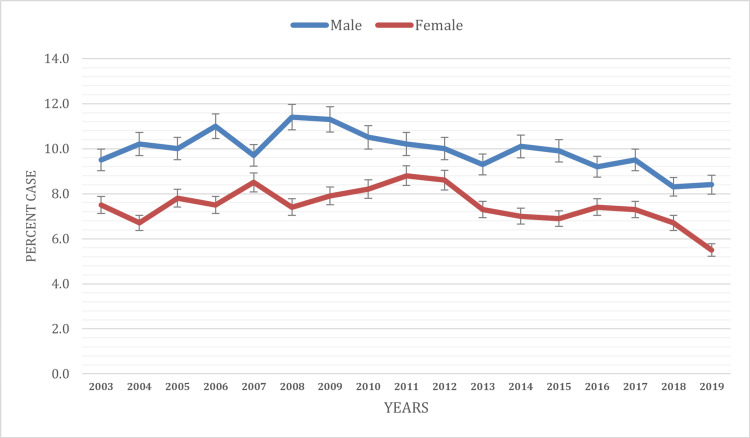
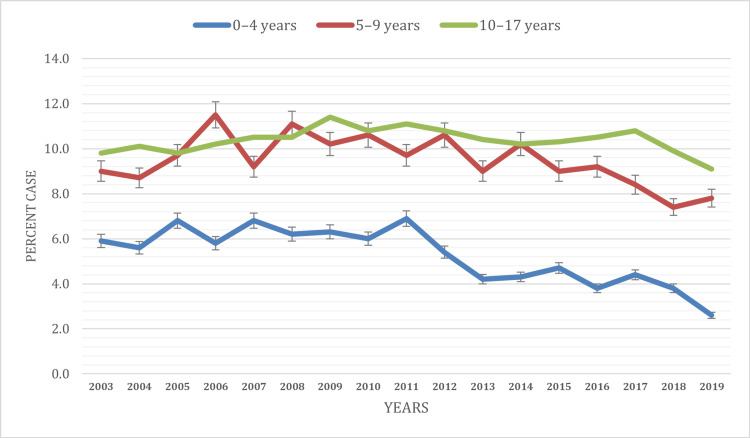
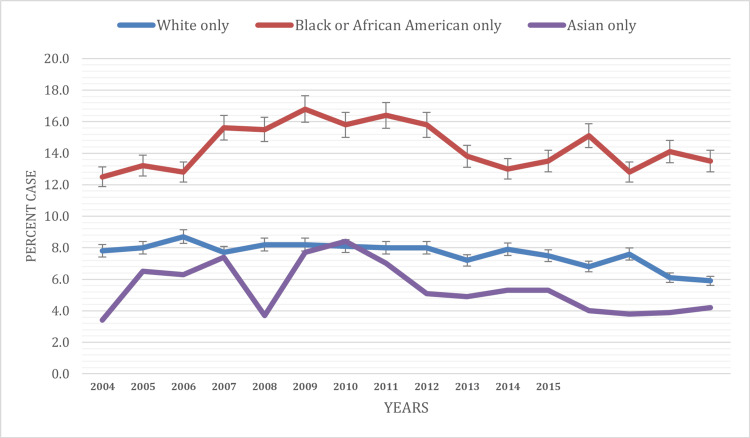
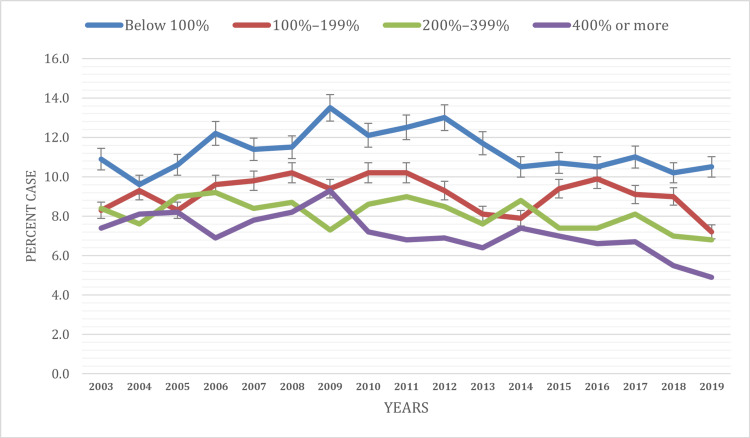
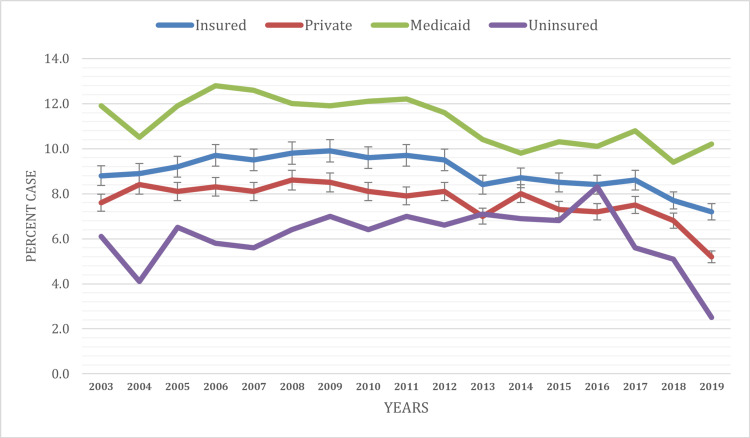
Results: The study revealed substantial disparities in current asthma prevalence. Over the two-decade period, the overall prevalence of current asthma fluctuated. It increased from 2003 (8.5%) to 2009 (9.6%) and then decreased by 2019 (7.0%). Gender disparities were evident, with males (9.9%) consistently reporting a higher prevalence than females (7.5%). Older children aged between 10-17 years (10.4%) consistently had a higher prevalence of asthma than younger children aged 0-4 (5.3%) and 5-9 years (9.5%). Children with Medicaid insurance (11.2%) had the highest prevalence, followed by insured (8.9%), privately insured (7.7%), and uninsured children (6.1%). Children living below the federal poverty level (FPL) consistently reported the highest prevalence (11.3%), while children above 400% of the FPL (7.1%) had the lowest prevalence. Racial disparities were observed, with Black children (14.3%) having higher asthma prevalence, followed by White (7.6%) and Asian children (5.4%).
Conclusion: The study highlights significant disparities in current asthma prevalence over the two-decade period analyzed. While the overall prevalence showed fluctuations, it generally increased from 2003 to 2009 and then decreased by 2019. Gender disparities were evident, with males consistently reporting a higher prevalence compared to females. Older children in the 10-17 age group consistently had a higher asthma prevalence than younger age groups. Moreover, disparities based on insurance status and income levels were also apparent, with children on Medicaid and those living below the FPL reporting higher asthma prevalence. Racial disparities were observed, with Black children having the highest prevalence, followed by White and Asian children. These findings emphasize the importance of addressing these disparities and tailoring interventions to improve asthma management and prevention across different demographic groups.
Keywords: children under 18; current asthma; epidemiology; nchs-based study; temporal trends.
Copyright © 2023, Ojo et al.
Conflict of interest statement
The authors have declared that no competing interests exist.
Figures
References
-
- Asthma Facts and Figures. [ Oct; 2023 ];https://aafa.org/asthma/asthma-facts/ 2022 5:2023.
LinkOut - more resources
Full Text Sources