Prevalence and risk factors associated with Haemophilus ducreyi cutaneous ulcers in Cameroon
- PMID: 38150487
- PMCID: PMC10791135
- DOI: 10.1371/journal.pntd.0011553
Prevalence and risk factors associated with Haemophilus ducreyi cutaneous ulcers in Cameroon
Abstract
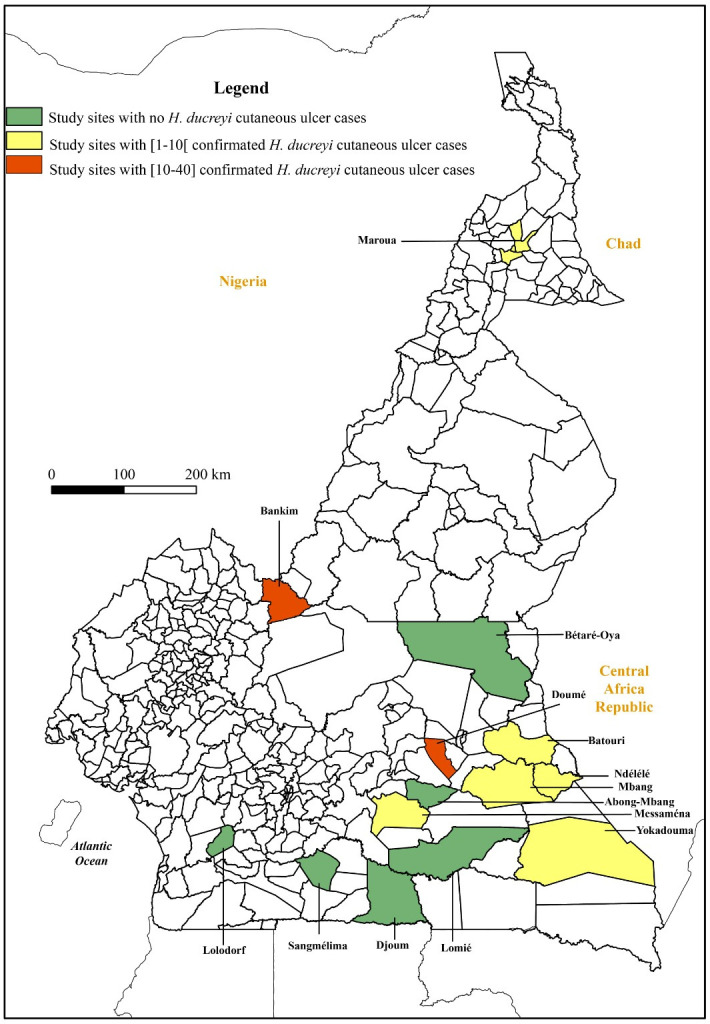
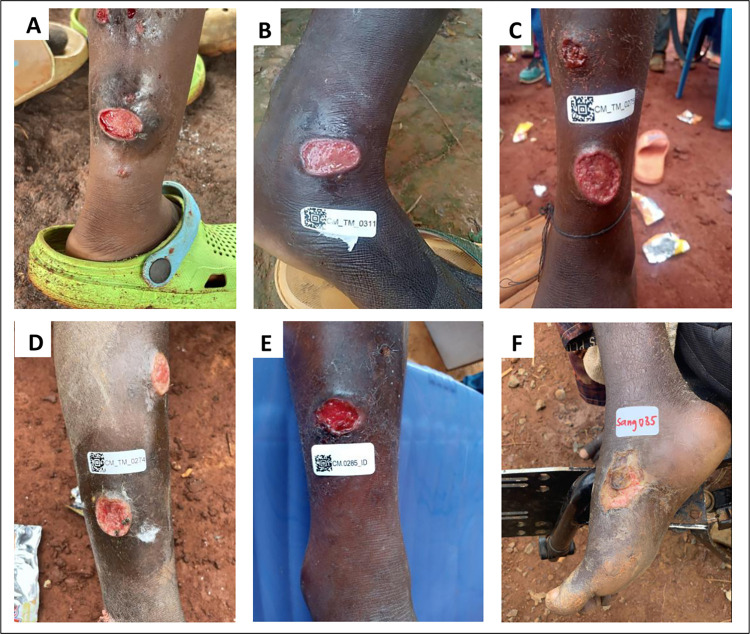
Epidemics of yaws-like cutaneous ulcers are regularly documented in children in the tropics. They occur mainly in poor and remote communities without access to health facilities. The integration of molecular tools into yaws control efforts has made it possible to describe Haemophilus ducreyi (HD) as a major cause of cutaneous ulcers. The objective of this study was to determine the prevalence of HD as cause of cutaneous ulcers, investigate its presence in asymptomatic individuals and identify associated risk factors. A cross-sectional study was conducted in yaws endemic districts of Cameroon. Participants included people presenting yaws-like ulcers and asymptomatic individuals. Swab samples were collected from each participant and tested for HD and Treponema pallidum (TP) using an established qPCR method. Additionally, demographic, habitat, proximity, and hygiene characteristics were collected using a structured questionnaire. A total of 443 individuals participated in the study, including 271 ulcer cases and 172 asymptomatic contacts. The prevalence of HD in ulcers was 30.3% (Confidence Interval (CI) 95% [24.8-35.7]) and the prevalence of asymptomatic HD carriage was 8.6% (CI95% [4.5-12.9]). TP was also detected in our sample among ulcer cases but in lower proportion (5.2% CI95% [2.5-7.8]) compared to HD. The adjusted logistic regression model showed that women were as much at risk of having HD cutaneous ulcer as men regardless of age. Physical proximity to a confirmed ulcer case was the major factor identified favouring HD transmission. HD ulcers were more likely to be present on Bantu individuals compared to Baka as well as HD colonization. These findings highlight HD as the most common cause of cutaneous ulcers in yaws-endemic communities in Cameroon. The exact implications of detecting HD on intact skin are not yet clear. Further studies are needed to understand the significance of this carriage in the spread dynamics of the disease.
Copyright: © 2023 Ndzomo et al. This is an open access article distributed under the terms of the Creative Commons Attribution License, which permits unrestricted use, distribution, and reproduction in any medium, provided the original author and source are credited.
Conflict of interest statement
The authors have declared that no competing interests exist.
Figures
References
Publication types
MeSH terms
LinkOut - more resources
Full Text Sources