


Intramedullary K-wires versus Alternate Techniques for Metacarpal Shaft and Neck Fractures: A Systematic Review and Meta-analysis
- PMID: 38152671
- PMCID: PMC10751204
- DOI: 10.1055/s-0042-1749410
Intramedullary K-wires versus Alternate Techniques for Metacarpal Shaft and Neck Fractures: A Systematic Review and Meta-analysis
Abstract
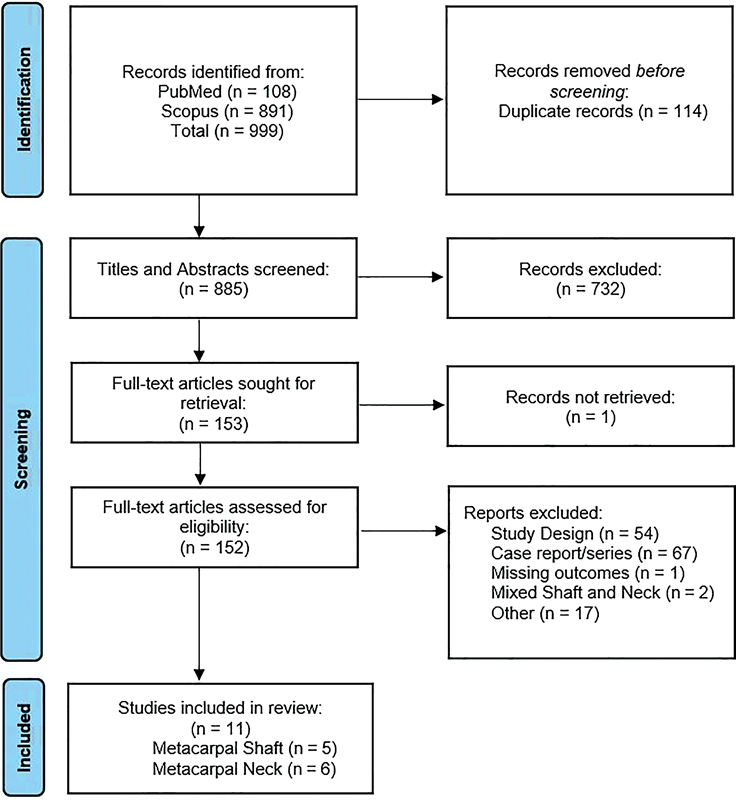
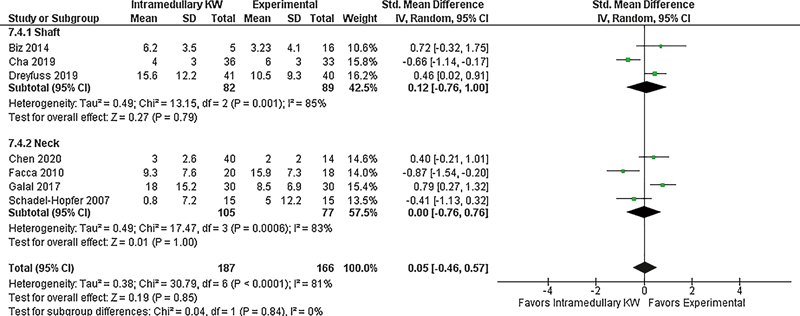
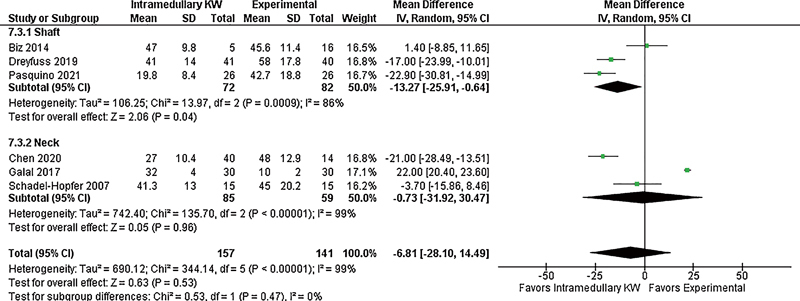
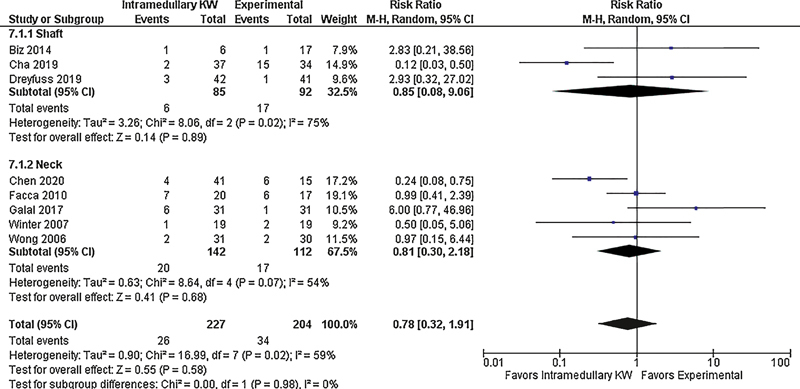
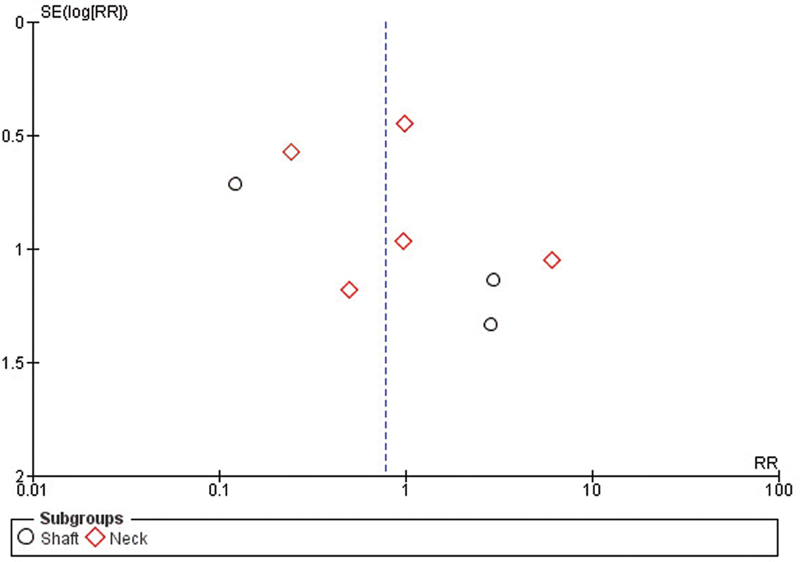
Intramedullary K-wire (IMKW) fixation is one of the mainstays for surgically treating metacarpal shaft and neck fractures. However, there remains a lack of literature comparing outcomes of the various available surgical repair techniques in all indicated metacarpals. Therefore, we conducted a systematic review and meta-analysis to investigate the clinical advantages and drawbacks of IMKW compared with alternate fracture repair techniques. A comprehensive systematic literature review was performed to identify studies that compared clinical outcomes of IMKW to alternate metacarpal fixation modalities. Outcomes included Disabilities of the Arm, Shoulder, and Hand (DASH/ quick DASH) scores, grip strength, union rate, visual analog scale pain, operative time, and complications. A random-effects model was used to compare IMKW to the pooled effect of other fixation techniques. A total of 10 studies were included in our analysis, comprising 497 metacarpal fractures (220 shafts and 277 necks). IMKW fixation was identified as the control group in all studies. The pooled experimental group included plates, transverse K-wires (TKWs), interfragmentary screws (IFSs), and K-wire cross-pinning (CP). In treating metacarpal shaft fractures, IMKW showed significantly shorter operative time ( p = 0.04; mean difference = - 13; 95% confidence interval = -26 to -0.64). No significant differences were observed in treating metacarpal neck fractures for disability, grip strength, healing rate, pain, operative time, or complication rate. This systematic review and meta-analysis found no difference in clinical outcomes among various surgical techniques for treating metacarpal shaft and neck fractures. Further high evidence studies are required that investigate the efficacy and safety of IFS, CP, TKW, and intramedullary screws versus IMKW for treating closed, unstable metacarpal fractures.
Keywords: fixation techniques; fracture; hand fracture; intramedullary; meta-analysis; metacarpal; metacarpal fracture; surgery; surgical; systematic review.
Society of Indian Hand Surgery & Microsurgeons. All rights reserved.
Conflict of interest statement
Conflict of Interest None declared.
Figures



Similar articles
-
Modified retrograde percutaneous intramedullary multiple Kirschner wire fixation for treatment of unstable displaced metacarpal neck and shaft fractures.Eur J Orthop Surg Traumatol. 2013 Jul;23(5):535-43. doi: 10.1007/s00590-012-1036-6. Epub 2012 Jul 7. Eur J Orthop Surg Traumatol. 2013. PMID: 23412169
-
A Comparison of Locking Plates and Intramedullary Pinning for Fixation of Metacarpal Shaft Fractures.Hand (N Y). 2019 Jan;14(1):27-33. doi: 10.1177/1558944718798854. Epub 2018 Sep 7. Hand (N Y). 2019. PMID: 30192648 Free PMC article.
-
Intramedullary Pinning for Displaced Fifth Metacarpal Neck Fractures: Closed Reduction and Fixation Using Either an Open Antegrade or Percutaneous Retrograde Technique.JBJS Essent Surg Tech. 2016 May 25;6(2):e21. doi: 10.2106/JBJS.ST.16.00006. eCollection 2016 Jun 22. JBJS Essent Surg Tech. 2016. PMID: 30237930 Free PMC article.
-
Metacarpal Neck Fractures: A Review of Surgical Indications and Techniques.Arch Trauma Res. 2016 May 23;5(3):e32933. doi: 10.5812/atr.32933. eCollection 2016 Sep. Arch Trauma Res. 2016. PMID: 27800460 Free PMC article. Review.
-
Plate Fixation versus Percutaneous Pinning for Unstable Metacarpal Fractures: A Meta-analysis.J Hand Surg Asian Pac Vol. 2017 Mar;22(1):29-34. doi: 10.1142/S0218810417500058. J Hand Surg Asian Pac Vol. 2017. PMID: 28205483 Review.
Cited by
-
Outcomes Following Fully Threaded Intramedullary Nailing of Metacarpal Fractures.J Hand Surg Glob Online. 2023 Nov 11;6(1):85-90. doi: 10.1016/j.jhsg.2023.10.003. eCollection 2024 Jan. J Hand Surg Glob Online. 2023. PMID: 38313619 Free PMC article.
References
-
- Cheah A E, Yao J. Hand fractures: indications, the tried and true and new innovations. J Hand Surg Am. 2016;41(06):712–722. - PubMed
-
- Karl J W, Olson P R, Rosenwasser M P. The epidemiology of upper extremity fractures in the United States, 2009. J Orthop Trauma. 2015;29(08):e242–e244. - PubMed
-
- Diaz-Garcia R, Waljee J F. Current management of metacarpal fractures. Hand Clin. 2013;29(04):507–518. - PubMed
-
- Meals C, Meals R.Hand fractures: a review of current treatment strategies J Hand Surg Am 201338051021–1031., quiz 1031 - PubMed
LinkOut - more resources
Full Text Sources
Miscellaneous