


The effects of postoperative malrotation alignment on outcomes of Gartland type III/IV paediatric supracondylar humeral fractures treated by close reduction and percutaneous K-wire fixation
- PMID: 38167111
- PMCID: PMC10763312
- DOI: 10.1186/s13018-023-04505-x
The effects of postoperative malrotation alignment on outcomes of Gartland type III/IV paediatric supracondylar humeral fractures treated by close reduction and percutaneous K-wire fixation
Abstract
Purpose: In this study, we aimed to investigate the effects of postoperative malrotation alignment on the outcomes of Gartland type III/IV paediatric supracondylar humeral fracture (SCHF) treated by close reduction and percutaneous K-wire fixation.
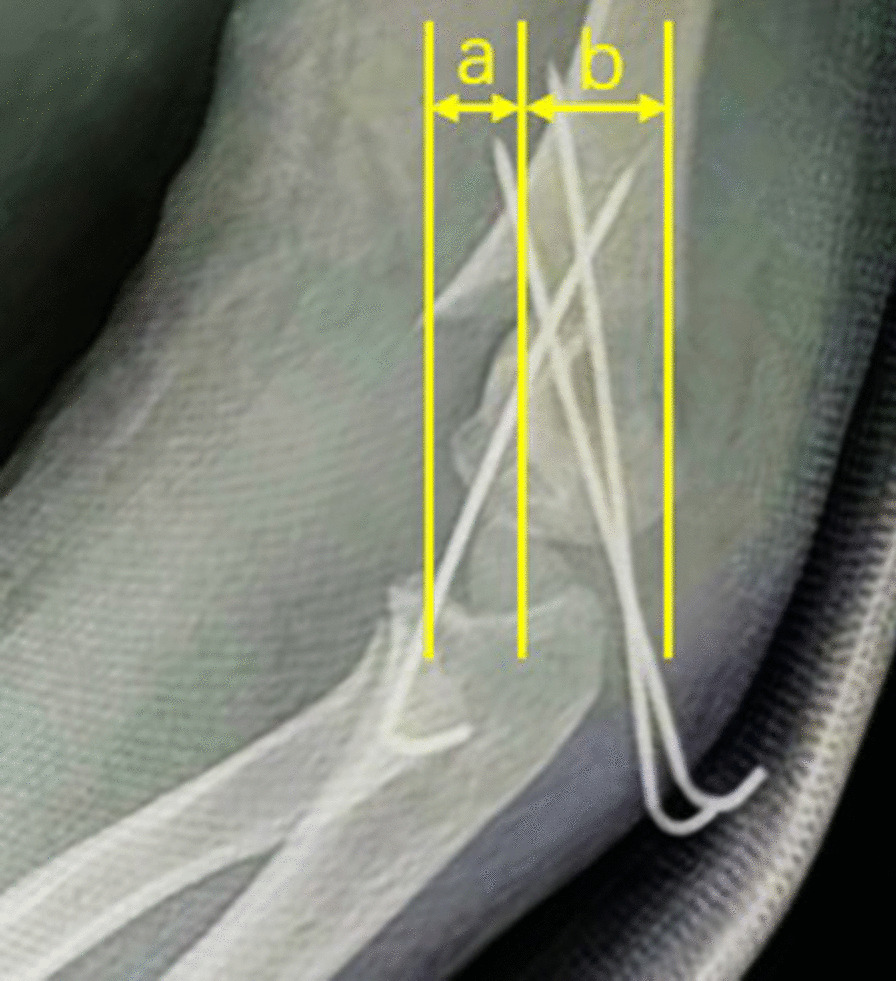
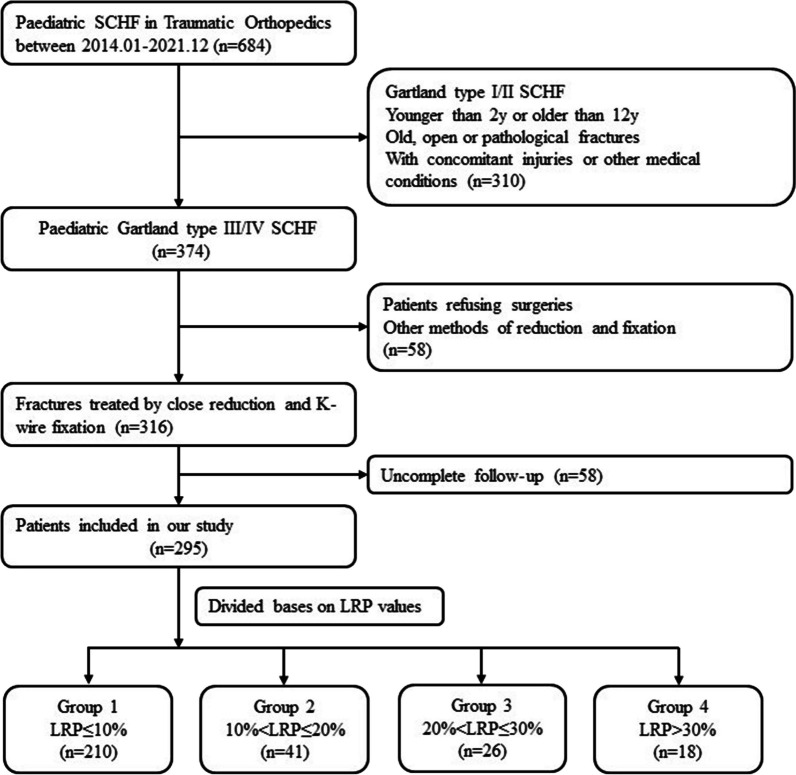
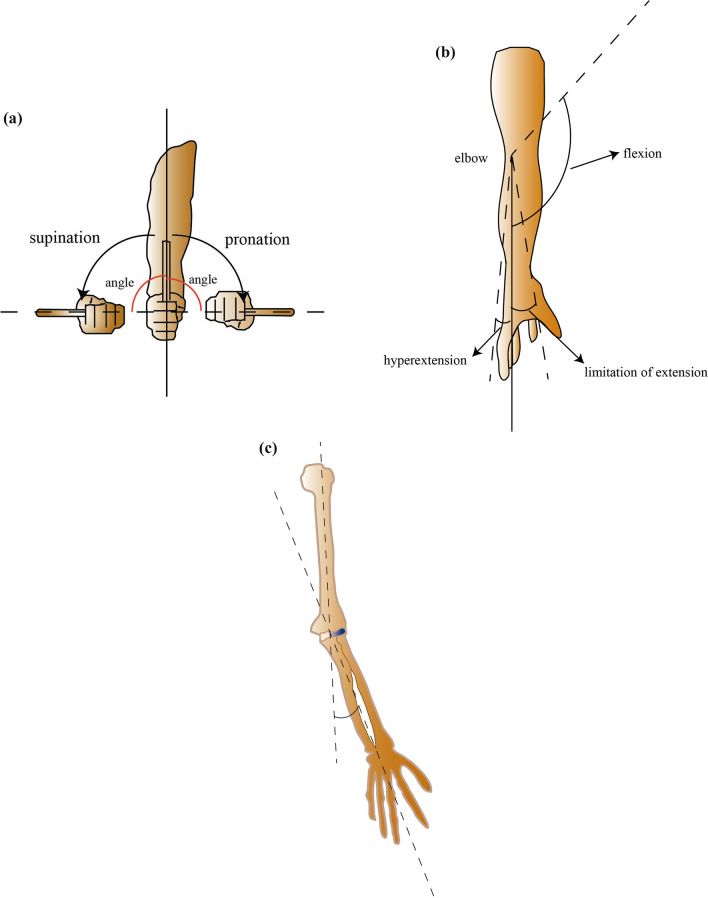
Methods: Between January 2014 and December 2021, 295 Gartland type III/IV paediatric SCHFs treated by close reduction and percutaneous K-wire fixation were selected for this retrospective study. The demographic, clinical and radiographic parameters of all cases were collected. The lateral rotation percentage (LRP) was measured on X-rays to evaluate postoperative malrotation alignment of the fracture. All cases were categorized into 4 groups according to LRP: LRP ≤ 10% (210, 71.2%), 10% < LRP ≤ 20% (41, 13.9%), 20% < LRP ≤ 30% (26, 8.8%) and LRP > 30% (18, 6.1%). The carrying angle, ranges of multidirectional motions, Mayo Elbow Performance Score (MEPS) and Flynn's Standard Score (FSS) of the injured elbow were assessed 6 months postoperation and compared among different groups. ROC analysis based on LRP and the excellent/good rate of FSS was performed to determine the acceptable maximum degree of postoperative malrotation alignment.
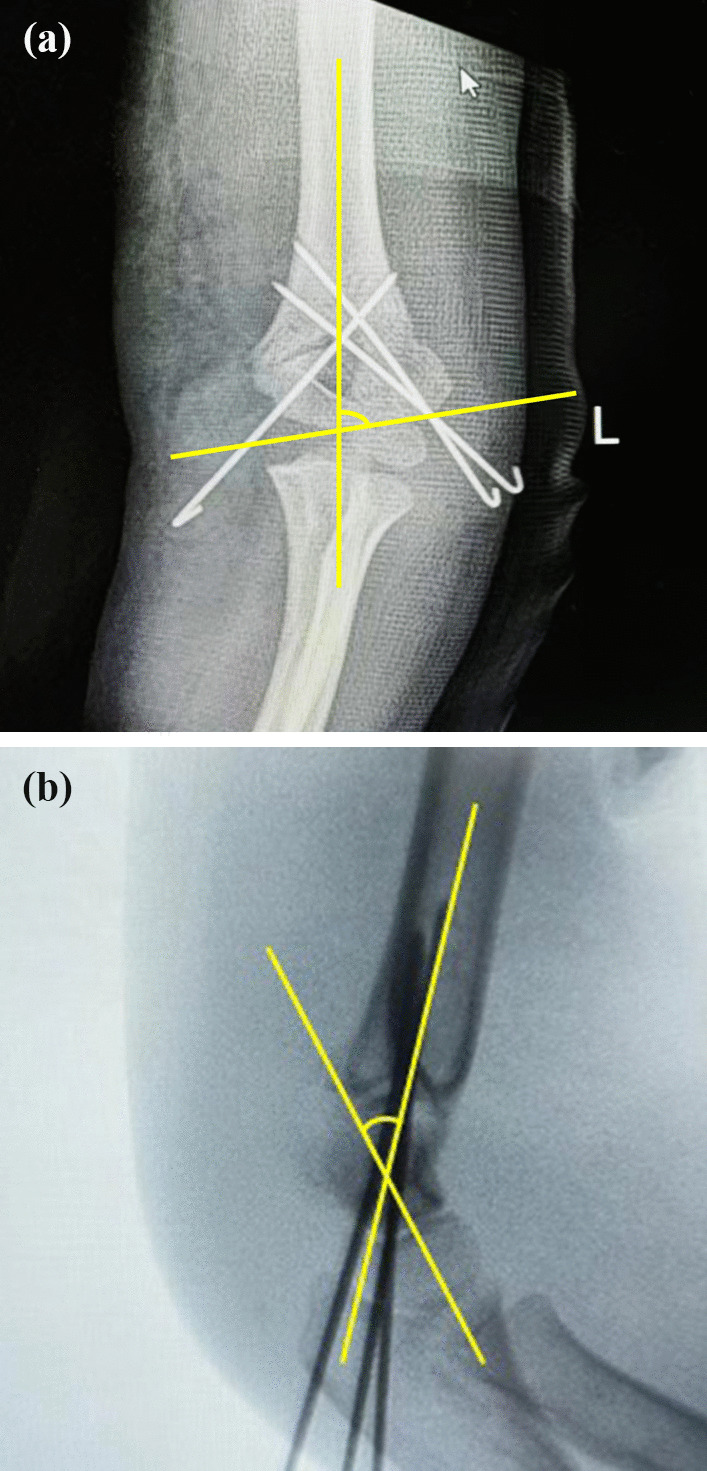
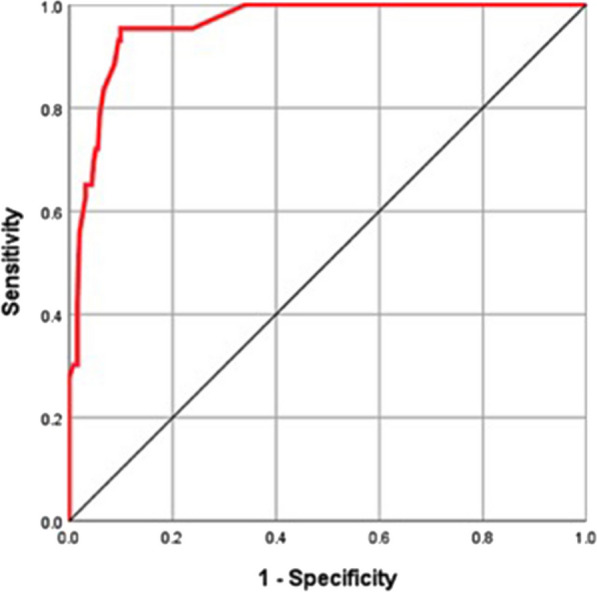
Results: There was no difference in the demographic characteristics (age, sex, injured side and fracture type), postoperative Baumann angle, carrying angle or range of forearm rotation among the 4 groups (P > 0.05). The operation time and time from operation to K-wire removal were longer in the 20% < LRP ≤ 30% and LRP > 30% groups than in the LRP < 10% and 10% < LRP ≤ 20% groups (P < 0.001). The shaft condylar angle, range of elbow flexion, MEPS and FSS of the injured elbow 6 months postoperatively were lower in the 20% < LRP ≤ 30% and LRP > 30% groups than in the LRP < 10% and 10% < LRP ≤ 20% groups (P < 0.001). ROC analysis based on LRP and the excellent/good rate of FSS showed an area under the curve of 0.959 (95% CI 0.936-0.983), with a cutoff value of 26.5%, sensitivity of 95.3% and specificity of 90.1%.
Conclusion: A certain degree of residual malrotation alignment deformity of the SCHF may reduce the shaft condylar angle and extend the time from operation to removing the K-wire and affect elbow function, especially the range of elbow flexion. The acceptable maximum degree of residual malrotation deformity expressed as the LRP value was 26.5%.
Keywords: Gartland type III/IV; Malrotation; Outcomes; Supracondylar humeral fracture.
© 2023. The Author(s).
Conflict of interest statement
The authors declare that they have no competing interests.
Figures
References
MeSH terms
Grants and funding
- M2021063/Scientific Research Project of Jiangsu Commission of Health
- M2021063/Scientific Research Project of Jiangsu Commission of Health
- M2021063/Scientific Research Project of Jiangsu Commission of Health
- M2021063/Scientific Research Project of Jiangsu Commission of Health
- M2021063/Scientific Research Project of Jiangsu Commission of Health
LinkOut - more resources
Full Text Sources
Medical
Miscellaneous
