


Current understanding of the Alzheimer's disease-associated microbiome and therapeutic strategies
- PMID: 38172602
- PMCID: PMC10834451
- DOI: 10.1038/s12276-023-01146-2
Current understanding of the Alzheimer's disease-associated microbiome and therapeutic strategies
Abstract
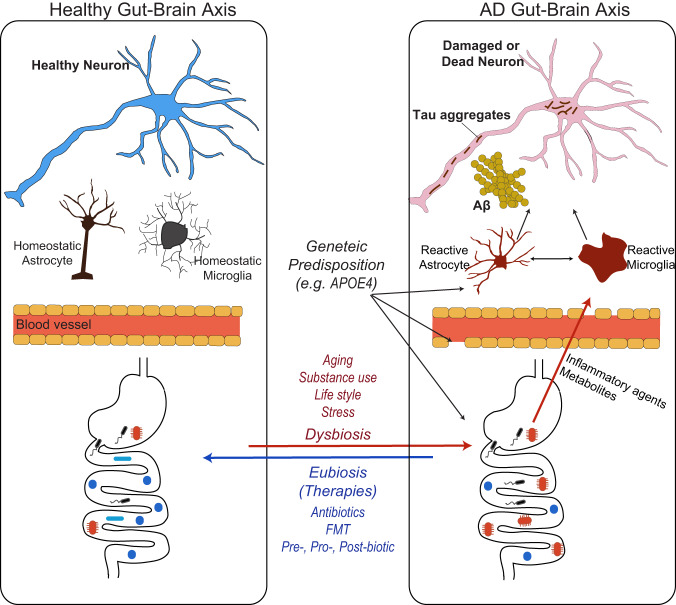
Alzheimer's disease (AD) is a fatal progressive neurodegenerative disease. Despite tremendous research efforts to understand this complex disease, the exact pathophysiology of the disease is not completely clear. Recently, anti-Aβ antibodies have been shown to remove amyloid from the brain and slow the clinical progression of mild dementia by ~30%. However, exploring alternative strategies is crucial to understanding and developing more effective therapeutic interventions. In recent years, the microbiota-gut-brain axis has received significant attention in the AD field. Numerous studies have suggested that alterations in the gut microbiota composition are associated with the progression of AD, and several underlying mechanisms have been proposed. However, studies in this area are still in their infancy, and many aspects of this field are just beginning to be explored and understood. Gaining a deeper understanding of the intricate interactions and signaling pathways involved in the microbiota-AD interaction is crucial for optimizing therapeutic strategies targeting gut microbiota to positively impact AD. In this review, we aim to summarize the current understanding of the microbiota-gut-brain axis in AD. We will discuss the existing evidence regarding the role of gut microbiota in AD pathogenesis, suggested underlying mechanisms, biological factors influencing the microbiome-gut-brain axis in AD, and remaining questions in the field. Last, we will discuss potential therapeutic approaches to recondition the community of gut microbiota to alleviate disease progression. An ongoing exploration of the gut-brain axis and the development of microbiota-based therapies hold the potential for advancing AD management in the future.
© 2023. The Author(s).
Conflict of interest statement
D.M.H. is a cofounder of C2N Diagnostics, LLC, and is on the scientific advisory board and/or consults for Genentech, Denali, C2N Diagnostics, Cajal Neurosciences, and Asteroid. D.M.H. is an inventor on a patent licensed by Washington University to NextCure on the therapeutic use of anti-apoE antibodies. The Holtzman laboratory receives research grants from the National Institutes of Health, the Cure Alzheimer’s Fund, the Rainwater Foundation, the JPB Foundation, the Good Ventures Foundation, the GHR Foundation, Novartis, Eli Lilly, and NextCure. The authors declare no other competing interests.
Figures
References
Publication types
MeSH terms
Grants and funding
LinkOut - more resources
Full Text Sources
Medical
