Review
. 2024 Jan-Dec;16(1):2295432.
doi: 10.1080/19490976.2023.2295432. Epub 2024 Jan 4.

Diets intervene osteoporosis via gut-bone axis

Affiliations
Review

Diets intervene osteoporosis via gut-bone axis

Yuan-Wei Zhang et al. Gut Microbes. 2024 Jan-Dec.

Abstract

Osteoporosis is a systemic skeletal disease that seriously endangers the health of middle-aged and older adults. Recently, with the continuous deepening of research, an increasing number of studies have revealed gut microbiota as a potential target for osteoporosis, and the research concept of the gut-bone axis has gradually emerged. Additionally, the intake of dietary nutrients and the adoption of dietary patterns may affect the gut microbiota, and alterations in the gut microbiota might also influence the metabolic status of the host, thus adjusting bone metabolism. Based on the gut-bone axis, dietary intake can also participate in the modulation of bone metabolism by altering abundance, diversity, and composition of gut microbiota. Herein, combined with emerging literatures and relevant studies, this review is aimed to summarize the impacts of different dietary components and patterns on osteoporosis by acting on gut microbiota, as well as underlying mechanisms and proper dietary recommendations.

Keywords: Gut microbiota; dietary patterns; diets; gut-bone axis; osteoporosis.


Conflict of interest statement

No potential conflict of interest was reported by the author(s).

Figures
None
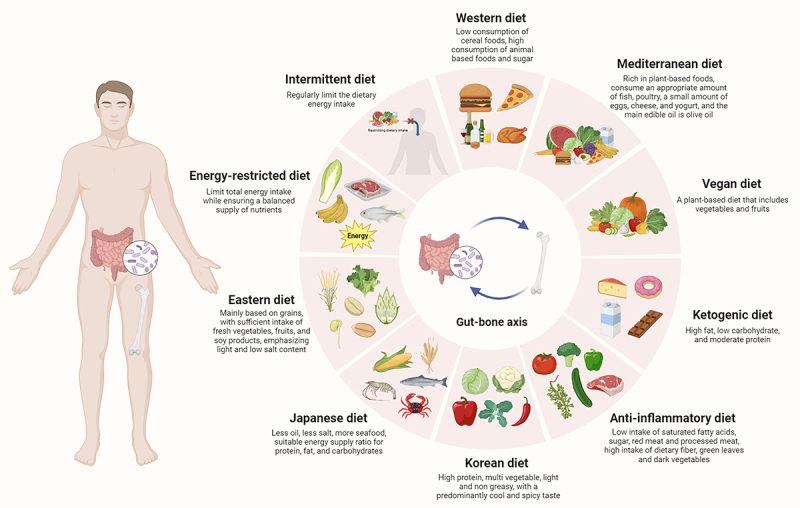
Graphical abstract
Figure 1.
Figure 1.
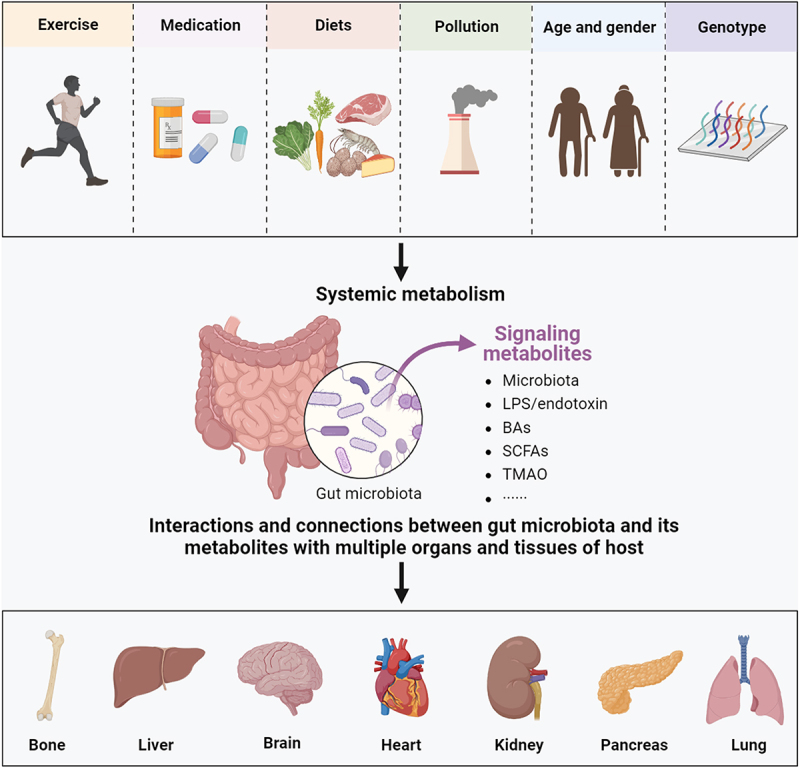
Interactions and connections between the gut microbiota and its metabolites with multiple organs and tissues of host. Several factors, such as exercise, medication, diets, pollution, age and gender, genotype and so on, might affect the gut microbiota and its metabolites of population, and then cause corresponding changes to the bone, liver, brain, heart, kidney, pancreas, lung, and other organs of the host via a variety of regulation approaches. LPS, lipopolysaccharide; BAs, bile acids; SCFAs, short chain fatty acids; TMAO, trimetlylamine oxide.
Figure 2.
Figure 2.
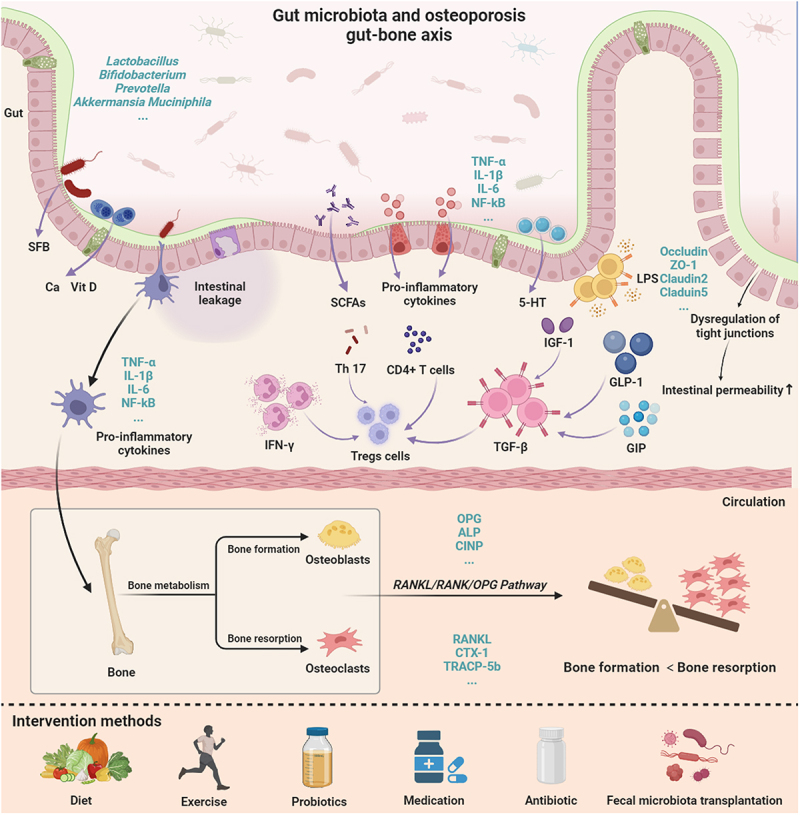
Association between gut microbiota and osteoporosis based on the gut-bone axis. Specifically, gut microbiota can regulate metabolic, immune, and inflammatory states of the body. Meanwhile, it can serve as a pivotal regulatory factor in the bone metabolism, regulating the immune system, affecting the generation of osteoclasts, and exerting regulatory effects on the bone. Studies on the regulation of inflammatory factors and hormones in the gut microbiota have shown that anti-inflammatory factors can reduce bone resorption and prevent bone loss. The constantly emerging researches on probiotics regulating bone metabolism has revealed that the increase of beneficial microbiota can promote the enhancement of bone mass and serve as a potential target for preventing and treating osteoporosis. However, the researches on the relationship between gut microbiota and osteoporosis is still in its infancy, and various studies are needed to further clarify its underlying mechanisms of action. TNF-α, tumor necrosis factor-α; IL-1β, interleukin-1β; IL-6, interleukin-6; SCFAs, short chain fatty acids; 5-HT, 5-hydroxytryptamine; NF-kB, nuclear transcription factor-κB; ca, calcium; vit D, vitamin D; SFB, segmented filamentous bacteria; LPS, lipopolysaccharide; GLP-1, glucagon-like peptide-1; IFN-γ, interferon-γ; TGF-β, transforming growth factor-β; GIP, glucose-dependent insulinotropic polypeptide; OPG, osteoprotegerin; RANKL, receptor activator of nuclear factor-kB ligand; RANK, receptor activator of nuclear factor-kB; ZO-1, zona occludens 1; ALP, alkaline phosphatase; CINP, N.Terminal propeptide of type I collagen; CTX-1, C-terminal telopeptide of type I collagen; IGF-1, insulin-like growth factor-1; TRACP-5b, tartrate-resistant acid phosphatase 5b.
Figure 3.
Figure 3.
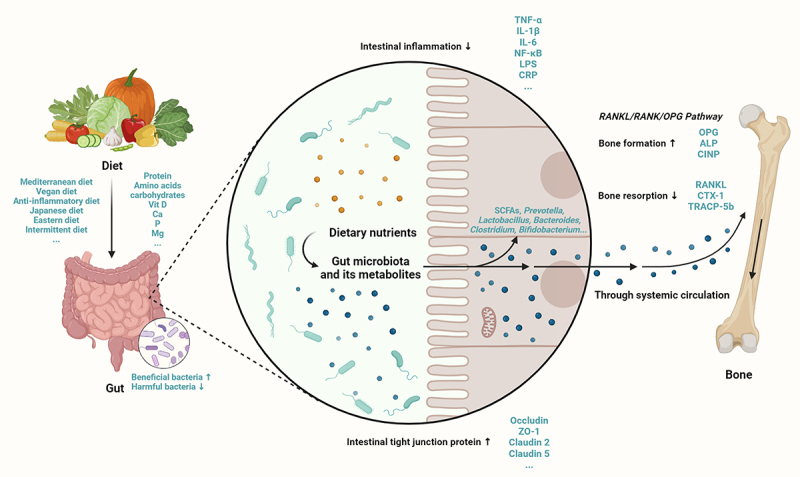
The effects of dietary nutrients on osteoporosis by acting on gut microbiota and its metabolites. Under the domination of various dietary patterns, gut microbiota is closely related to the synthesis and absorption of essential nutrients, such as protein, vit D, ca, P, and mg, which affect the intestinal mucosal barrier function, intestinal inflammation, metabolites, etc., thereby participating in the modulation of the balance between bone formation represented by osteoblasts and bone absorption represented by osteoclasts via systemic circulation. SCFAs, short chain fatty acids; vit D, vitamin D; ca, calcium; P, phosphorus; mg, magnesium; TNF-α, tumor necrosis factor-α; IL-1β, interleukin-1β; IL-6, interleukin-6; NF-kB, nuclear transcription factor-κB; LPS, lipopolysaccharide; CRP, C-reactive protein; OPG, osteoprotegerin; ALP, alkaline phosphatase; CINP, N.Terminal propeptide of type I collagen; RANKL, receptor activator of nuclear factor-kB ligand; RANK, receptor activator of nuclear factor-kB; CTX-1, C-terminal telopeptide of type I collagen; ZO-1, zona occludens 1; TRACP-5b, tartrate-resistant acid phosphatase 5b.
Figure 4.
Figure 4.
Different dietary patterns on osteoporosis by modulating the gut microbiota and its metabolites. Different dietary nutrients (such as protein, fat, carbohydrates, etc.) and different dietary patterns (such as Western diet, vegan diet, mediterranean diet, etc.) may affect gut microbiota and its metabolites, and the changes of gut microbiota and its metabolites may also influence the metabolic status of host, thereby adjusting the bone metabolism and modulating the occurrence and development of osteoporosis. The effects of different dietary patterns on gut microbiota and bone metabolism are exhibited in this figure.
Figure 5.
Figure 5.
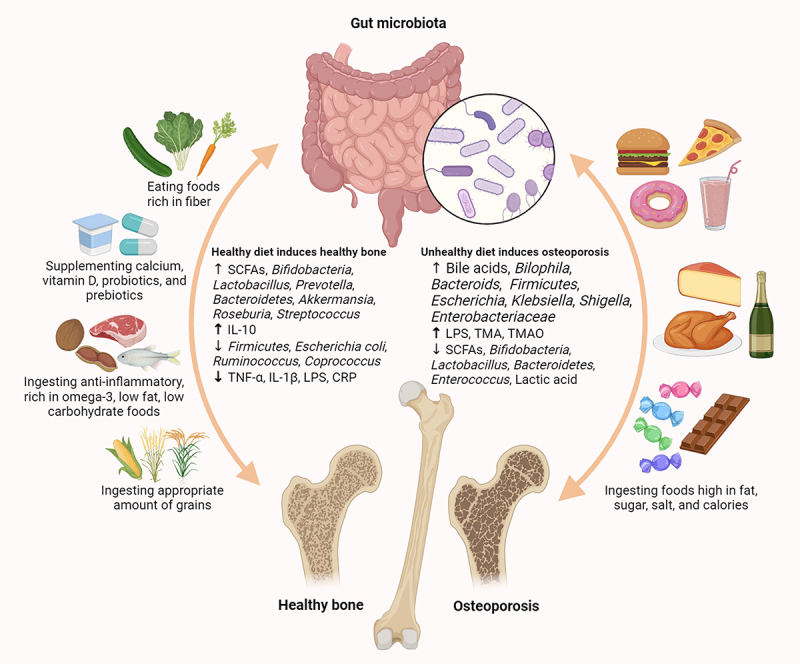
Different impacts on bone by modulating gut microbiota and its metabolites under different dietary recommendations. The reasonable dietary patterns integrate the characteristics of healthy dietary patterns, such as a Mediterranean diet and an anti-inflammatory diet, mainly including the diversified food, high fiber intake, low sugar intake, low fat intake, and high grains intake, thereby maintaining the bone health and preventing osteoporosis. On the contrary, unhealthy dietary pattern (such as Western diet), represented by high-fat, high sugar, high salt, and high calorie dietary intake, is not conducive to maintaining the intestinal and bone health. SCFAs, short chain fatty acids; TMAO, trimetlylamine oxide; TMA, trimethylamine; LPS, lipopolysaccharide; TNF-α, tumor necrosis factor-α; CRP, C-reactive protein; IL-10, interleukin-10; IL-1β, interleukin-1β.

References

    1. Ayers C, Kansagara D, Lazur B, Fu R, Kwon A, Harrod C.. Effectiveness and safety of treatments to prevent fractures in people with low bone mass or primary osteoporosis: a living systematic review and network meta-analysis for the American college of physicians. Ann Intern Med. 2023;176(2):182–25. doi: 10.7326/M22-0684. - DOI - PubMed
    1. Hu Y, Li X, Zhi X, Cong W, Huang B, Chen H, Wang Y, Li Y, Wang L, Fang C, et al. RANKL from bone marrow adipose lineage cells promotes osteoclast formation and bone loss. EMBO Rep. 2021;22(7):e52481. doi: 10.15252/embr.202152481. - DOI - PMC - PubMed
    1. Li X, Wang L, Huang B, Gu Y, Luo Y, Zhi X, Hu Y, Zhang H, Gu Z, Cui J, et al. Targeting actin-bundling protein L-plastin as an anabolic therapy for bone loss. Sci Adv. 2020;6(47):6. doi: 10.1126/sciadv.abb7135. - DOI - PMC - PubMed
    1. Deardorff WJ, Cenzer I, Nguyen B, Lee SJ. Time to benefit of bisphosphonate therapy for the prevention of fractures among postmenopausal women with osteoporosis: a meta-analysis of randomized clinical trials. JAMA Intern Med. 2022;182(1):33–41. doi: 10.1001/jamainternmed.2021.6745. - DOI - PMC - PubMed
    1. Händel MN, Cardoso I, von Bülow C, Rohde JF, Ussing A, Nielsen SM, Christensen R, Body JJ, Brandi ML, Diez-Perez A, et al. Fracture risk reduction and safety by osteoporosis treatment compared with placebo or active comparator in postmenopausal women: systematic review, network meta-analysis, and meta-regression analysis of randomised clinical trials. BMJ. 2023;381:e068033. doi: 10.1136/bmj-2021-068033. - DOI - PMC - PubMed

Publication types