


Beyond the kidney biopsy: genomic approach to undetermined kidney diseases
- PMID: 38186885
- PMCID: PMC10765093
- DOI: 10.1093/ckj/sfad099
Beyond the kidney biopsy: genomic approach to undetermined kidney diseases
Abstract
Background: According to data from large national registries, almost 20%-25% of patients with end-stage kidney disease have an undetermined kidney disease (UKD). Recent data have shown that monogenic disease-causing variants are under-diagnosed. We performed exome sequencing (ES) on UKD patients in our center to improve the diagnosis rate.
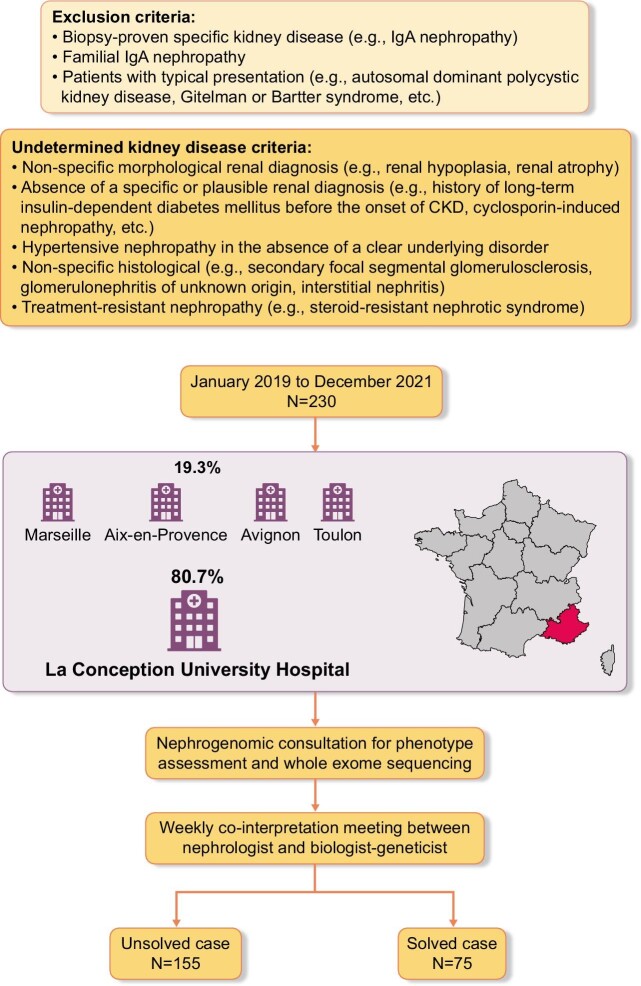
Methods: ES was proposed in routine practice for patients with UKD including kidney biopsy from January 2019 to December 2021. Mutations were detected using a targeted bioinformatic customized kidney gene panel (675 genes). The pathogenicity was assessed using American College of Medical Genetics guidelines.
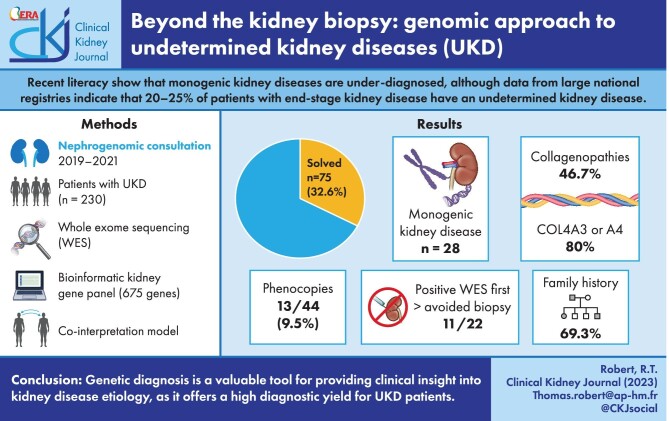
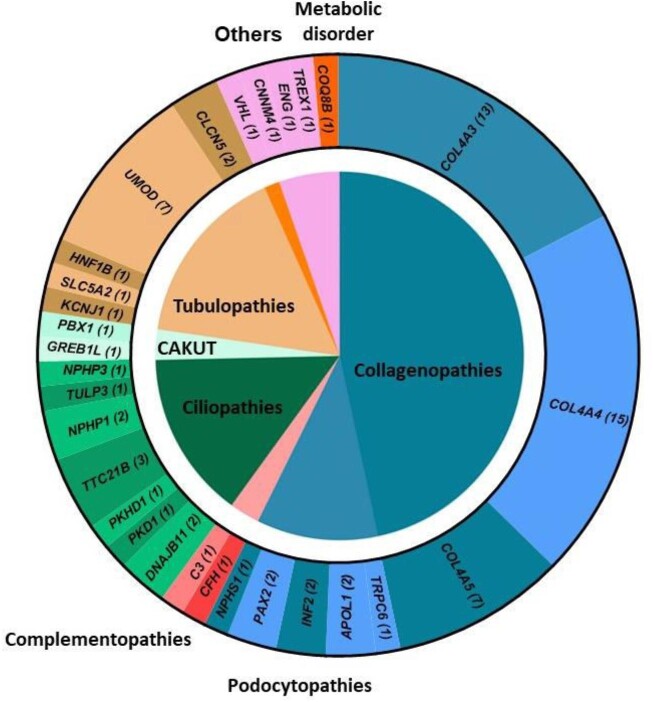
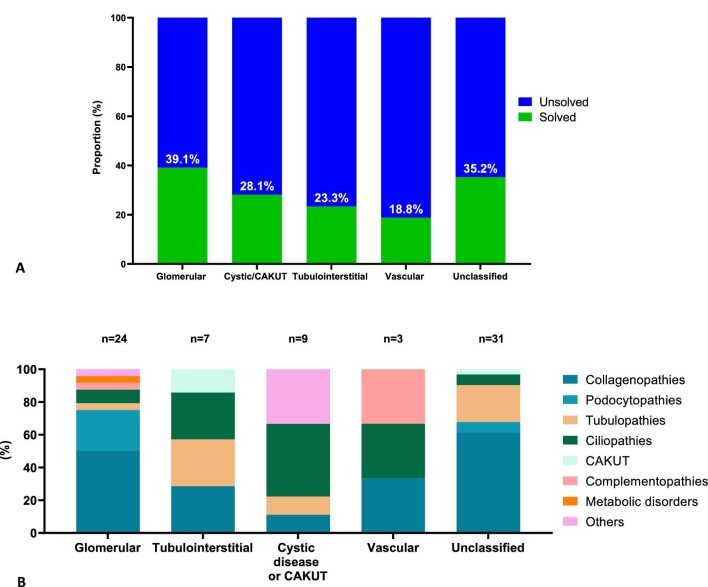
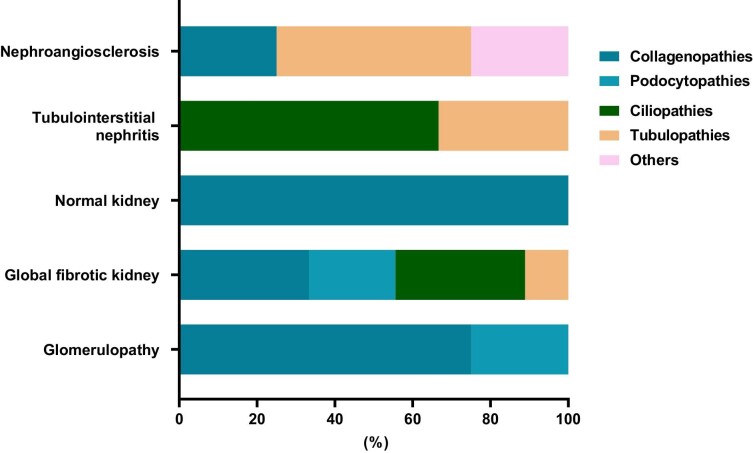
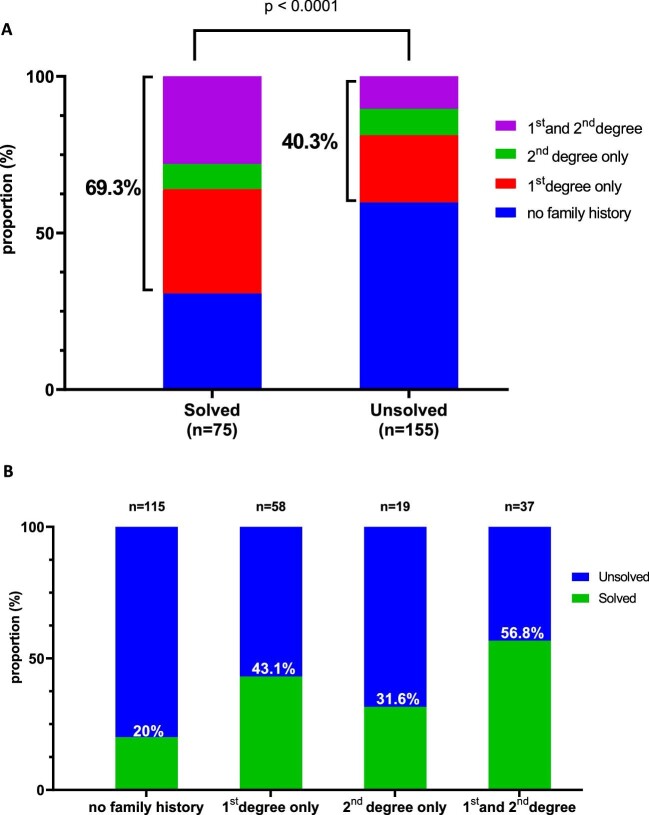
Results: We included 230 adult patients, median age 47.5 years. Consanguinity was reported by 25 patients. A family history of kidney disease was documented in 115 patients (50%). Kidney biopsies were either inconclusive in 69 patients (30.1%) or impossible in 71 (30.9%). We detected 28 monogenic renal disorders in 75 (32.6%) patients. Collagenopathies was the most common genetic kidney diagnosis (46.7%), with COL4A3 and COL4A4 accounting for 80% of these diagnoses. Tubulopathies (16%) and ciliopathies (14.7%) yielded, respectively, the second and third genetic kidney diagnosis category and UMOD-associated nephropathy as the main genetic findings for tubulopathies (7/11). Ten of the 22 patients having ES "first" eventually received a positive diagnosis, thereby avoiding 11 biopsies. Among the 44 patients with glomerular, tubulo-interstitial or vascular nephropathy, 13 (29.5%) were phenocopies. The diagnostic yield of ES was higher in female patients (P = .02) and in patients with a family history of kidney disease (P < .0001), reaching 56.8% when the patient had both first- and second-degree family history of renal disease.
Conclusion: Genetic diagnosis has provided new clinical insights by clarifying or reclassifying kidney disease etiology in over a third of UKD patients. Exome "first" may have a significant positive diagnostic yield, thus avoiding invasive kidney biopsy; moreover, the diagnostic yield remains elevated even when biopsy is impossible or inconclusive. ES provides a clinical benefit for routine nephrological healthcare in patients with UKD.
Keywords: chronic kidney disease; exome sequencing; undetermined nephropathy.
© The Author(s) 2023. Published by Oxford University Press on behalf of the ERA.
Conflict of interest statement
All the authors declared no competing interests.
Figures
References
LinkOut - more resources
Full Text Sources
Miscellaneous
