


Aedes aegypti saliva modulates inflammasome activation and facilitates flavivirus infection in vitro
- PMID: 38188518
- PMCID: PMC10770497
- DOI: 10.1016/j.isci.2023.108620
Aedes aegypti saliva modulates inflammasome activation and facilitates flavivirus infection in vitro
Abstract
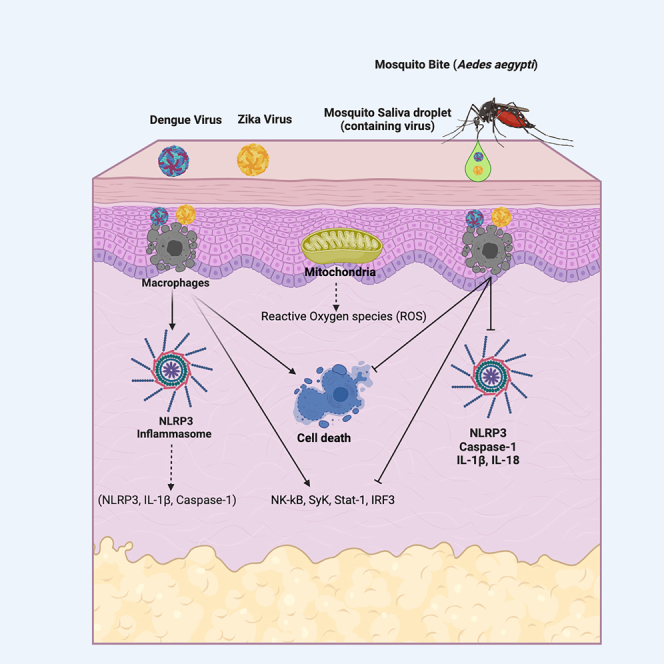
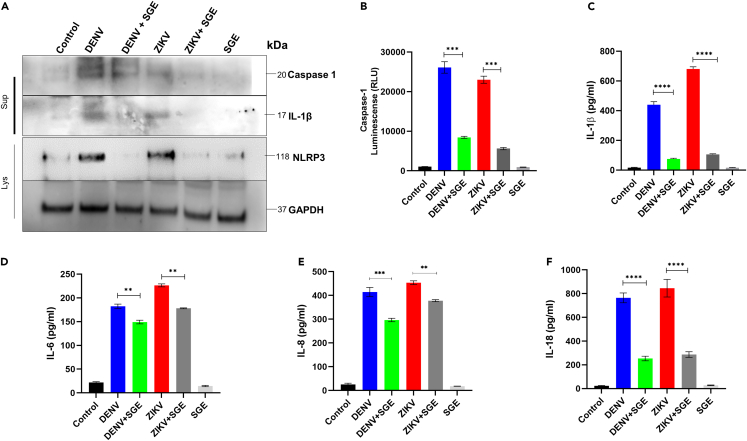
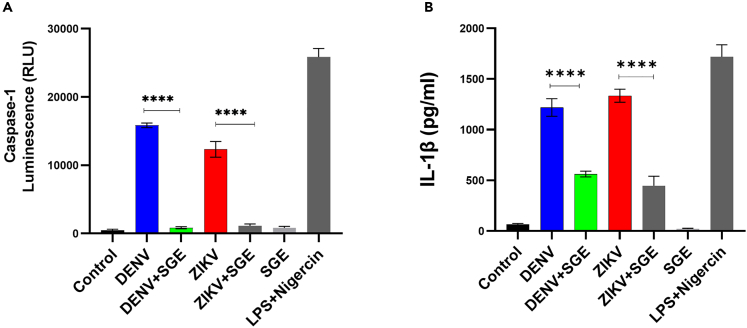
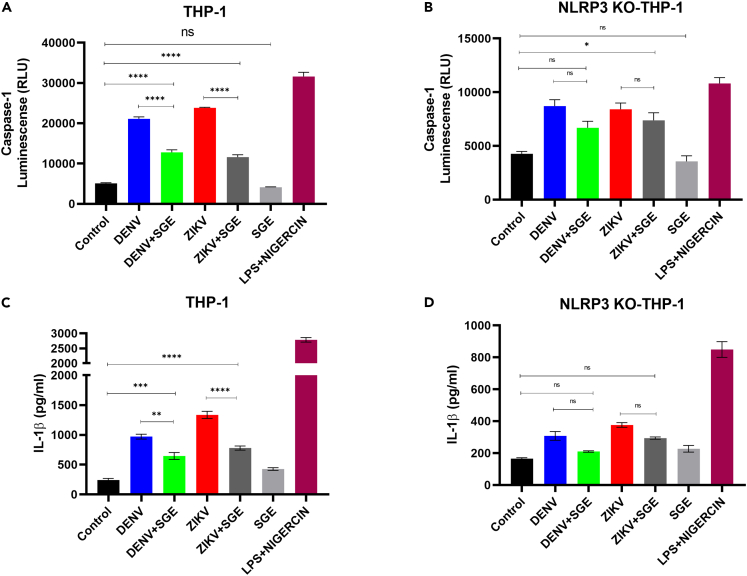
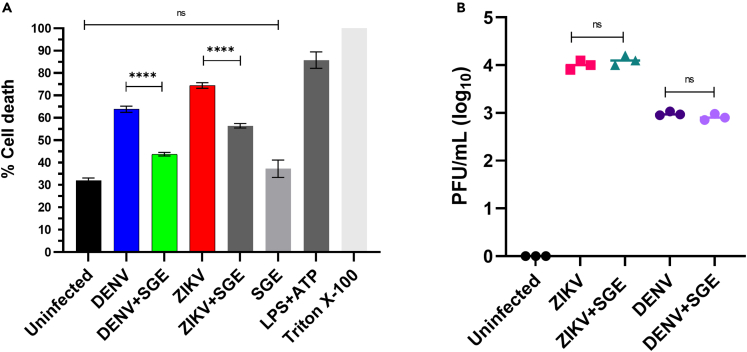
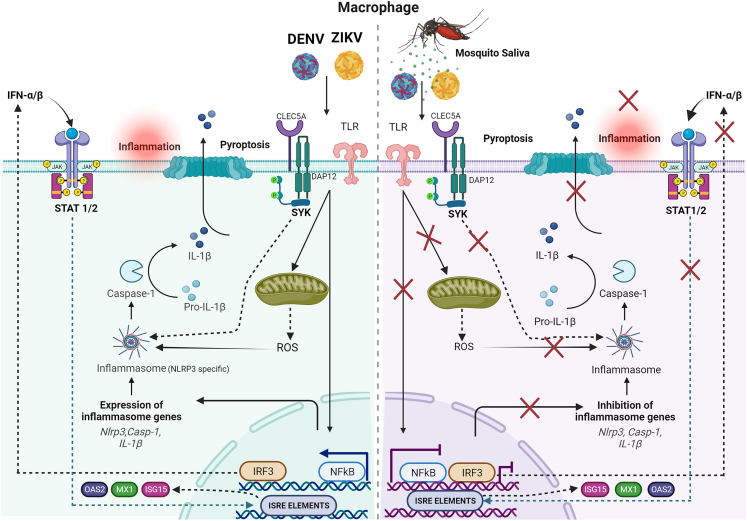
Mosquito borne flaviviruses such as dengue and Zika represent a major public health problem due to globalization and propagation of susceptible vectors worldwide. Vertebrate host responses to dengue and Zika infections include the processing and release of pro-inflammatory cytokines through the activation of inflammasomes, resulting in disease severity and fatality. Mosquito saliva can facilitate pathogen infection by downregulating the host's immune response. However, the role of mosquito saliva in modulating host innate immune responses remains largely unknown. Here, we show that mosquito salivary gland extract (SGE) inhibits dengue and Zika virus-induced inflammasome activation by reducing NLRP3 expression, Caspase-1 activation, and 1L-1β secretion in cultured human and mice macrophages. As a result, we observe that SGE inhibits virus detection in the early phase of infection. This study provides important insights into how mosquito saliva modulates host innate immunity during viral infection.
Keywords: Biological sciences; Natural sciences; Virology.
Conflict of interest statement
The authors declare no competing interests.
Figures
References
-
- WHO Vector-borne diseases. 2020. https://www.who.int/news-room/fact-sheets/detail/vector-borne-diseases
-
- Lupton K. Zika virus disease: a public health emergency of international concern. Br. J. Nurs. 2016;25:198–200. - PubMed
LinkOut - more resources
Full Text Sources
Research Materials
