


Prevalence of food insecurity amid COVID-19 lockdowns and sociodemographic indicators of household vulnerability in Harar and Kersa, Ethiopia
- PMID: 38195646
- PMCID: PMC10777627
- DOI: 10.1186/s40795-023-00815-9
Prevalence of food insecurity amid COVID-19 lockdowns and sociodemographic indicators of household vulnerability in Harar and Kersa, Ethiopia
Abstract
Background: The COVID-19 pandemic was associated with widespread social disruptions, as governments implemented lockdowns to quell disease spread. To advance knowledge of consequences for households in resource-limited countries, we examine food insecurity during the pandemic period.
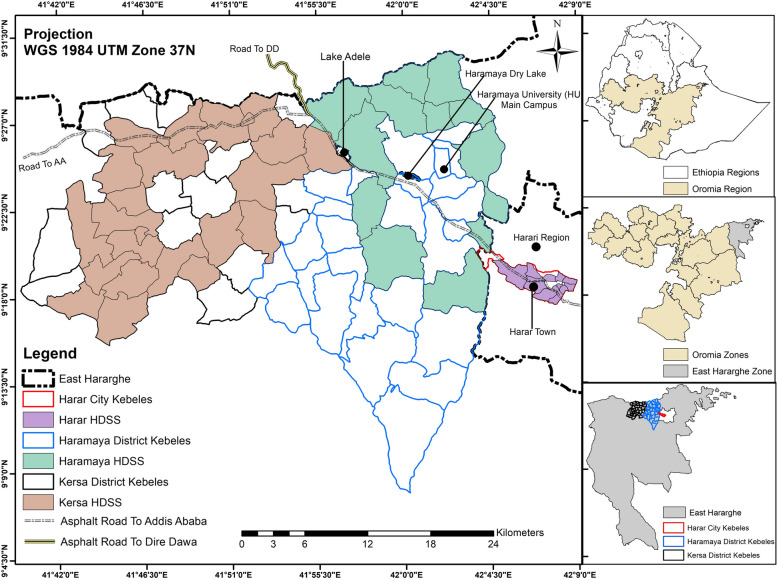
Methods: We conducted a cross-sectional study and used logistic regression to examine factors associated with food insecurity. Data were collected between August and September of 2021 through a Health and Demographic Surveillance System (HDSS) using a survey instrument focused on knowledge regarding the spread of COVID-19; food availability; COVID-19 related shocks/coping; under-five child healthcare services; and healthcare services for pregnant women. The study is set in two communities in Eastern Ethiopia, one rural (Kersa) and one urban (Harar), and included a random sample of 880 households.
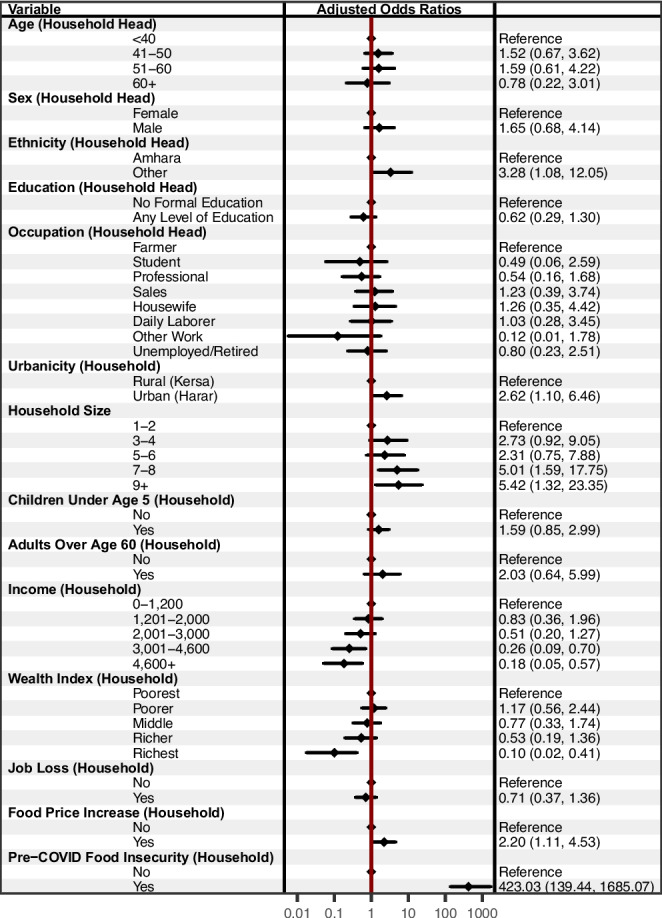
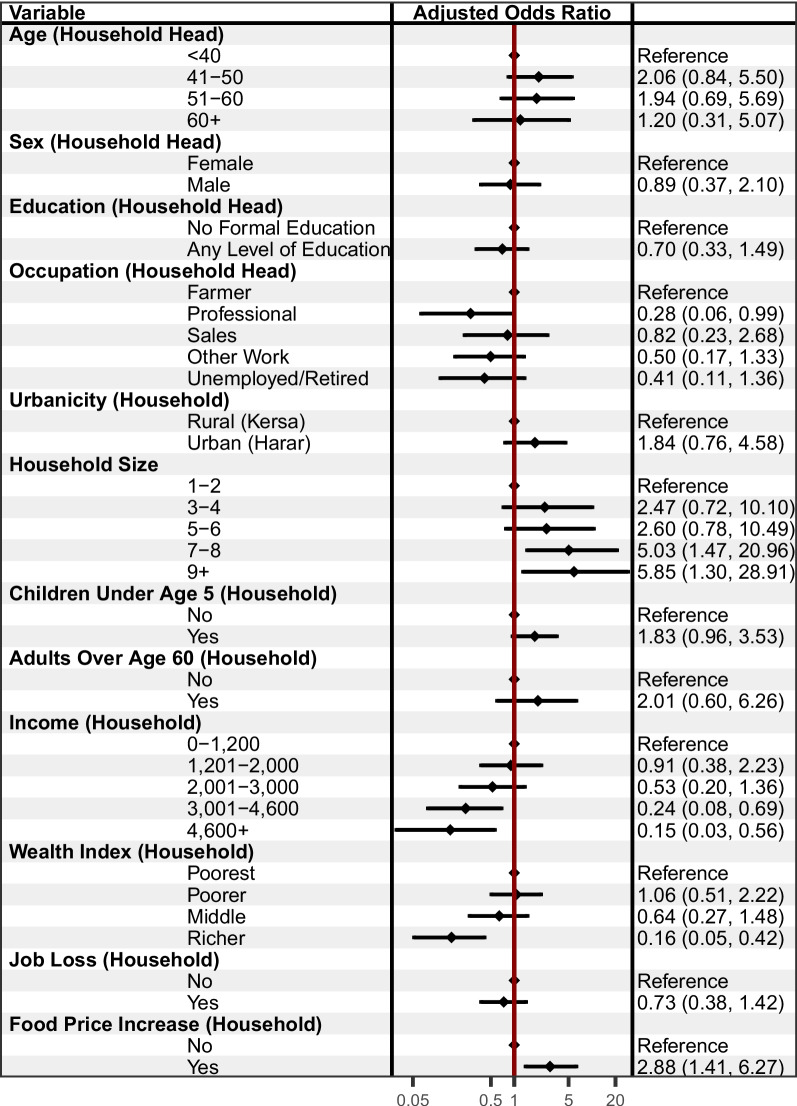
Results: Roughly 16% of households reported not having enough food to eat during the pandemic, an increase of 6% since before the pandemic. After adjusting for other variables, households were more likely to report food insecurity if they were living in an urban area, were a larger household, had a family member lose employment, reported an increase in food prices, or were food insecure before the pandemic. Households were less likely to report food insecurity if they were wealthier or had higher household income.
Conclusions: After taking individual and household level sociodemographic characteristics into consideration, households in urban areas were at higher risk for food insecurity. These findings suggest a need for expanding food assistance programs to more urban areas to help mitigate the impact of lockdowns on more vulnerable households.
Keywords: East Africa; Hardship; Resilience; SARS-CoV-2; Vulnerability.
© 2024. The Author(s).
Conflict of interest statement
The authors declare no competing interests.
Figures
References
-
- Baldwin RE, Weder B. Mitigating the COVID economic crisis: act fast and do whatever it takes. London: CEPR press; 2020.
-
- Osendarp S, Akuoku JK, Black RE, Headey D, Ruel M, Scott N, Shekar M, Walker N, Flory A, Haddad L. The COVID-19 crisis will exacerbate maternal and child undernutrition and child mortality in low-and middle-income countries. Nat Food. 2021;2(7):476–484. doi: 10.1038/s43016-021-00319-4. - DOI - PubMed
LinkOut - more resources
Full Text Sources
Miscellaneous