


Growth and micronutrient status parameters of Nigerian preterm infants consuming preterm formula or breastmilk
- PMID: 38195937
- PMCID: PMC11343706
- DOI: 10.1038/s41390-023-02976-6
Growth and micronutrient status parameters of Nigerian preterm infants consuming preterm formula or breastmilk
Abstract
Background: Moderate-to-late preterm infants (32-34 weeks GA) have increased risk of neonatal morbidities compared to term infants, however dedicated nutritional guidelines are lacking.
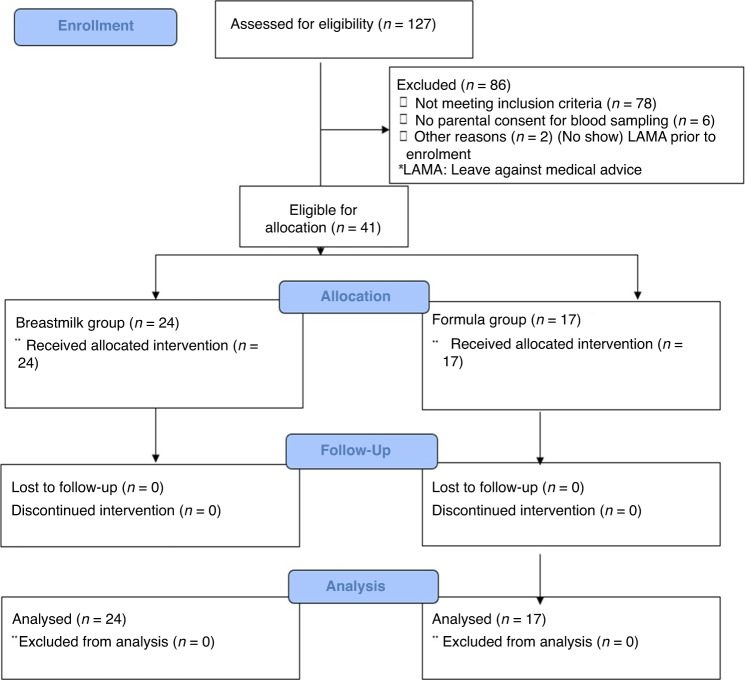
Methods: Moderate-to-late preterm infants received a preterm formula (n = 17) or breastmilk (n = 24) from age 2-10 weeks in a non-randomized, open-label observational study. Anthropometric measurements were assessed bi-weekly. Blood concentrations of hemoglobin, ferritin, serum retinol, and 25-hydroxy-vitamin D (25OHD) were analyzed at age 2 and 10 weeks.
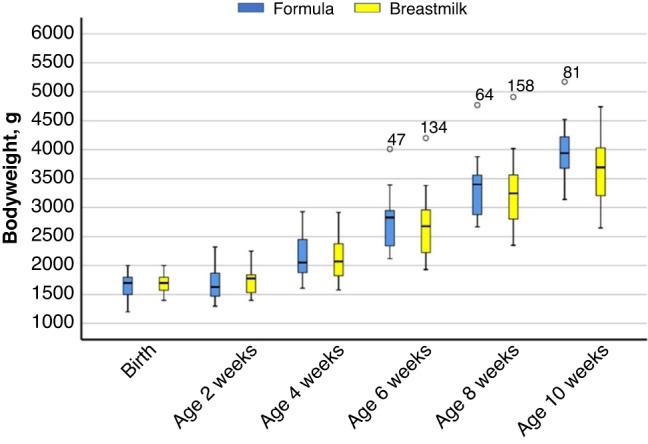
Result: Average growth per day was 14.7 g/kg BW/day in formula-fed and 12.8 g/kg BW/day in breastmilk-fed infants but not different from each other. Length and head circumference in both groups were in line with the median reference values of the Fenton growth chart. At 10 weeks of age, hemoglobin tended to be higher in the formula-fed group (10.2 g/dL vs. 9.6 g/dL, p = 0.053). 25OHD increased in formula- and breastmilk-fed infants from 73.8 to 180.9 nmol/L and from 70.7 to 97.6 nmol/L, respectively. Serum retinol only increased in the formula-fed group (0.63 to 1.02 µmol/L, p < 0.001).
Conclusion: Breastfeeding resulted in adequate growth in moderate-late preterm infants but was limiting in some micronutrients. The preterm formula provided adequate micronutrients, but weight gain velocity was higher than the Fenton reference value.
Impact statement: Unfortified breastmilk resulted in adequate growth in weight, length and head circumference in Nigerian moderate to late preterm infants during an study period of 8 weeks, but status of vitamin D, vitamin A and iron needs to be monitored. The high-energy formula, developed for very preterm infants, resulted in higher growth in body weight in moderate to late preterm infants than the median of the Fenton preterm growth chart. This study supports the necessity of dedicated nutritional guidelines, and regular monitoring of growth and nutritional status of moderate to late preterm infants.
© 2024. The Author(s).
Conflict of interest statement
At the time of submission, A.S. just retired as an employee of FrieslandCampina. He was involved in the design of the study, data evaluation, and manuscript writing, but not in the recruitment and execution. The product for the study was provided by FrieslandCampina. A.A.I. as an employee of University College Hospital Ibadan implemented the study on behalf of her institution. Her institution received the grant for the project implementation. The other authors declare no competing interests.
Figures

References
-
- Kerstjens, J. M., de Winter, A. F., Bocca-Tjeertes, I. F., Bos, A. F. & Reijneveld, S. A. Risk of developmental delay increases exponentially as gestational age of preterm infants decreases: a cohort study at age 4 years. Dev. Med. Child Neurol.54, 1096–1101, 10.1111/j.1469-8749.2012.04423.x (2012). 10.1111/j.1469-8749.2012.04423.x - DOI - PubMed
Publication types
MeSH terms
Substances
LinkOut - more resources
Full Text Sources
Medical
