


Spatio-temporal variability in transmission risk of human schistosomes and animal trematodes in a seasonally desiccating East African landscape
- PMID: 38196367
- PMCID: PMC10777146
- DOI: 10.1098/rspb.2023.1766
Spatio-temporal variability in transmission risk of human schistosomes and animal trematodes in a seasonally desiccating East African landscape
Abstract
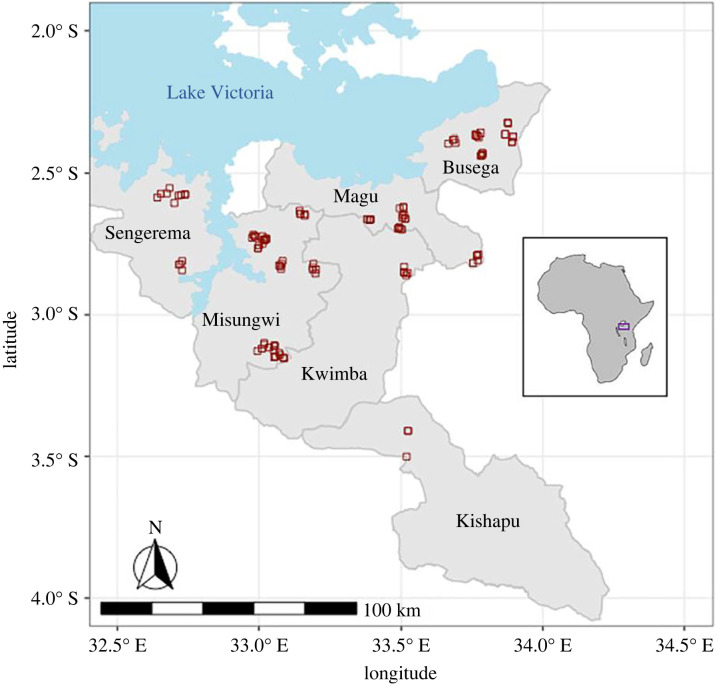
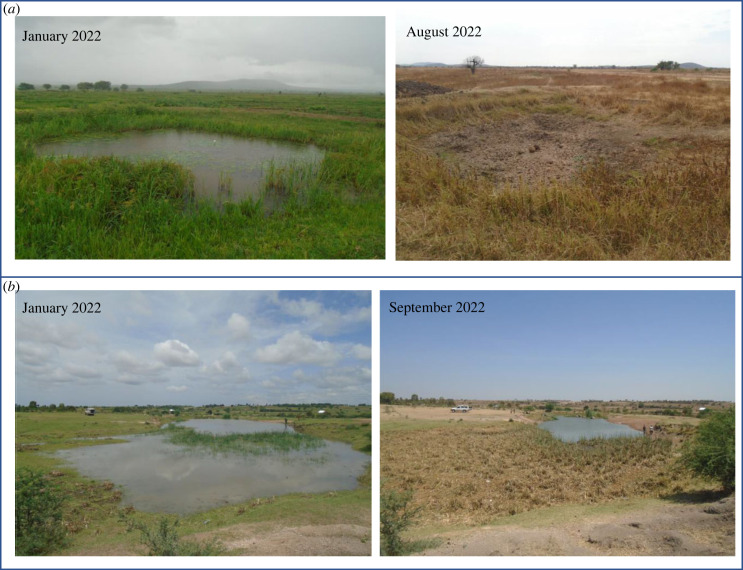
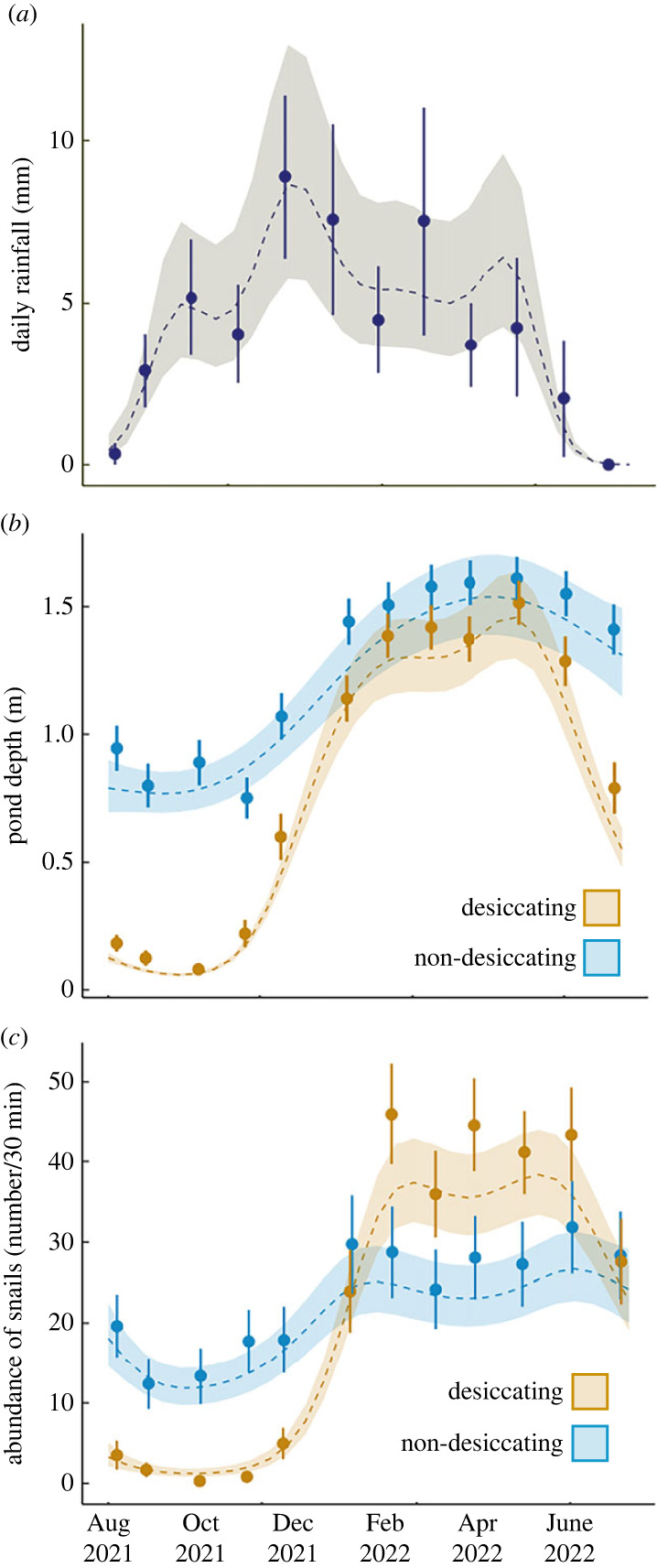
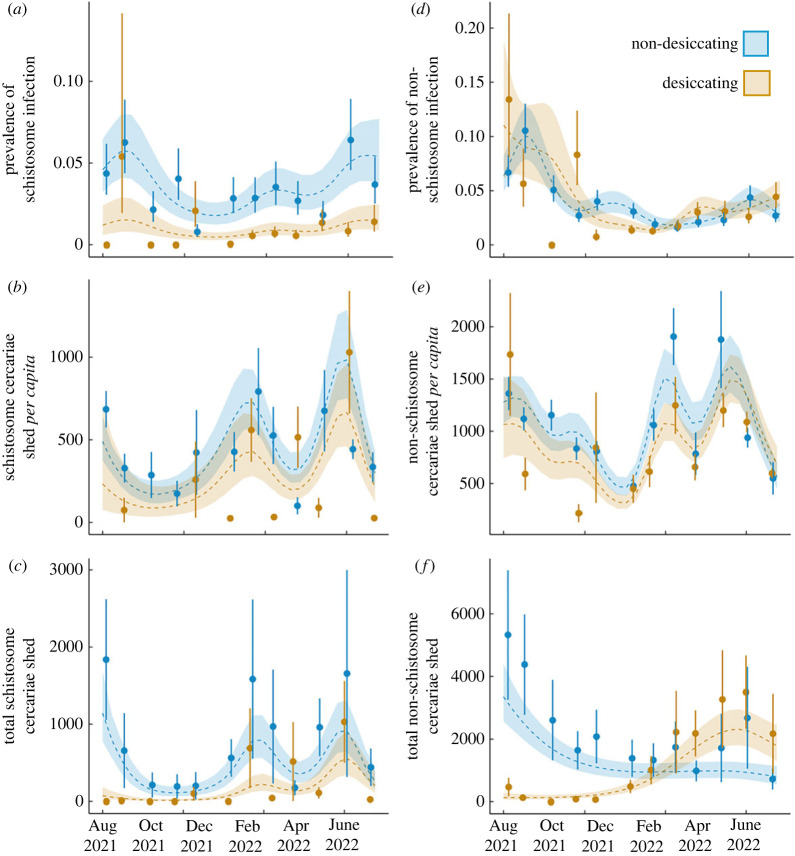
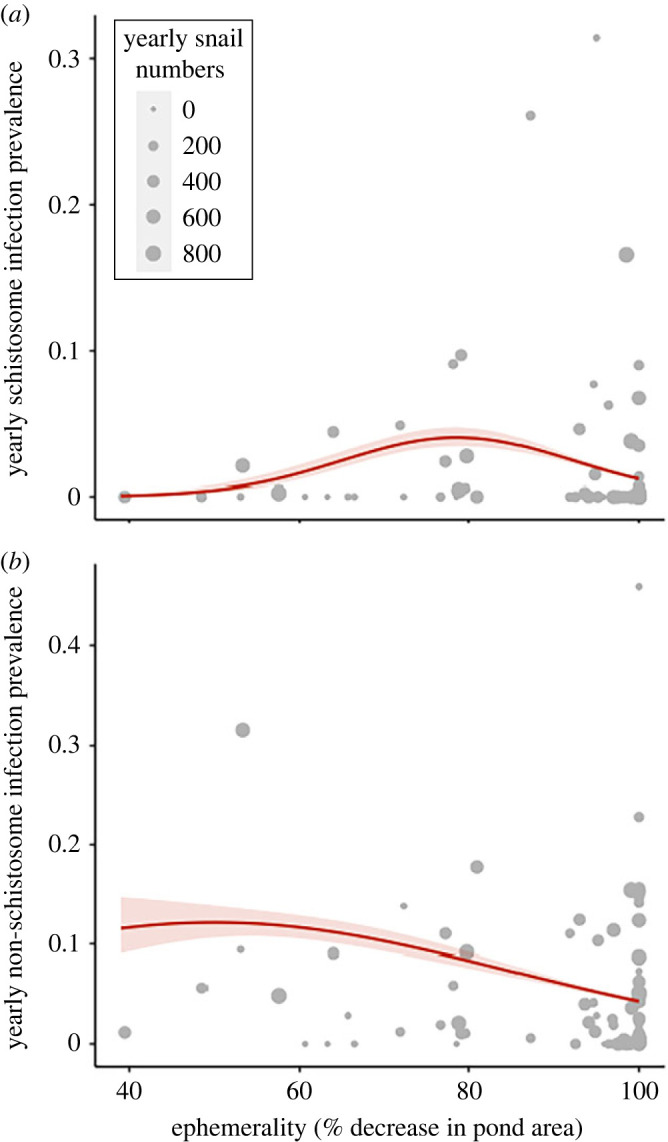
Different populations of hosts and parasites experience distinct seasonality in environmental factors, depending on local-scale biotic and abiotic factors. This can lead to highly heterogeneous disease outcomes across host ranges. Variable seasonality characterizes urogenital schistosomiasis, a neglected tropical disease caused by parasitic trematodes (Schistosoma haematobium). Their intermediate hosts are aquatic Bulinus snails that are highly adapted to extreme rainfall seasonality, undergoing prolonged dormancy yearly. While Bulinus snails have a remarkable capacity for rebounding following dormancy, we investigated the extent to which parasite survival within snails is diminished. We conducted an investigation of seasonal snail schistosome dynamics in 109 ponds of variable ephemerality in Tanzania from August 2021 to July 2022. First, we found that ponds have two synchronized peaks of schistosome infection prevalence and observed cercariae, though of lower magnitude in the fully desiccating than non-desiccating ponds. Second, we evaluated total yearly schistosome prevalence across an ephemerality gradient, finding ponds with intermediate ephemerality to have the highest infection rates. We also investigated dynamics of non-schistosome trematodes, which lacked synonymity with schistosome patterns. We found peak schistosome transmission risk at intermediate pond ephemerality, thus the impacts of anticipated increases in landscape desiccation could result in increases or decreases in transmission risk with global change.
Keywords: Bulinus; Schistosoma haematobium; aestivation; ephemerality; schistosomiasis; seasonality.
Conflict of interest statement
We declare we have no competing interests.
Figures
Update of
-
Spatiotemporal variability in transmission risk of human schistosomes and animal trematodes in a seasonally desiccating East African landscape.bioRxiv [Preprint]. 2023 May 26:2023.05.25.542103. doi: 10.1101/2023.05.25.542103. bioRxiv. 2023. Update in: Proc Biol Sci. 2024 Jan 10;291(2014):20231766. doi: 10.1098/rspb.2023.1766. PMID: 37292923 Free PMC article. Updated. Preprint.
References
-
- Parratt S, Numminen E, Laine A-L. 2016. Infectious disease dynamics in heterogenous landscapes. Annu. Rev. Ecol. Evol. Syst. 47, 283-306. ( 10.1146/annurev-ecolsys-121415-032321) - DOI
-
- Brannelly LA, Ohmer MEB, Saenz V, Richards-Zawacki CL. 2019. Effects of hydroperiod on growth, development, survival and immune defences in a temperate amphibian. Funct. Ecol. 33, 1952-1961. ( 10.1111/1365-2435.13419) - DOI
-
- Gleason JE, Rooney RC. 2018. Pond permanence is a key determinant of aquatic macroinvertebrate community structure in wetlands. Freshw. Biol. 63, 264-277. ( 10.1111/fwb.13057) - DOI
MeSH terms
LinkOut - more resources
Full Text Sources
Other Literature Sources
Research Materials
