This is a preprint.
Genetic and Survey Data Improves Performance of Machine Learning Model for Long COVID
- PMID: 38196610
- PMCID: PMC10775401
- DOI: 10.21203/rs.3.rs-3749510/v1
Genetic and Survey Data Improves Performance of Machine Learning Model for Long COVID
Abstract
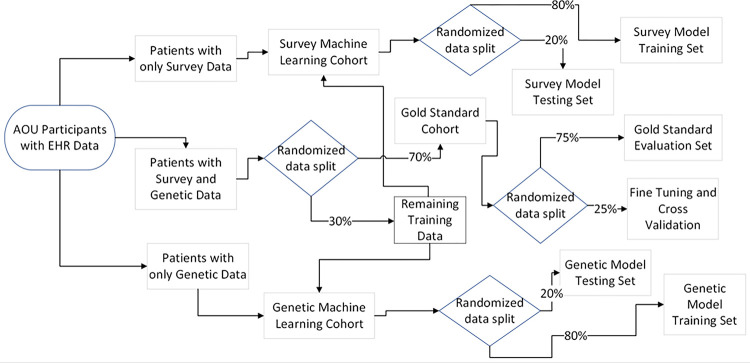
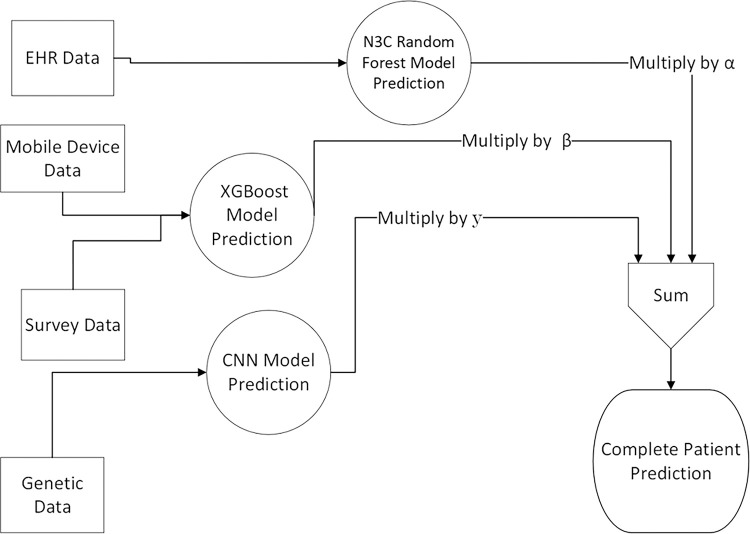
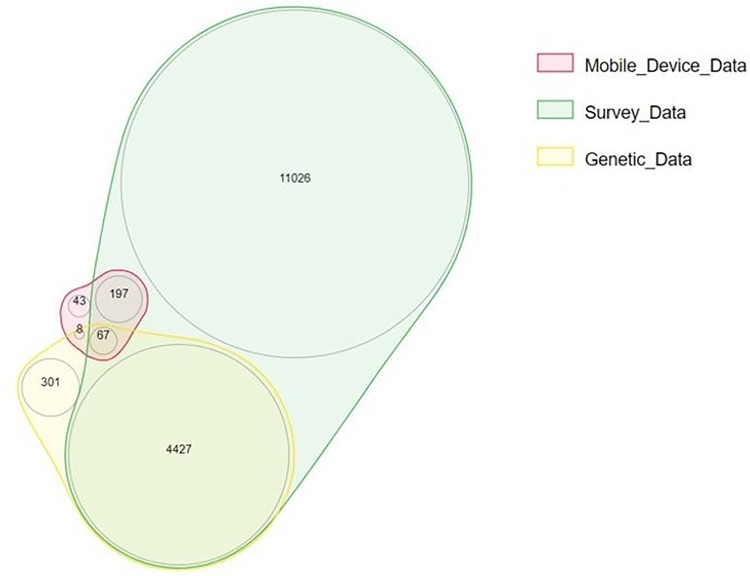
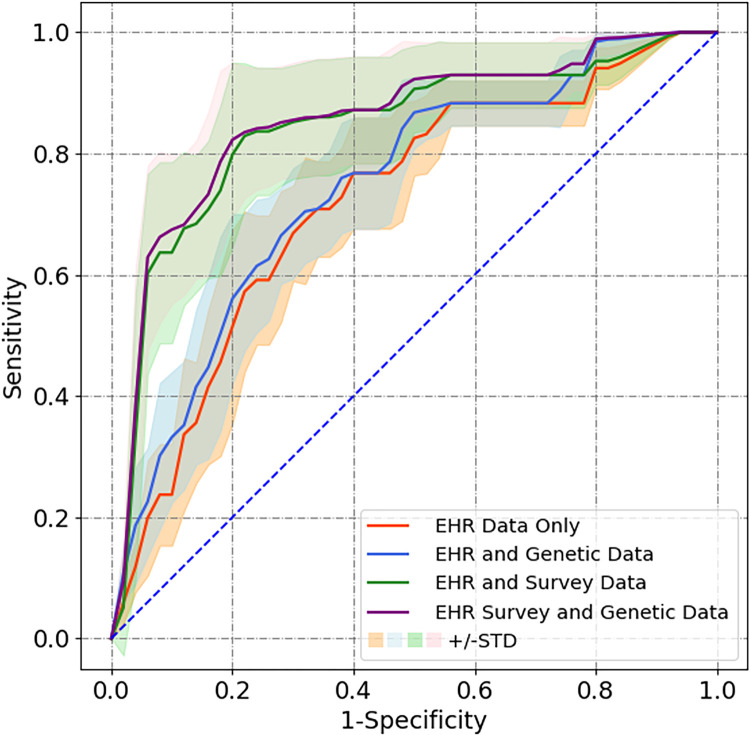
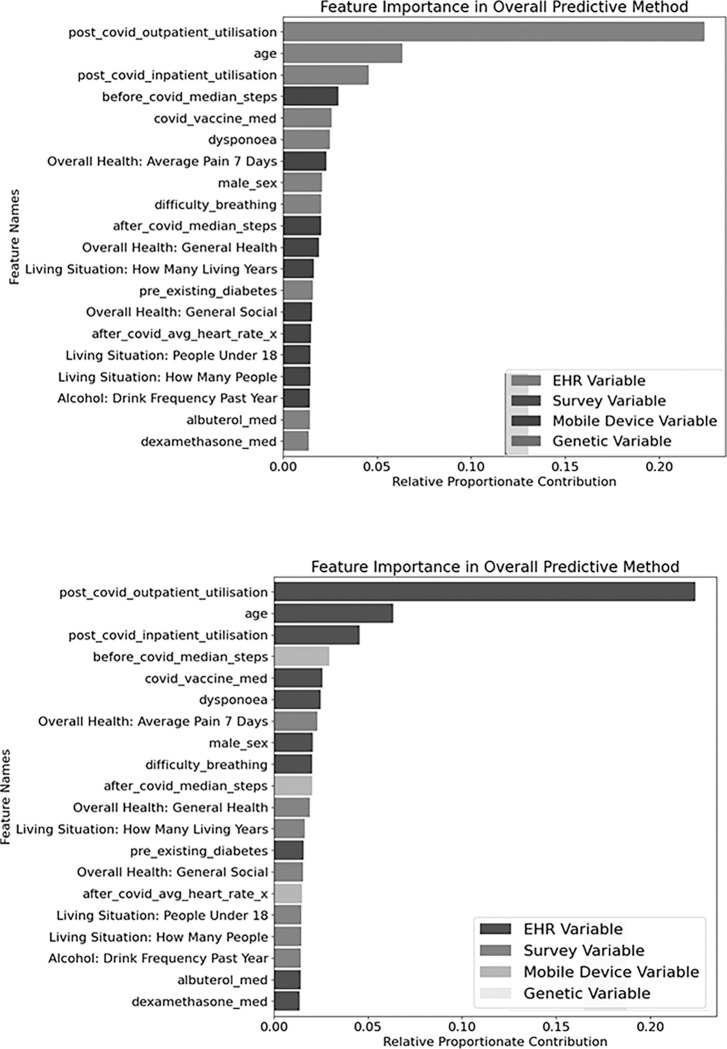
Over 200 million SARS-CoV-2 patients have or will develop persistent symptoms (long COVID). Given this pressing research priority, the National COVID Cohort Collaborative (N3C) developed a machine learning model using only electronic health record data to identify potential patients with long COVID. We hypothesized that additional data from health surveys, mobile devices, and genotypes could improve prediction ability. In a cohort of SARS-CoV-2 infected individuals (n=17,755) in the All of Us program, we applied and expanded upon the N3C long COVID prediction model, testing machine learning infrastructures, assessing model performance, and identifying factors that contributed most to the prediction models. For the survey/mobile device information and genetic data, extreme gradient boosting and a convolutional neural network delivered the best performance for predicting long COVID, respectively. Combined survey, genetic, and mobile data increased specificity and the Area Under Curve the Receiver Operating Characteristic score versus the original N3C model.
Conflict of interest statement
Declarations The authors declared no competing interests for this work.
Figures
References
-
- WHO Coronavirus (COVID-19) Dashboard. https://covid19.who.int.
-
- Lammi V. et al. Genome-wide Association Study of Long COVID. 2023.06.29.23292056 Preprint at 10.1101/2023.06.29.23292056 (2023). - DOI
Publication types
Grants and funding
LinkOut - more resources
Full Text Sources
Miscellaneous