


Covalent immobilization of β-galactosidase using a novel carrier alginate/tea waste: statistical optimization of beads modification and reusability
- PMID: 38197955
- PMCID: PMC10866805
- DOI: 10.1007/s00449-023-02959-1
Covalent immobilization of β-galactosidase using a novel carrier alginate/tea waste: statistical optimization of beads modification and reusability
Abstract
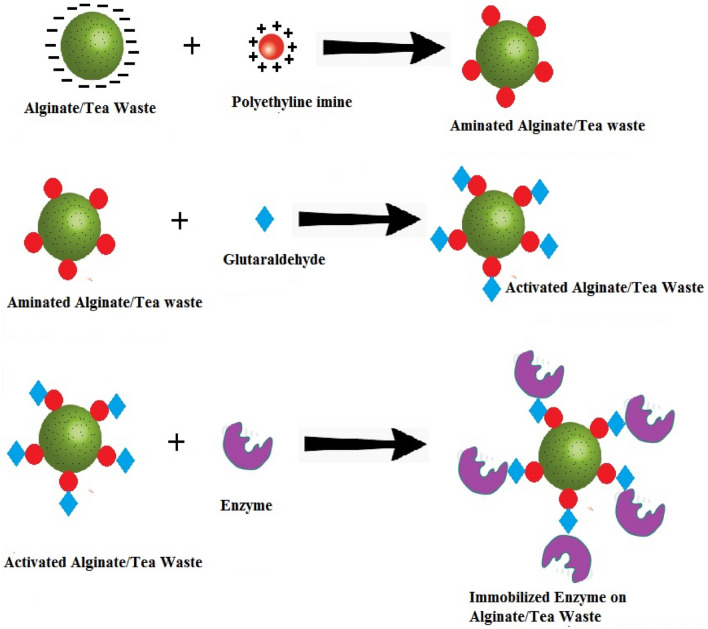
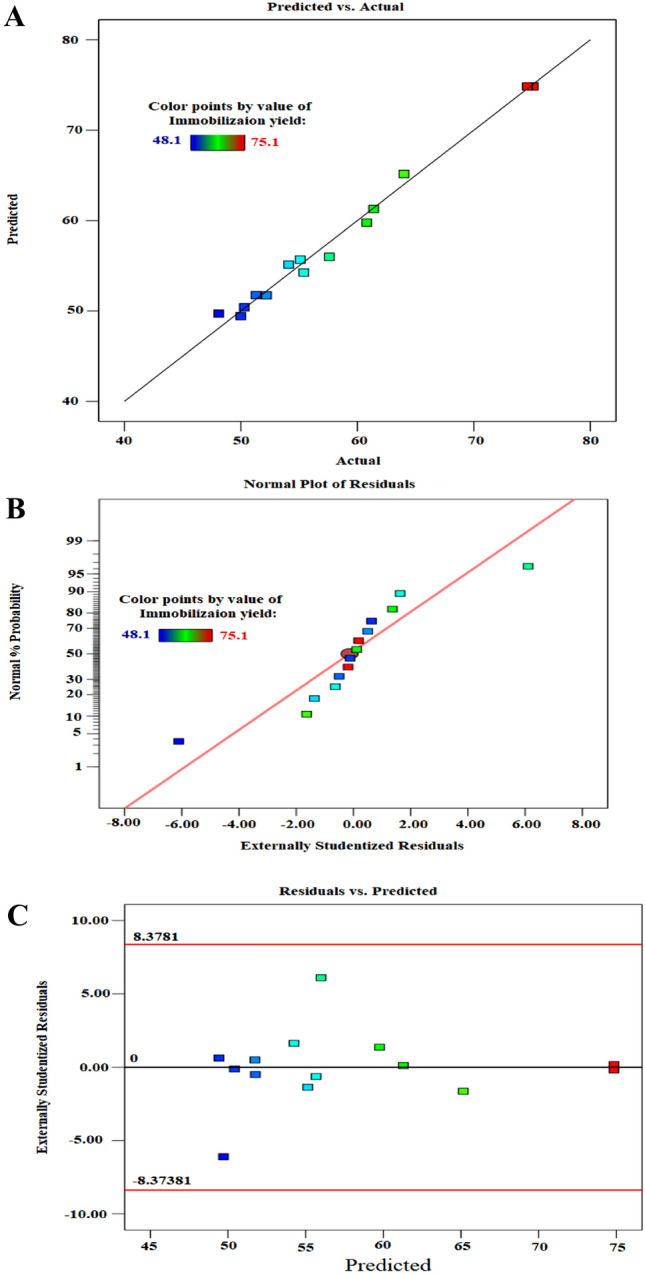
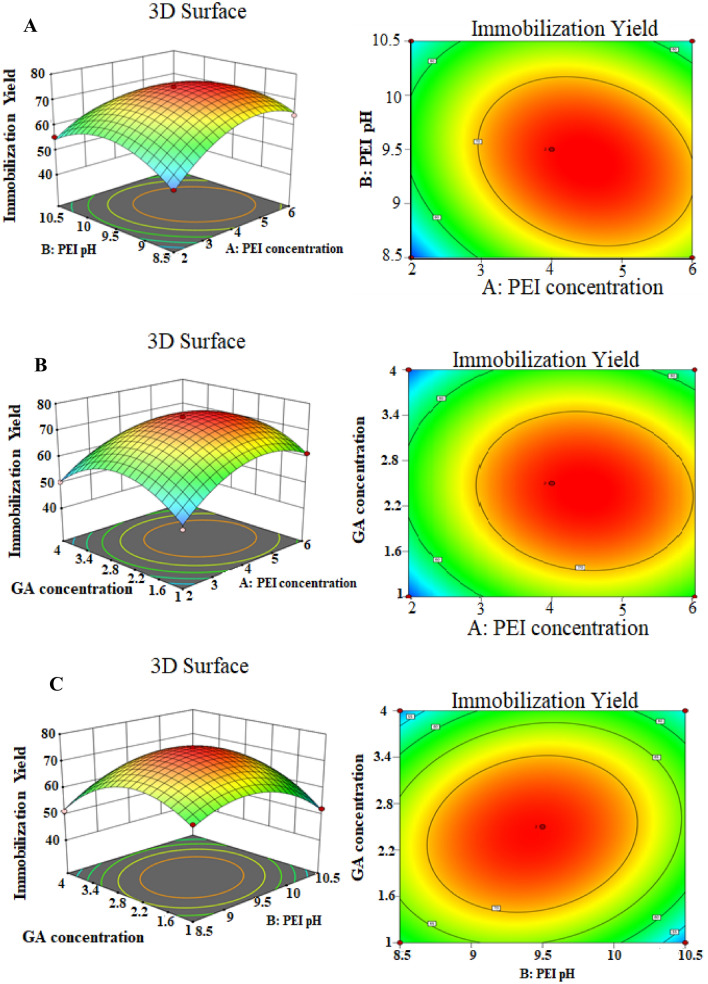
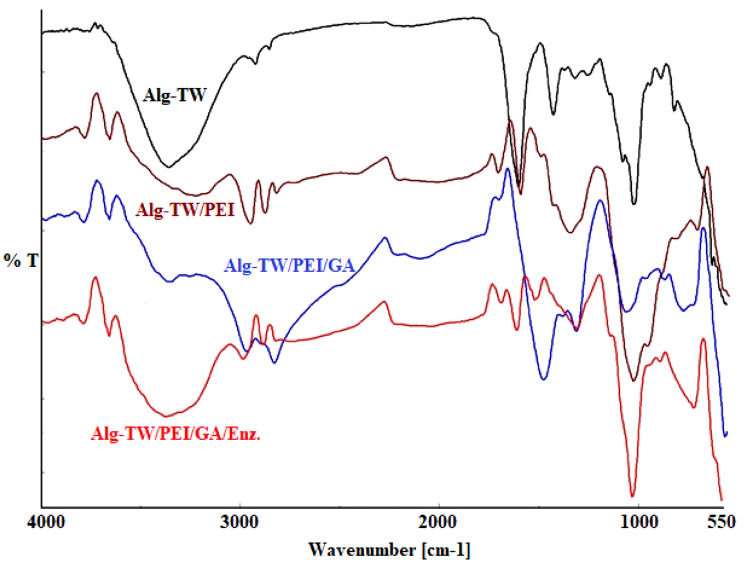
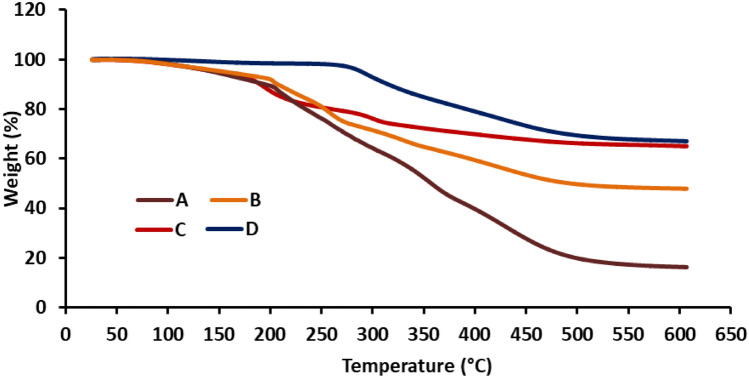
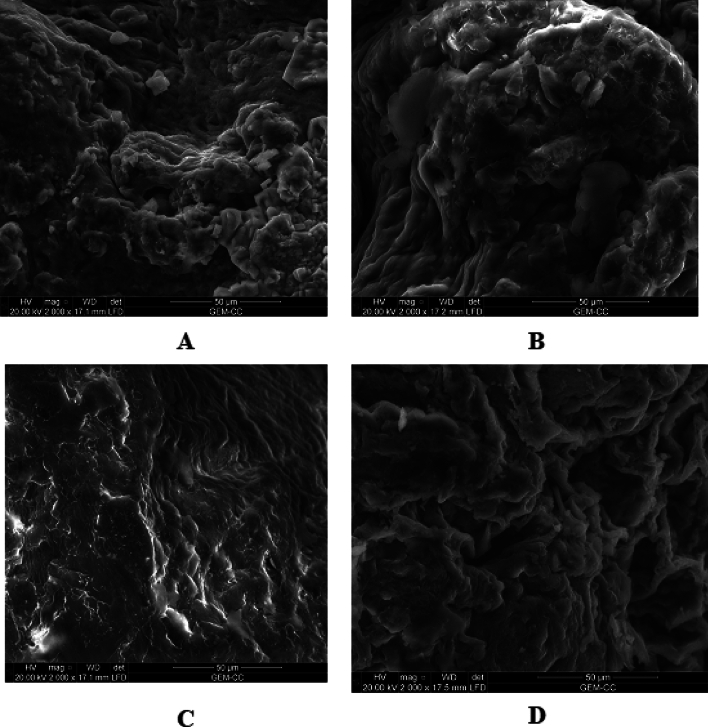
β-galactosidase has been immobilized onto novel alginate/tea waste gel beads (Alg/TW) via covalent binding. Alg/TW beads were subjected to chemical modification through amination with polyethyleneimine (PEI) followed by activation with glutaraldehyde (GA). Chemical modification parameters including PEI concentration, PEI pH, and GA concentration were statistically optimized using Response Surface methodology (RSM) based on Box-Behnken Design (BBD). Analysis of variance (ANOVA) results confirmed the great significance of the model that had F value of 37.26 and P value < 0.05. Furthermore, the R2 value (0.9882), Adjusted R2 value (0.9617), and predicted R2 value (0.8130) referred to the high correlation between predicted and experimental values, demonstrating the fitness of the model. In addition, the coefficient of variation (CV) value was 2.90 that pointed to the accuracy of the experiments. The highest immobilization yield (IY) of β-galactosidase (75.1%) was given under optimized conditions of PEI concentration (4%), PEI pH (9.5), and GA concentration (2.5%). Alg/TW beads were characterized by FT-IR, TGA, and SEM techniques at each step of immobilization process. Moreover, the immobilized β-galactosidase revealed a very good reusability as it could be reused for 15 and 20 consecutive cycles keeping 99.7 and 72.1% of its initial activity, respectively. In conclusion, the environmental waste (tea waste) can be used in modern technological industries such as the food and pharmaceutical industry.
Keywords: Alginate/tea waste; Chemical modification; Immobilized β-galactosidase; Reusability; Statistical optimization.
© 2024. The Author(s).
Conflict of interest statement
The authors declare that there is no conflict of interests.
Figures


References
-
- Hussain S, Anjali KP, Hassan ST, Dwivedi PB. Waste tea as a novel adsorbent: a review. Appl Water Sci. 2018;8(165):1–16. doi: 10.1007/s13201-018-0824-5. - DOI
-
- Debnath B, Haldar D, Purkait MK. Potential and sustainable utilization of tea waste: a review on present status and future trends. J Environ Chem Eng. 2021;9:1–24. doi: 10.1016/j.jece.2021.106179. - DOI
-
- Kiyama R. Estrogenic biological activity and underlying molecular mechanisms of green tea constituents. Trends Food Sci Technol. 2020;95:247–260. doi: 10.1016/j.tifs.2019.11.014. - DOI
-
- Barathi M, Kumar ASK, Kodali J, Mittal S, Samhith GD, Rajesh N. Probing the interaction between fluoride and the polysaccharides in Al(III)- and Zr (IV)- modified tea waste by using diverse analytical characterization techniques. Chem Select. 2017;2(31):10123–10135. doi: 10.1002/slct.201701774. - DOI
MeSH terms
Substances
LinkOut - more resources
Full Text Sources
