


A single-cell atlas of the aging mouse ovary
- PMID: 38200272
- PMCID: PMC10798902
- DOI: 10.1038/s43587-023-00552-5
A single-cell atlas of the aging mouse ovary
Abstract
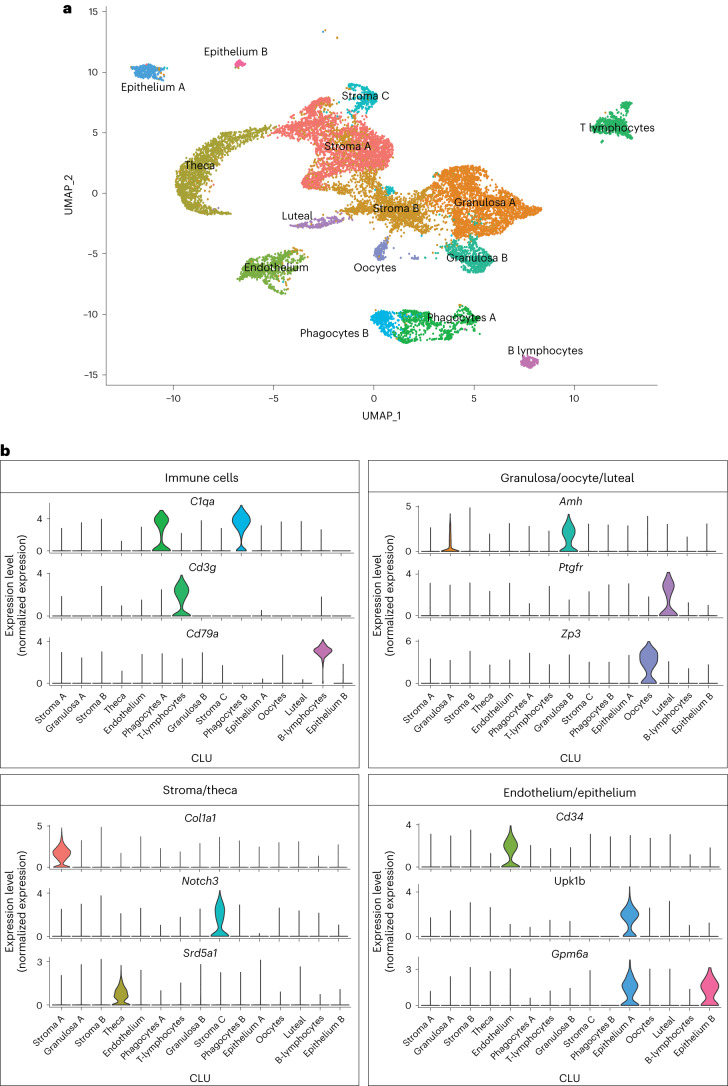
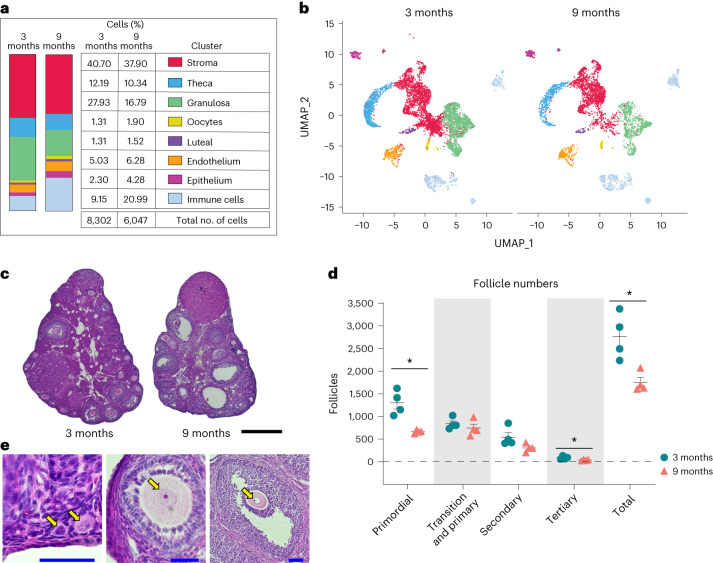
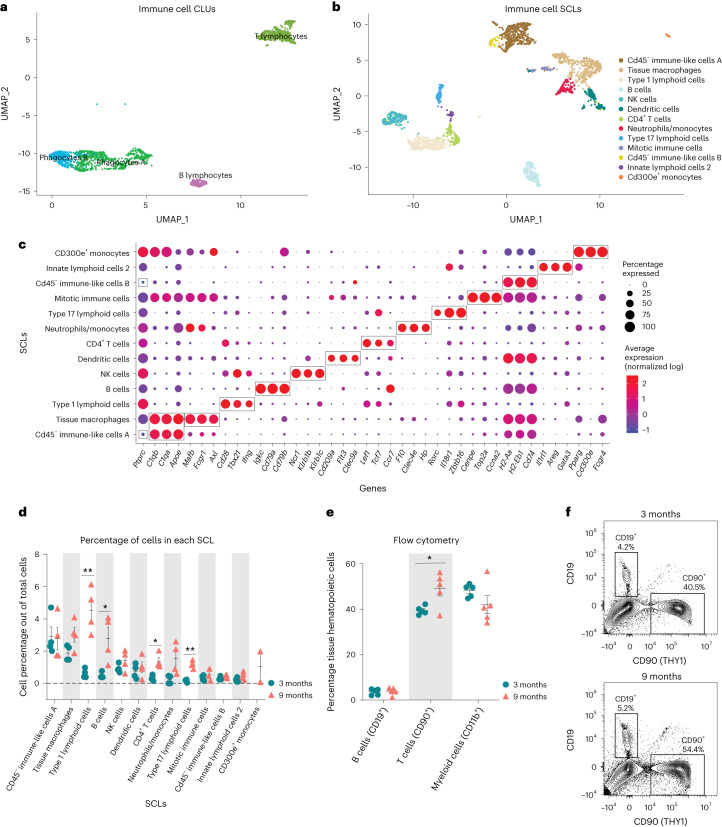
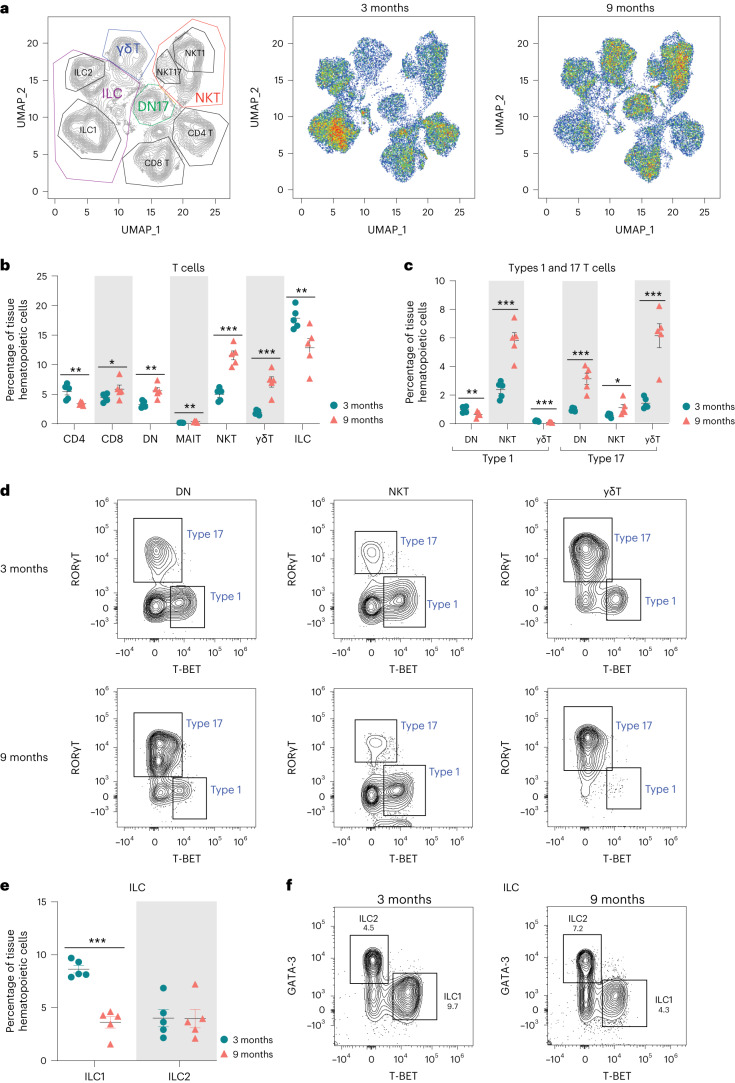
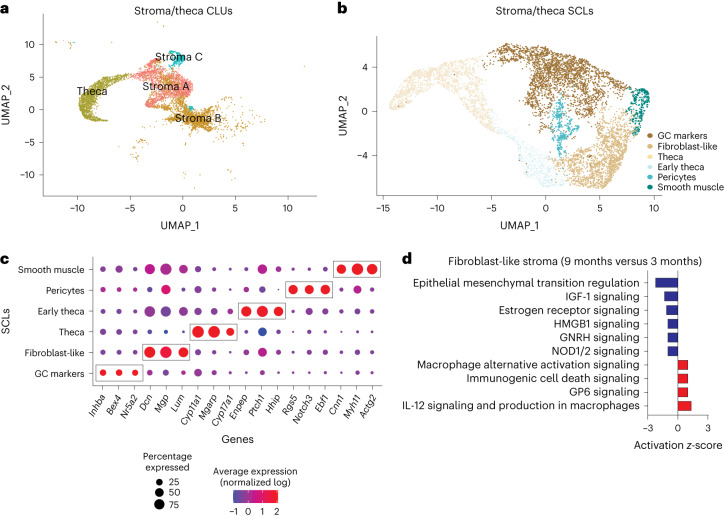
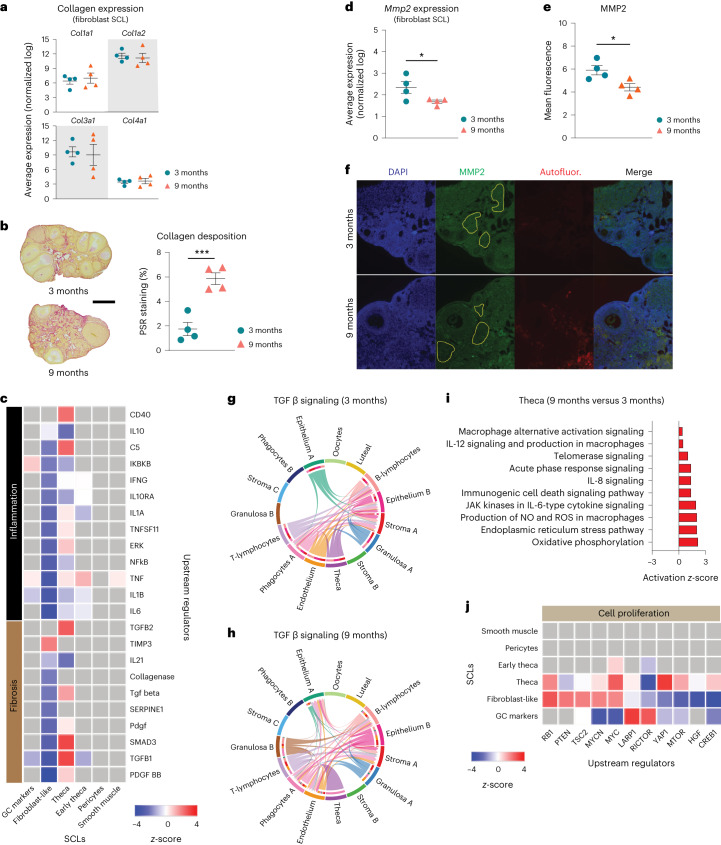
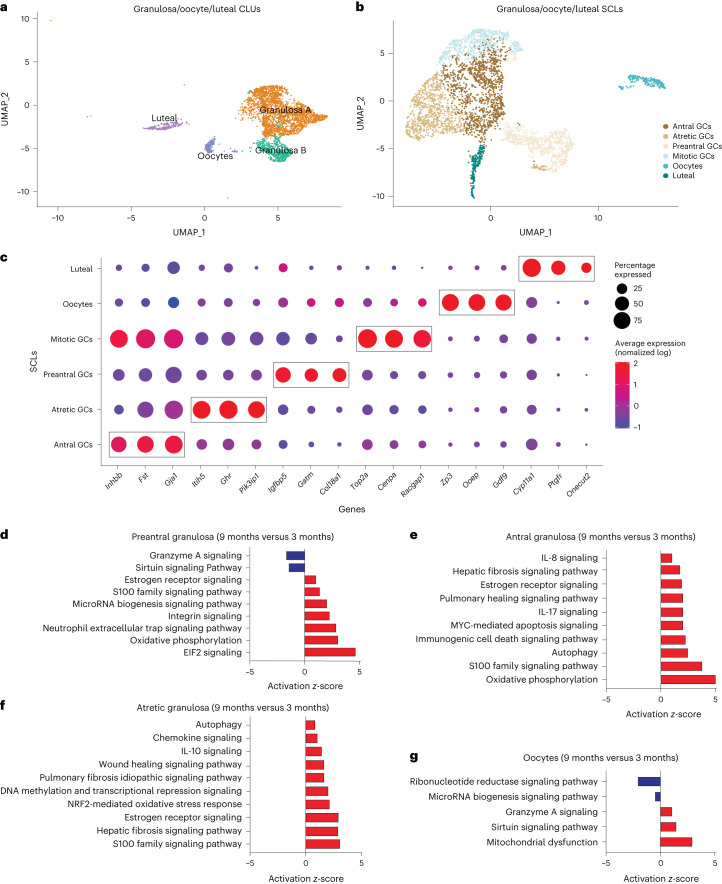
Ovarian aging leads to diminished fertility, dysregulated endocrine signaling and increased chronic disease burden. These effects begin to emerge long before follicular exhaustion. Female humans experience a sharp decline in fertility around 35 years of age, which corresponds to declines in oocyte quality. Despite a growing body of work, the field lacks a comprehensive cellular map of the transcriptomic changes in the aging mouse ovary to identify early drivers of ovarian decline. To fill this gap we performed single-cell RNA sequencing on ovarian tissue from young (3-month-old) and reproductively aged (9-month-old) mice. Our analysis revealed a doubling of immune cells in the aged ovary, with lymphocyte proportions increasing the most, which was confirmed by flow cytometry. We also found an age-related downregulation of collagenase pathways in stromal fibroblasts, which corresponds to rises in ovarian fibrosis. Follicular cells displayed stress-response, immunogenic and fibrotic signaling pathway inductions with aging. This report provides critical insights into mechanisms responsible for ovarian aging phenotypes. The data can be explored interactively via a Shiny-based web application.
© 2024. The Author(s).
Conflict of interest statement
The authors declare no competing interests.
Figures
Update of
-
A single-cell atlas of the aging murine ovary.bioRxiv [Preprint]. 2023 Sep 6:2023.04.29.538828. doi: 10.1101/2023.04.29.538828. bioRxiv. 2023. Update in: Nat Aging. 2024 Jan;4(1):145-162. doi: 10.1038/s43587-023-00552-5. PMID: 37162983 Free PMC article. Updated. Preprint.
References
MeSH terms
Grants and funding
LinkOut - more resources
Full Text Sources
Medical
Molecular Biology Databases
Miscellaneous
