


Gender differences in changes in alcohol consumption achieved by free provision of non-alcoholic beverages: a secondary analysis of a randomized controlled trial
- PMID: 38200433
- PMCID: PMC10782583
- DOI: 10.1186/s12889-024-17645-4
Gender differences in changes in alcohol consumption achieved by free provision of non-alcoholic beverages: a secondary analysis of a randomized controlled trial
Abstract
Background: We recently demonstrated that a 12-week intervention consisting of the provision of free non-alcoholic beverages reduced alcohol consumption in excessive drinkers for 8 weeks after the intervention. However, gender differences in this effect were not explored. Thus, this secondary analysis investigated gender differences in the influence of non-alcoholic beverage provision on alcohol consumption.
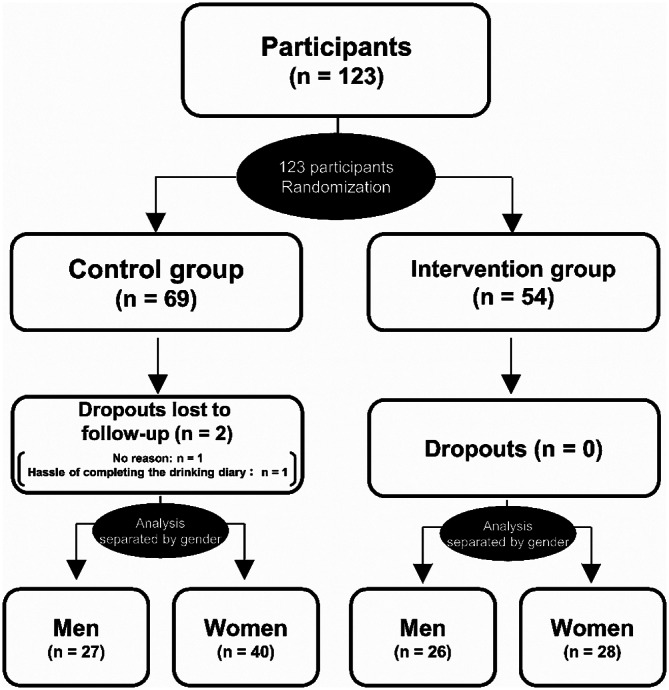
Methods: Individuals who frequently drank excessively (at least 40 g/day in men and 20 g/day in women) and who were not diagnosed with alcoholism were recruited. Participants were randomized into the intervention or control group by simple randomization using a random number table. In the intervention group, free non-alcoholic beverages were provided once every 4 weeks for 12 weeks (three times in total). The consumption of alcoholic and non-alcoholic beverages was calculated based on a drinking diary submitted with the previous 4 weeks' of data. In this study, we compared the longitudinal changes in alcohol consumption between genders in both groups.
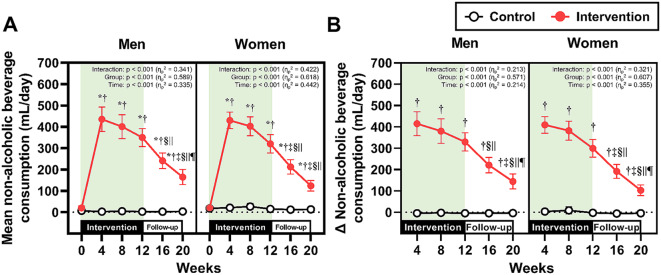
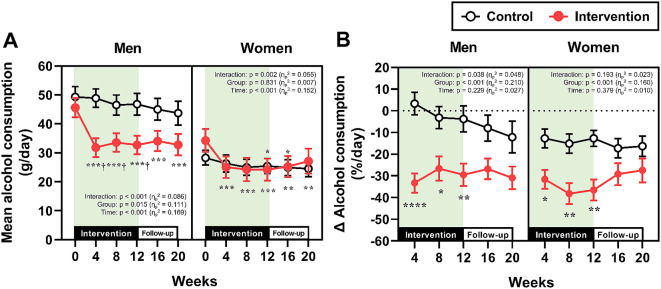
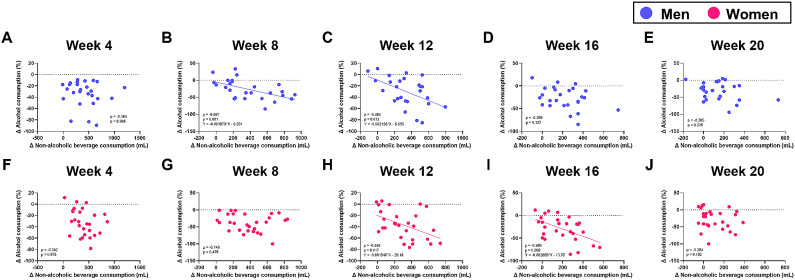
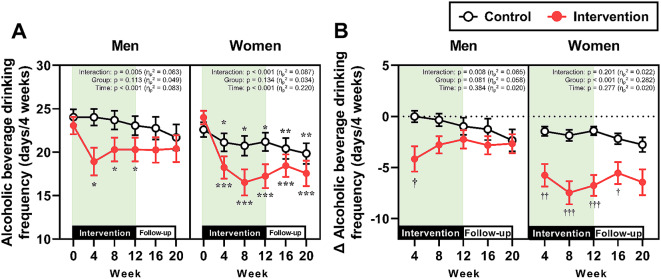
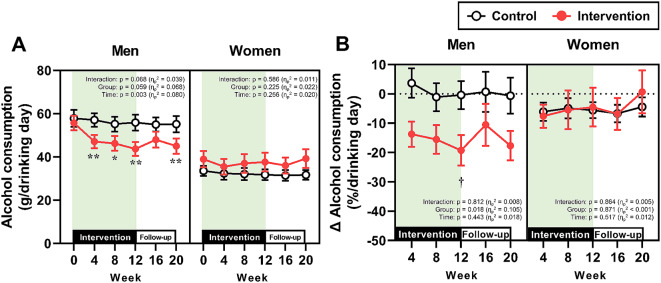
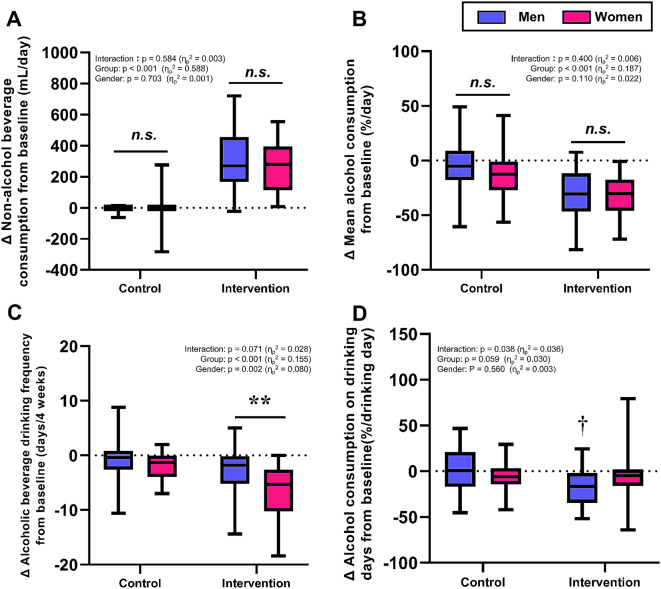
Results: The provision of non-alcoholic beverages significantly reduced alcohol consumption in both genders; however, significant differences in alcohol consumption between the control and intervention groups were observed only in men. The average alcohol consumption during the intervention fell below the level associated with a high risk of non-communicable diseases in men (32.7 g/day), but not in women (24.8 g/day). Correlation coefficient analysis showed that replacing alcoholic beverages with the provided non-alcoholic beverages resulted in different drinking patterns according to gender. The percent changes in the consumption of alcoholic and non-alcoholic beverages relative to baseline levels did not differ between genders.
Conclusions: Our results suggest that the provision of non-alcoholic beverages reduced alcohol consumption irrespective of gender. Of note, providing non-alcoholic beverages might be particularly useful for reducing high-risk alcohol consumption in male excessive drinkers.
Trial registration: UMIN UMIN000047949. Registered 4 June 2022.
Keywords: Alcohol drinking behavior; Non-alcoholic beverages; Reduced alcohol consumption; Sex difference.
© 2024. The Author(s).
Conflict of interest statement
H.Y. received research funding from Asahi Breweries.
Figures
References
-
- World Health Organization . Global status report on alcohol and health 2018. Geneva: World Health Organization; 2018.
Publication types
MeSH terms
LinkOut - more resources
Full Text Sources
Medical
