


Evaluation of the Effectiveness of Medical-Grade Honey and Hypericum Perforatum Ointment on Second-Intention Healing of Full-Thickness Skin Wounds in Cats
- PMID: 38200767
- PMCID: PMC10778018
- DOI: 10.3390/ani14010036
Evaluation of the Effectiveness of Medical-Grade Honey and Hypericum Perforatum Ointment on Second-Intention Healing of Full-Thickness Skin Wounds in Cats
Abstract
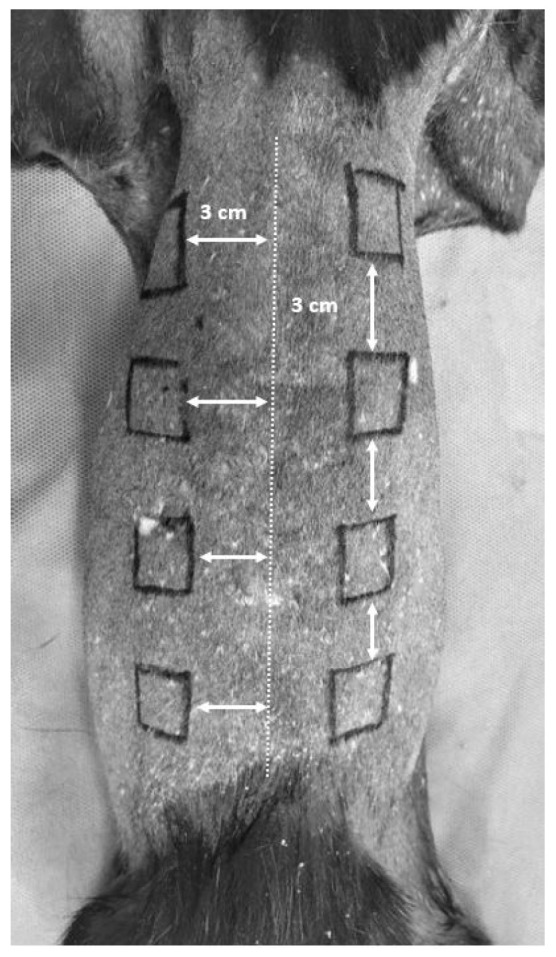
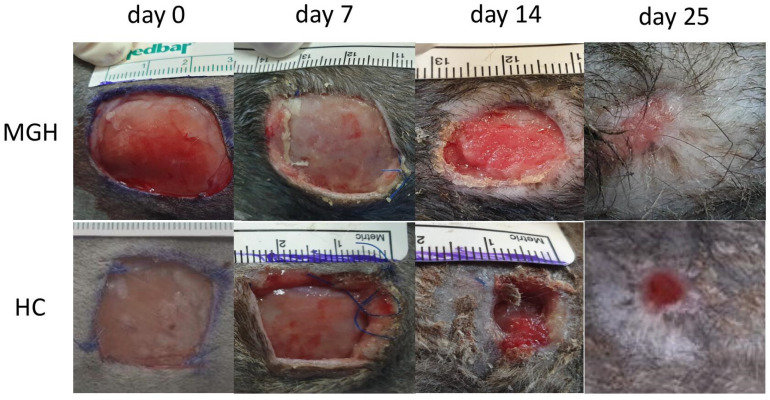
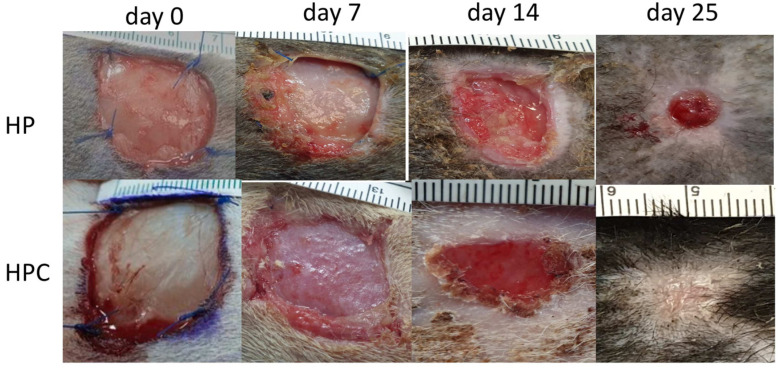
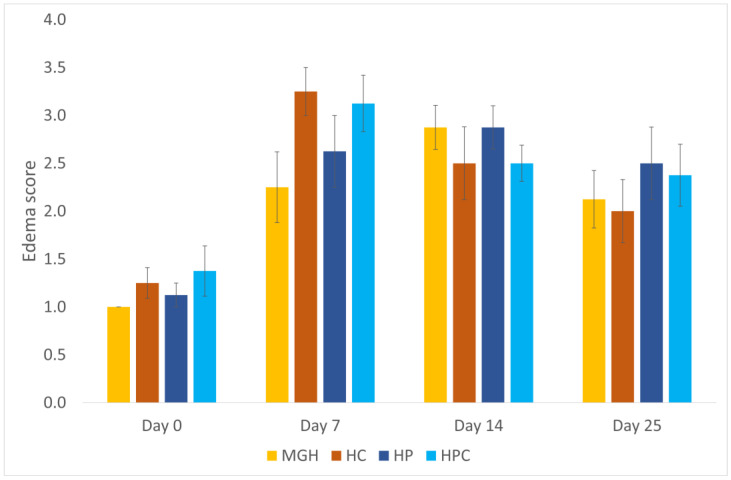
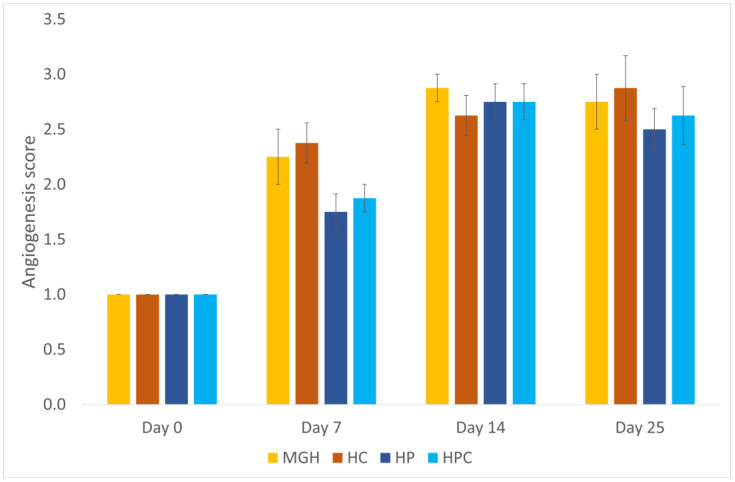
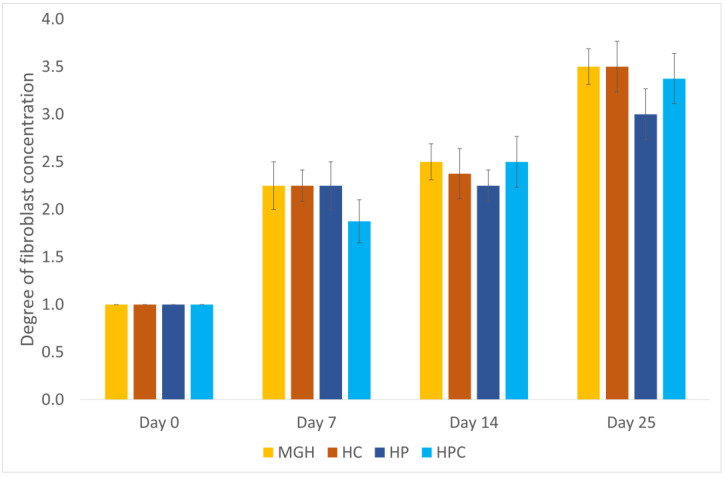
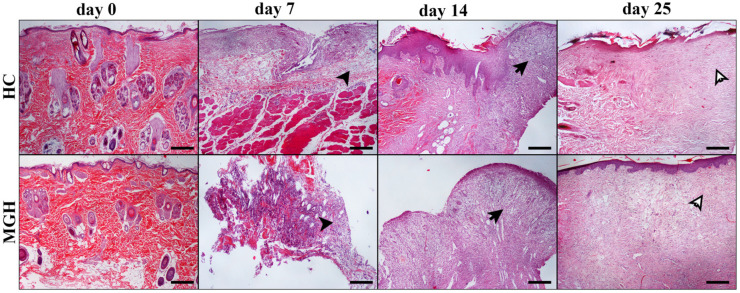
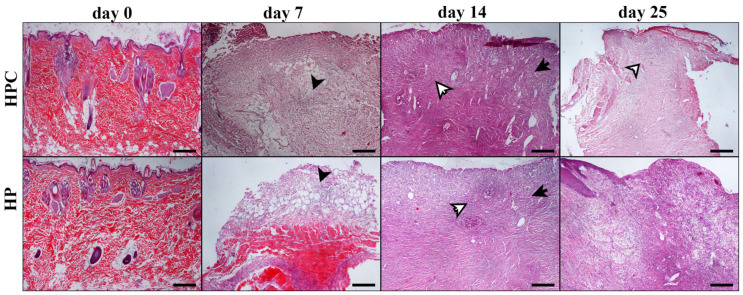
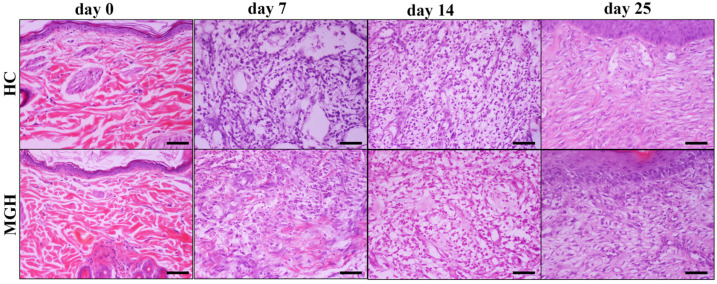
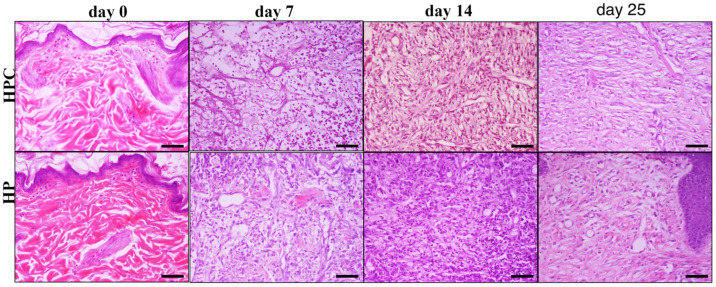
This study aimed to determine the effects of two topical treatments on second-intention wound healing in cats. Eight 2 × 2 cm full-thickness wounds were created, four on each side of the dorsal midline of eight laboratory cats, to receive either medical-grade honey ointment (MGH) and its control (HC), or Hypericum-based ointment (HP) and its control (HPC). MGH or HP ointment was applied to four wounds on the same side, while the remaining four were used as controls, chosen at random. Planimetry, laser Doppler flowmetry, daily physical examinations, and histologic examinations on days 0, 7, 14, and 25 were used to assess the healing of wounds. Tissue perfusion was better in the MGH-treated (2.14 ± 0.18 mm/s) and HP-treated wounds (2.02 ± 0.13 mm/s) than in the untreated controls HC (1.59 ± 0.11 mm/s) and HPC (1.60 ± 0.05 mm/s), respectively (p = 0.001). Histopathology revealed that the median edema score was lower in the MGH-treated (2; range 1-4) compared to the HC-treated wounds (3; range 2-4) on day 7 (p < 0.05). The median angiogenesis score was higher on day 7 in the MGH-treated (2; range 1-3) compared to the HP-treated wounds (2; range 1-2) (p = 0.046). The fibroblast concentration was increased in the MGH-treated wounds (3.5; range 3-4) compared to the HP-treated wounds (3; range 2-4) on day 25 (p = 0.046). MGH and HP increased tissue perfusion compared to the untreated controls. The MGH-treated wounds had histologic parameters superior to the HP-treated wounds regarding angiogenesis and fibroblast concentration in cutaneous wound healing in cats. Topical application of MGH and HP did not accelerate the healing process of feline cutaneous wounds.
Keywords: Hypericum; cat; honey; wound healing.
Conflict of interest statement
Niels Cremers works as Head of Research at Triticum Exploitatie BV, the manufacturer of the honey-based product used in this study. He was involved in manuscript preparation and editing. There are no relevant financial or non-financial competing interests to report. All other authors declare no conflicts of interest.
Figures
References
-
- Karayannopoulou M., Loukopoulos P., Papazoglou L.G., Tsioli V., Anagnostou T.L., Assaloumidis N., Constantinidis T.C., Assimopoulou A.N., Kaldrymidou E., Papageorgiou V.P. Naturally occurring isohexenylnapthazarins and wound healing: An experimental study in dogs. J. Cutan. Med. Surg. 2010;14:62–70. doi: 10.2310/7750.2010.09024. - DOI - PubMed
LinkOut - more resources
Full Text Sources
Research Materials
Miscellaneous
