


Exploring In Vitro the Combination of Cistus × incanus L. and Castanea sativa Mill. Extracts as Food Supplement Ingredients against H. pylori Infection
- PMID: 38201068
- PMCID: PMC10778332
- DOI: 10.3390/foods13010040
Exploring In Vitro the Combination of Cistus × incanus L. and Castanea sativa Mill. Extracts as Food Supplement Ingredients against H. pylori Infection
Abstract
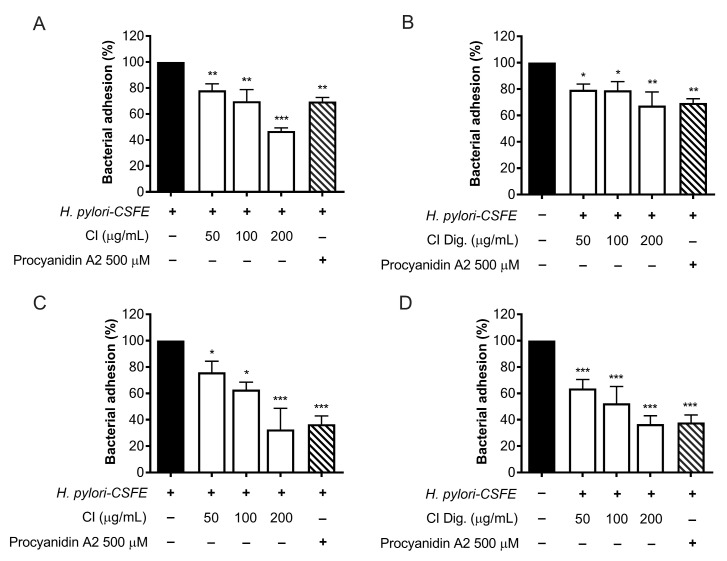
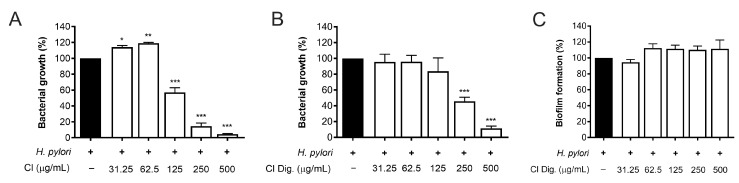
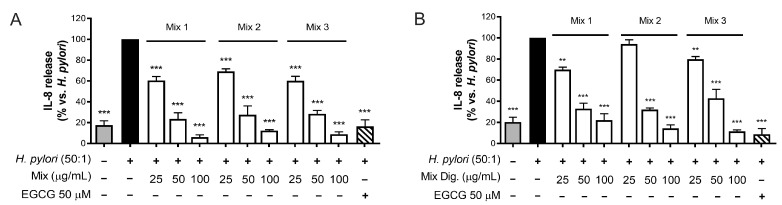
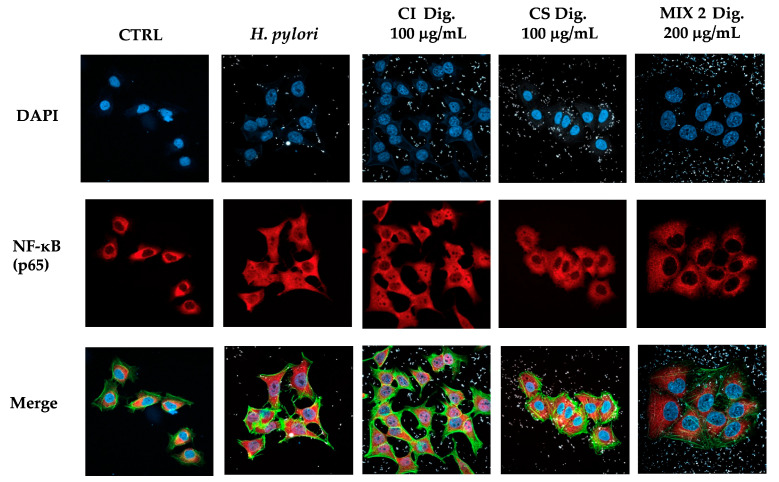
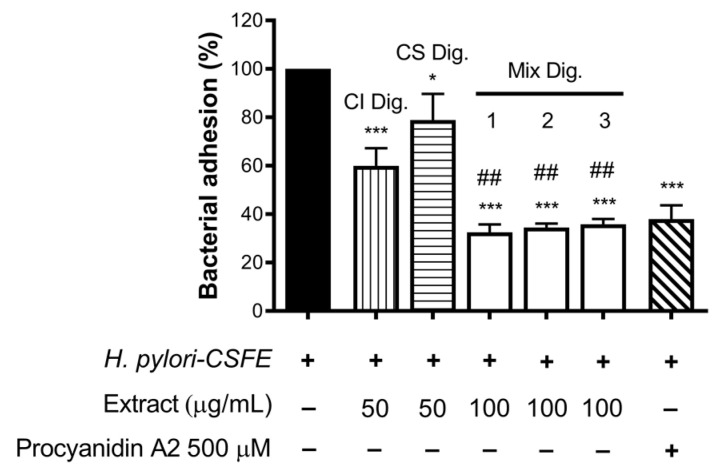
Cistus spp. have been traditionally used for inflammatory and infectious disorders, including gastrointestinal ailments, in the Mediterranean area. Among them, Cistus × incanus L. is one of the most frequently cited species in the literature for a variety of biological activities which include inflammatory diseases. Cistus spp. aerial parts are rich in polyphenols such as condensed and hydrolysable tannins, procyanidins, and flavonoids, which show gastroprotective activities. The purpose of the present study is to investigate the biological activities of a hydroalcoholic extract from Cistus × incanus L. aerial parts in gastric epithelial cells (GES-1) infected with H. pylori. The extracts inhibited IL-8 and NF-κB induced by H. pylori and showed antibacterial activity after simulated digestion. Since our previous paper reported interesting results on the ability of Castanea sativa Mill. leaf extract to decrease inflammatory conditions in H. pylori-infected gastric cells, the combination of Castanea sativa and Cistus × incanus extracts was also investigated, showing strong anti-inflammatory activity and inhibition of bacterial adhesion. This association of botanicals is proposed herein as a novel food supplement capable of counteracting gastric inflammatory conditions.
Keywords: Cistus; Cistus × incanus; Helicobacter pylori; gastritis; inflammation.
Conflict of interest statement
G.N. and S.F.V. are, respectively, the scientific director and the R&D officer responsible from EPO s.r.l. However, this paper does not necessarily reflect the company’s views of its future policy on this area. The authors declare no conflict of interest.
Figures
References
-
- Tomou E.-M., Lytra K., Rallis S., Tzakos A.G., Skaltsa H. An updated review of genus Cistus L. since 2014: Traditional uses, phytochemistry, and pharmacological properties. Phytochem. Rev. 2022;21:2049–2087. doi: 10.1007/s11101-022-09827-y. - DOI
-
- Viapiana A., Konopacka A., Waleron K., Wesolowski M. Cistus incanus L. commercial products as a good source of polyphenols in human diet. Ind. Crops Prod. 2017;107:297–304. doi: 10.1016/j.indcrop.2017.05.066. - DOI
-
- Mansoor K.A., Matalka K.Z., Qa’dan F.S., Awad R., Schmidt M. Two new proanthocyanidin trimers isolated from Cistus incanus L. demonstrate potent anti-inflammatory activity and selectivity to cyclooxygenase isoenzymes inhibition. Nat. Prod. Res. 2016;30:1919–1926. doi: 10.1080/14786419.2015.1089242. - DOI - PubMed
Grants and funding
LinkOut - more resources
Full Text Sources
Miscellaneous
