


Effect of Air Drying on the Metabolic Profile of Fresh Wild and Artificial Cordyceps sinensis
- PMID: 38201076
- PMCID: PMC10778509
- DOI: 10.3390/foods13010048
Effect of Air Drying on the Metabolic Profile of Fresh Wild and Artificial Cordyceps sinensis
Abstract
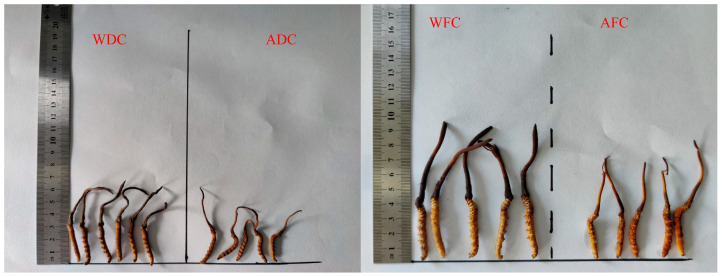
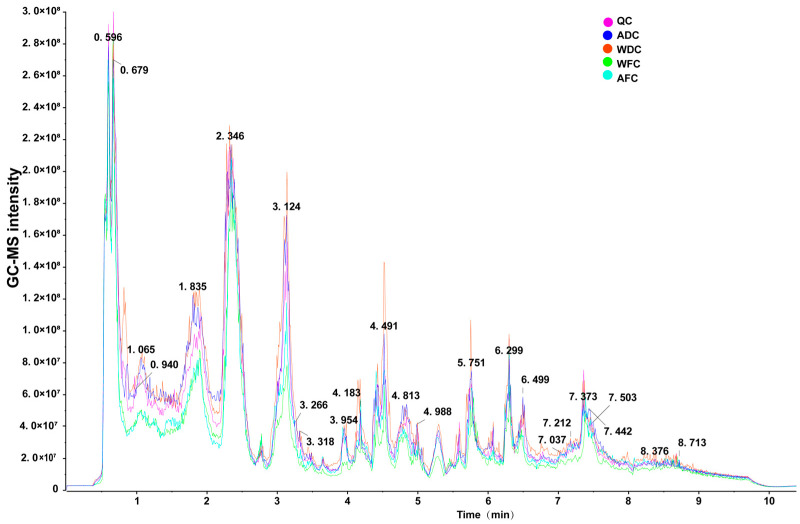
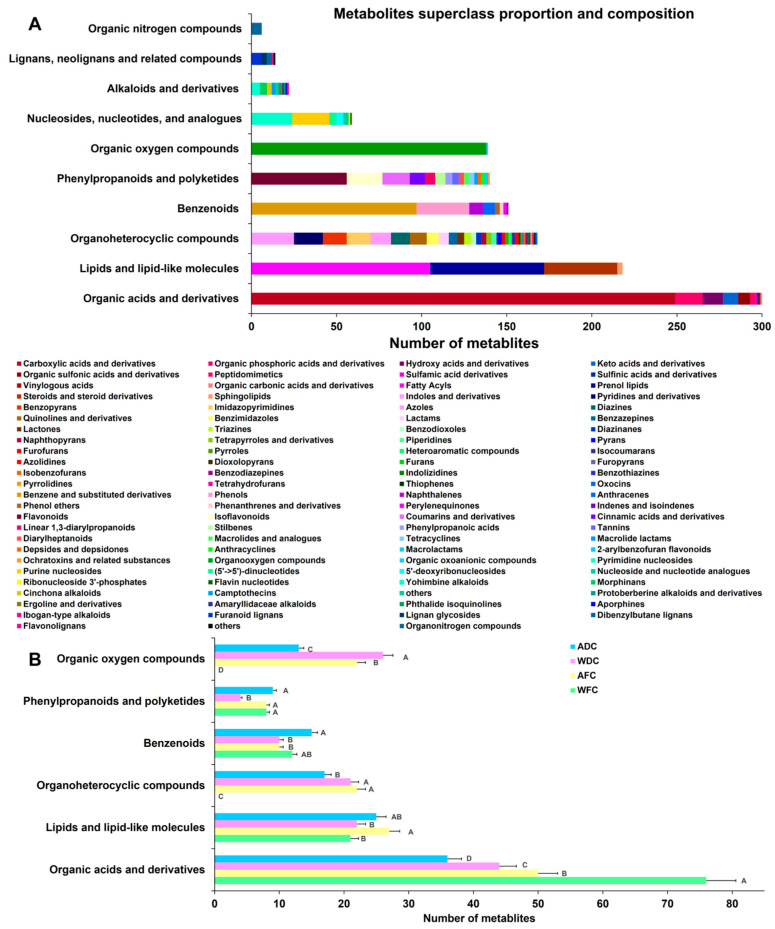
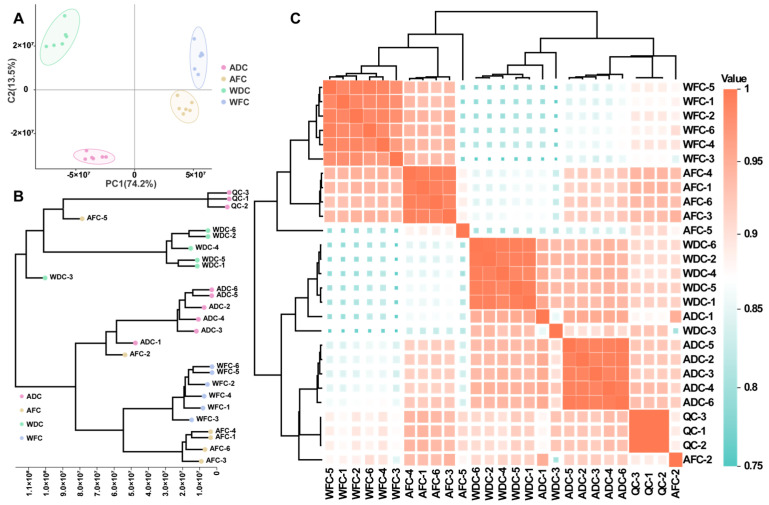
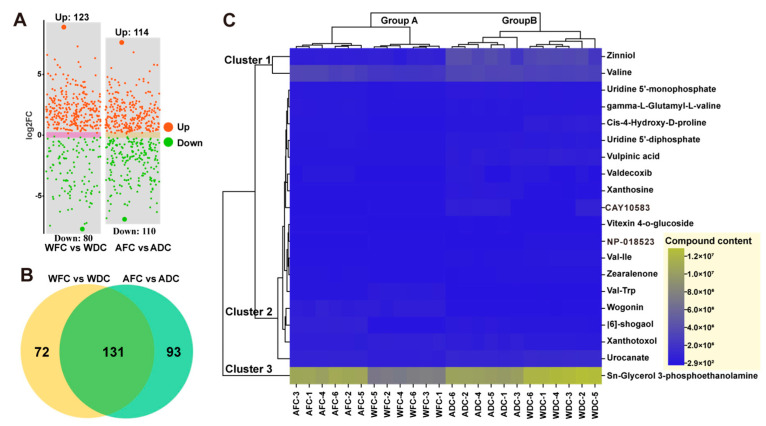
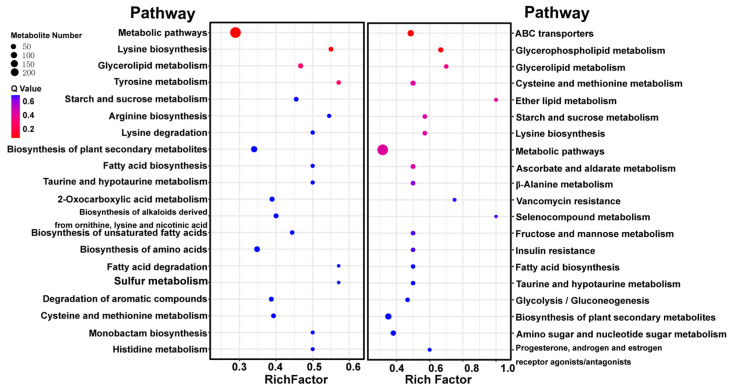
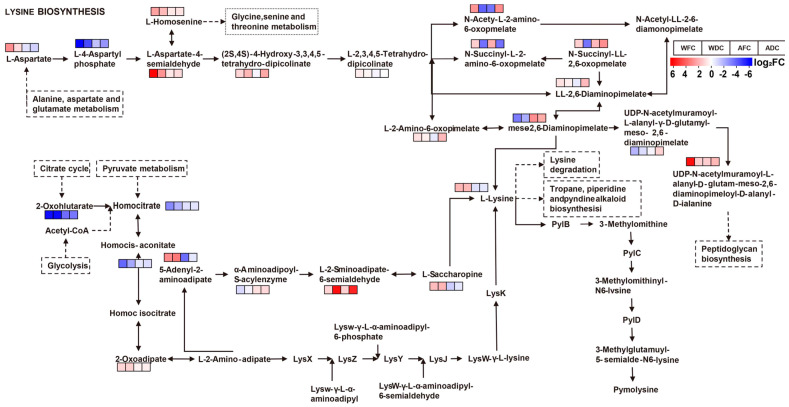
Fresh and dried Cordyceps sinensis are widely used by the public for medicinal and health purposes. However, the differences between them have not been examined. In this study, fresh wild and artificial C. sinensis (WFC and AFC) were dried to obtain dried wild and artificial C. sinensis (WDC and ADC). Non-targeted GC-MS was used to analyze the metabolic profile characteristics of the four groups of samples. The results showed that air drying significantly altered the composition and content of C. sinensis, mainly in the form of higher abundance of organic acids and derivatives and lower abundance of lipids and lipid-like molecules in fresh C. sinensis. Hierarchical cluster analysis (HCA) and quantitative analyses showed that air drying increased the abundance of Valine, Zinniol, Urocanate, Vulpinic acid, and Uridine 5'-diphosphate, and decreased Xanthotoxol, Vitexin-4-o-glucoside, Val-trp, and Wogonin. These differentially accumulated metabolites (DAMs) were also shown to be potential biomarkers for C. sinensis. KEGG enrichment analysis identified lysine biosynthesis as the most significantly enriched pathway. Annotation of these DAMs to lysine biosynthesis revealed that citrate cycle and pyruvate metabolism entered lysine biosynthesis via 2-oxohlutarate and Homocitrate, respectively, resulting in significant enrichment of L-saccharopine and L-lysine content was significantly higher. Alanine, aspartate, and Glutamate metabolism synthesized more L-aspartate to promote L-lysine synthesis. Thus, high levels of L-lysine result in lysine degradation and pymolysine, which are the most active metabolic pathways during the drying of fresh C. sinensis and indirectly lead to differences in metabolic profiles.
Keywords: Cordyceps sinensis; air drying; lysine biosynthesis; metabonomics.
Conflict of interest statement
The authors declare no conflicts of interest.
Figures
References
-
- Shalik R.S., Maan B.R., Zuzana M., Eryuan L. Habitat Ecology of Ophiocordyceps sinensis in Western Nepal. Mt. Res. Dev. 2017;37:216–223.
-
- Liu L., Guan L.L., Zhao H.X., Huang Y., Mou Q.Y., Liu K., Chen T.Y., Wang X.Y., Zhang Y., Wei B., et al. Modeling habitat suitability of Houttuynia cordata Thunb (Ceercao) using MaxEnt under climate change in China. Ecol. Inform. 2021;63:101324. doi: 10.1016/j.ecoinf.2021.101324. - DOI
-
- Zheng Y.L., Mei Q.X., Li W.J., Tang Z.F., Qian Z.M., Tao S.C., Dong P.P. Discussion on the medicinal history and modern administration method of Cordyceps sinensis. J. Chin. Med. Mater. 2017;40:2722–2725.
-
- Li G.R., Guo Y.F., Yu J.F., Liang G.H., Fang Q.M., Li W.J. Effects of different drying processes on quality of Chinese Cordyceps. J. Fungal Res. 2020;18:132–138.
Grants and funding
LinkOut - more resources
Full Text Sources
Miscellaneous
