


The Impact of Diet and Physical Activity on Fat-to-Lean Mass Ratio
- PMID: 38201847
- PMCID: PMC10780510
- DOI: 10.3390/nu16010019
The Impact of Diet and Physical Activity on Fat-to-Lean Mass Ratio
Abstract
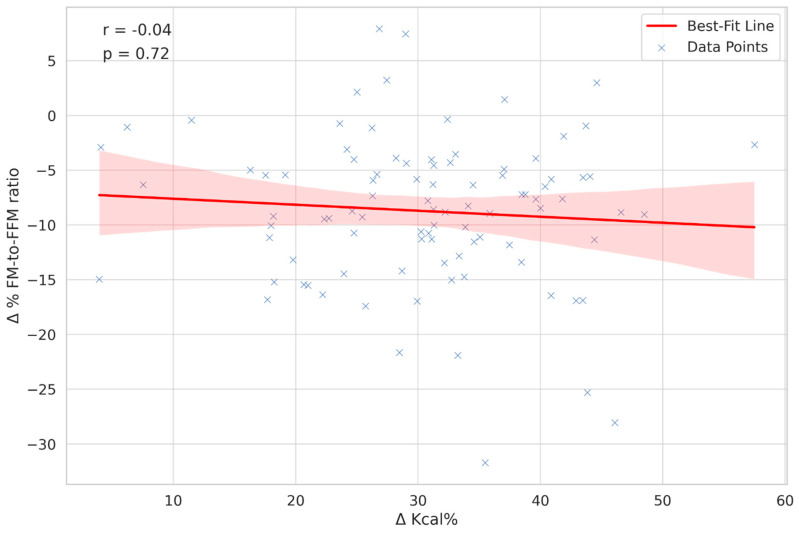
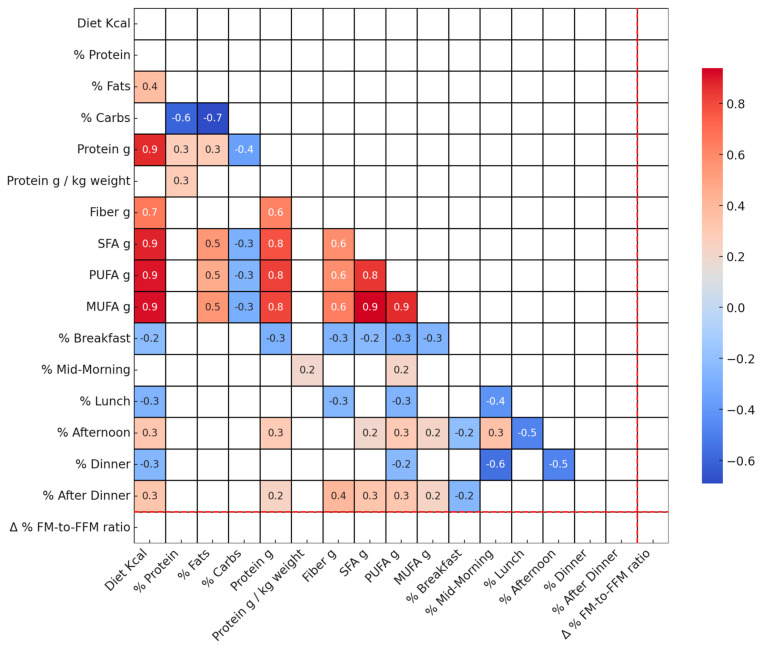
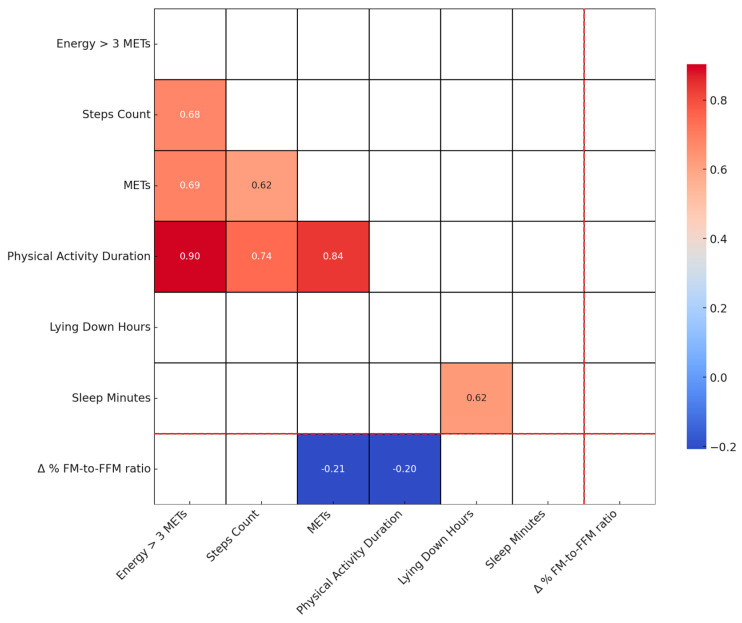
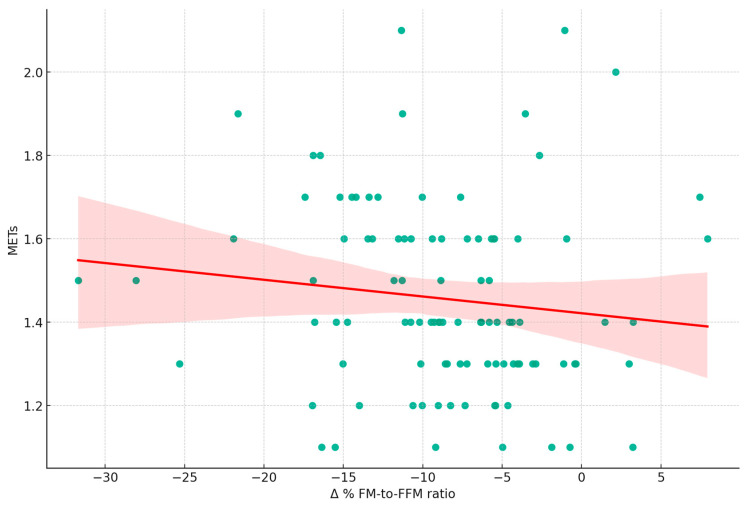
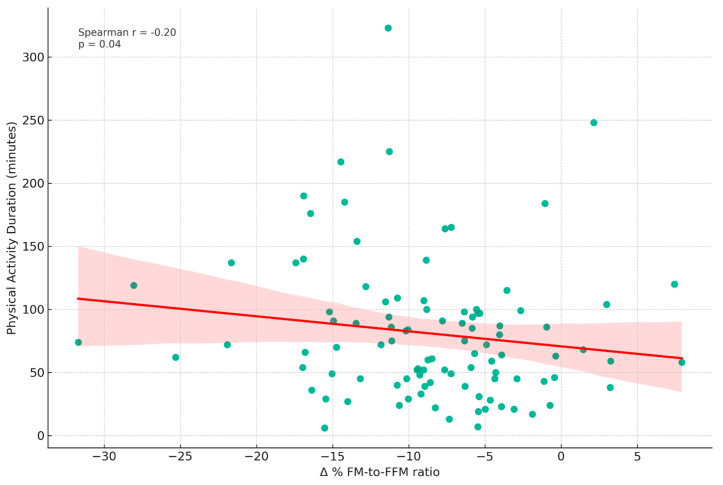
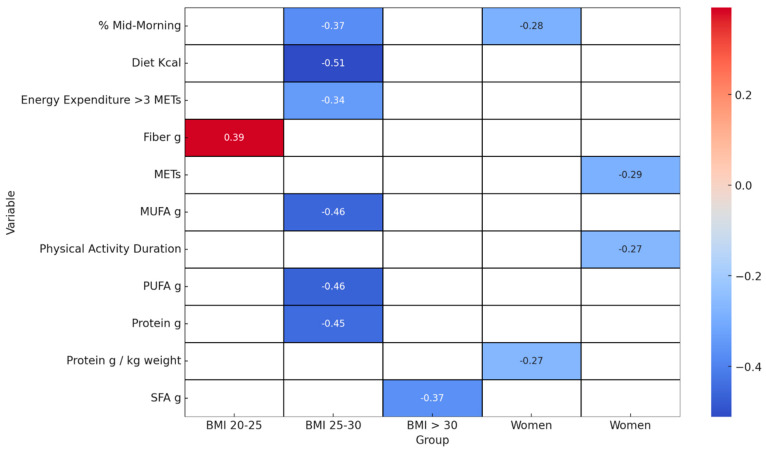
In this retrospective study, we evaluated the efficacy of a personalised low-calorie Mediterranean Diet (MD) in promoting fat mass (FM) reduction while preserving fat-free mass (FFM). This study involved 100 Caucasian adults aged 18-65 years who followed a tailored low-calorie MD for two months. The total energy expenditure was assessed using a multi-sensor armband. The change in body composition (BC) was evaluated using the Δ% FM-to-FFM ratio, calculated as the difference in the FM to FFM ratio before and after the diet, divided by the ratio before the diet, and multiplied by 100. A negative value indicates a greater decrease in FM than FFM, while a positive value suggests a greater increase in FM than FFM. This study demonstrated a significant FM reduction, with an average decrease of 5% (p < 0.001). However, the relationship between caloric reduction and the Δ% FM-to-FFM ratio showed a weak negative correlation (r = -0.03, p > 0.05). This suggests that the calorie deficit had a minimal direct impact on the BC changes. Subjects over the age of 30 showed an increase in muscle mass, while younger subjects showed no significant changes. Moreover, a direct correlation was observed between the changes in MET (Metabolic Equivalent of Task) values and the Δ% FM-to-FFM ratio, indicating that improved average physical activity intensity positively influences BC. In the female subgroup, high protein intake, exercise intensity, and the duration of physical activity were positively correlated with an improvement in the Δ% FM-to-FFM ratio. However, for individuals with BMI 20-25 kg/m2, high fibre intake was surprisingly negatively correlated with the Δ% FM-to-FFM ratio. This study underscores the intricate interplay between calorie restriction, physical activity intensity, and BC changes. It also suggests that individual factors, including age, gender, and BMI, may influence the response to a low-calorie MD. However, further prospective studies with larger sample sizes are necessary to confirm and expand upon these findings.
Keywords: body composition; caloric restriction; diet mediterranean; energy metabolism; exercise.
Conflict of interest statement
The authors declare no conflicts of interest.
Figures
References
-
- Bonaccio M., Costanzo S., Di Castelnuovo A., Gialluisi A., Ruggiero E., De Curtis A., Persichillo M., Cerletti C., Donati M.B., de Gaetano G., et al. Increased Adherence to a Mediterranean Diet Is Associated with Reduced Low-Grade Inflammation after a 12.7-Year Period: Results From the Moli-sani Study. J. Acad. Nutr. Diet. 2023;123:783–795.e7. doi: 10.1016/j.jand.2022.12.005. - DOI - PubMed
MeSH terms
LinkOut - more resources
Full Text Sources
Miscellaneous
