


Unique Bioactives from Zombie Fungus (Cordyceps) as Promising Multitargeted Neuroprotective Agents
- PMID: 38201932
- PMCID: PMC10780653
- DOI: 10.3390/nu16010102
Unique Bioactives from Zombie Fungus (Cordyceps) as Promising Multitargeted Neuroprotective Agents
Abstract
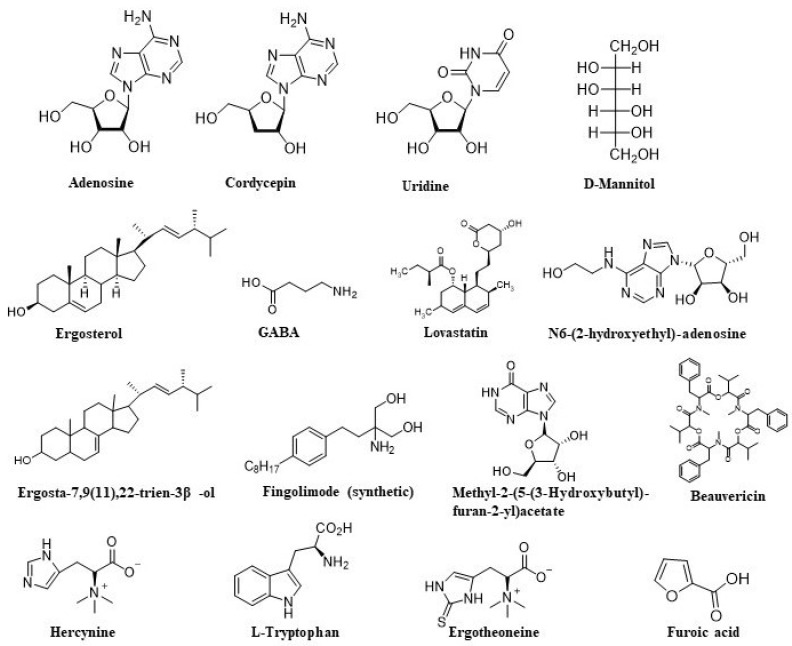
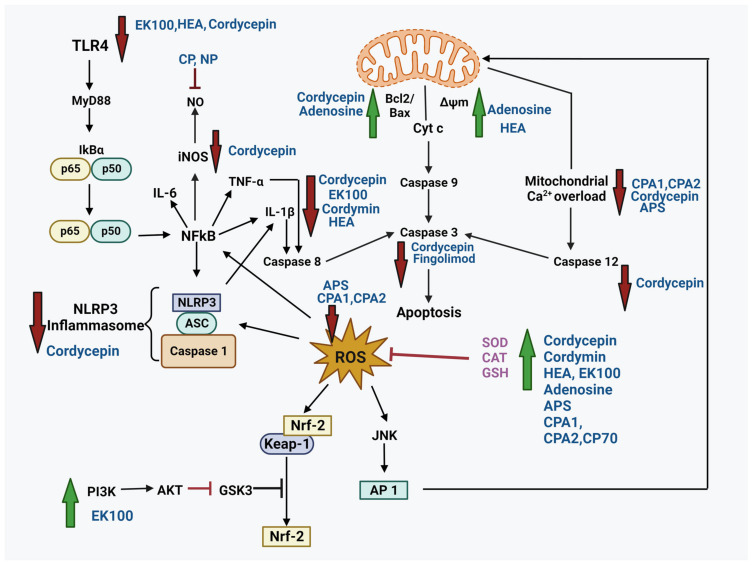
Cordyceps, also known as "zombie fungus", is a non-poisonous mushroom that parasitizes insects for growth and development by manipulating the host system in a way that makes the victim behave like a "zombie". These species produce promising bioactive metabolites, like adenosine, β-glucans, cordycepin, and ergosterol. Cordyceps has been used in traditional medicine due to its immense health benefits, as it boosts stamina, appetite, immunity, longevity, libido, memory, and sleep. Neuronal loss is the typical feature of neurodegenerative diseases (NDs) (Alzheimer's disease (AD), Parkinson's disease (PD), multiple sclerosis (MS), amyotrophic lateral sclerosis (ALS)) and neurotrauma. Both these conditions share common pathophysiological features, like oxidative stress, neuroinflammation, and glutamatergic excitotoxicity. Cordyceps bioactives (adenosine, N6-(2-hydroxyethyl)-adenosine, ergosta-7, 9 (11), 22-trien-3β-ol, active peptides, and polysaccharides) exert potential antioxidant, anti-inflammatory, and anti-apoptotic activities and display beneficial effects in the management and/or treatment of neurodegenerative disorders in vitro and in vivo. Although a considerable list of compounds is available from Cordyceps, only a few have been evaluated for their neuroprotective potential and still lack information for clinical trials. In this review, the neuroprotective mechanisms and safety profile of Cordyceps extracts/bioactives have been discussed, which might be helpful in the identification of novel potential therapeutic entities in the future.
Keywords: Cordyceps; neurodegenerative diseases; neuroinflammation; neuroprotection; neurotrauma; oxidative stress; zombie fungus.
Conflict of interest statement
The authors declare no conflict of interest.
Figures
References
-
- Keeler J.L., Patsalos O., Chung R., Schmidt U., Breen G., Treasure J., Himmerich H., Dalton B. Short communication: Serum levels of brain-derived neurotrophic factor and association with pro-inflammatory cytokines in acute and recovered anorexia nervosa. J. Psychiatr. Res. 2022;150:34–39. doi: 10.1016/j.jpsychires.2022.03.031. - DOI - PubMed
Publication types
MeSH terms
Substances
LinkOut - more resources
Full Text Sources
Miscellaneous
