


Safety and Efficacy of the Rho-Kinase Inhibitor (Ripasudil) in Bleb Needling after Trabeculectomy: A Prospective Multicenter Study
- PMID: 38202082
- PMCID: PMC10780264
- DOI: 10.3390/jcm13010075
Safety and Efficacy of the Rho-Kinase Inhibitor (Ripasudil) in Bleb Needling after Trabeculectomy: A Prospective Multicenter Study
Abstract
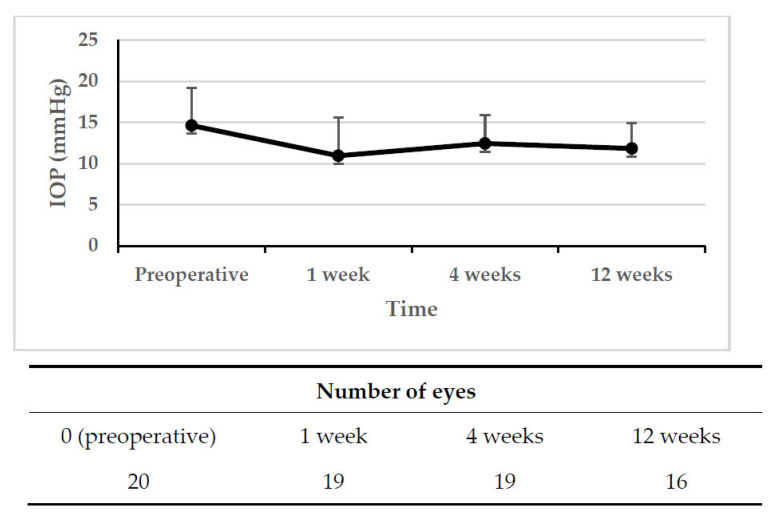
Ripasudil, a rho-associated protein kinase inhibitor ophthalmic solution, shows a protective effect in preventing excessive scarring in vitro. This study aims to evaluate the safety and efficacy of ripasudil for glaucoma patients submitted to the needling procedure. In this prospective, multicenter, single-arm study, we included 20 eyes of 20 patients with glaucoma who underwent the needling procedure without antimetabolites. All patients administered ripasudil after needling for three months. The primary endpoint of this study was the safety of ripasudil in patients, and the secondary endpoint was the change in IOP at 12 weeks after the needling procedure. No serious complications were found in the patients. One eye experienced pruritus and conjunctival follicle, while another eye had conjunctival follicle. These complications were transient and resolved quickly after discontinuation of ripasudil. The mean preoperative IOP was 14.6 ± 4.6 mmHg, which decreased to 11.0 ± 4.7 mmHg (p = 0.0062) at 1 week postoperatively. The IOP reduction effect continued to 12 weeks (11.8 ± 3.1 mmHg; p = 0.0448). The administration of the ROCK inhibitor, ripasudil, after the needling procedure is safe and effective in maintaining IOP for 12 weeks.
Keywords: a rho-associated protein kinase inhibitor; glaucoma; needling; ripasudil; trabeculectomy.
Conflict of interest statement
The authors declare no conflict of interest.
Figures


References
Grants and funding
LinkOut - more resources
Full Text Sources
