


The Implication of a Polymorphism in the Methylenetetrahydrofolate Reductase Gene in Homocysteine Metabolism and Related Civilisation Diseases
- PMID: 38203363
- PMCID: PMC10779094
- DOI: 10.3390/ijms25010193
The Implication of a Polymorphism in the Methylenetetrahydrofolate Reductase Gene in Homocysteine Metabolism and Related Civilisation Diseases
Abstract
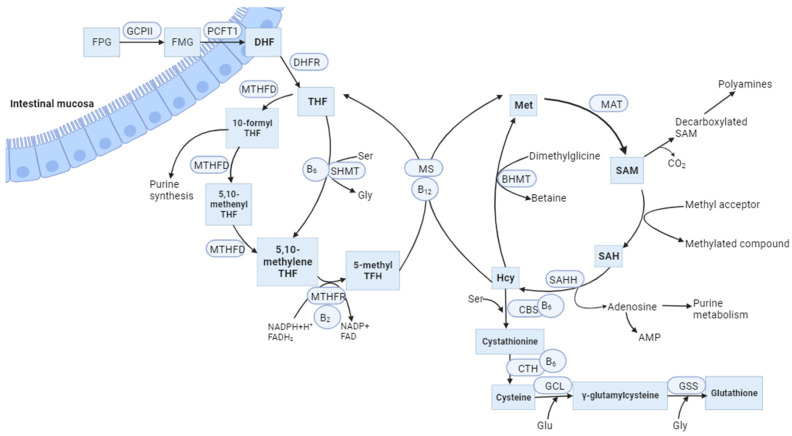
Methylenetetrahydrofolate reductase (MTHFR) is a key regulatory enzyme in the one-carbon cycle. This enzyme is essential for the metabolism of methionine, folate, and RNA, as well as for the production of proteins, DNA, and RNA. MTHFR catalyses the irreversible conversion of 5,10-methylenetetrahydrofolate to its active form, 5-methyltetrahydrofolate, a co-substrate for homocysteine remethylation to methionine. Numerous variants of the MTHFR gene have been recognised, among which the C677T variant is the most extensively studied. The C677T polymorphism, which results in the conversion of valine to alanine at codon 222, is associated with reduced activity and an increased thermolability of the enzyme. Impaired MTHFR efficiency is associated with increased levels of homocysteine, which can contribute to increased production of reactive oxygen species and the development of oxidative stress. Homocysteine is acknowledged as an independent risk factor for cardiovascular disease, while chronic inflammation serves as the common underlying factor among these issues. Many studies have been conducted to determine whether there is an association between the C677T polymorphism and an increased risk of cardiovascular disease, hypertension, diabetes, and overweight/obesity. There is substantial evidence supporting this association, although several studies have concluded that the polymorphism cannot be reliably used for prediction. This review examines the latest research on MTHFR polymorphisms and their correlation with cardiovascular disease, obesity, and epigenetic regulation.
Keywords: MTHFR; folate; gene variants.
Conflict of interest statement
The authors declare no conflict of interest.
Figures



References
-
- National Center for Biotechnology Information (NCBI) [(accessed on 8 October 2023)];2023 Available online: https://www.ncbi.nlm.nih.gov/
-
- Tran P., Leclerc D., Chan M., Pai A., Hiou-Tim F., Wu Q., Goyette P., Artigas C., Milos R., Rozen R. Multiple transcription start sites and alternative splicing in the methylenetetrahydrofolate reductase gene result in two enzyme isoforms. Mamm. Genome. 2002;13:483–492. doi: 10.1007/s00335-002-2167-6. - DOI - PubMed
Publication types
MeSH terms
Substances
LinkOut - more resources
Full Text Sources
