


Mechanistic insight into the synergistic antimicrobial potential of Fagonia indica Burm.f. extracts with cefixime
- PMID: 38204592
- PMCID: PMC10777119
- DOI: 10.1016/j.jsps.2023.101893
Mechanistic insight into the synergistic antimicrobial potential of Fagonia indica Burm.f. extracts with cefixime
Abstract
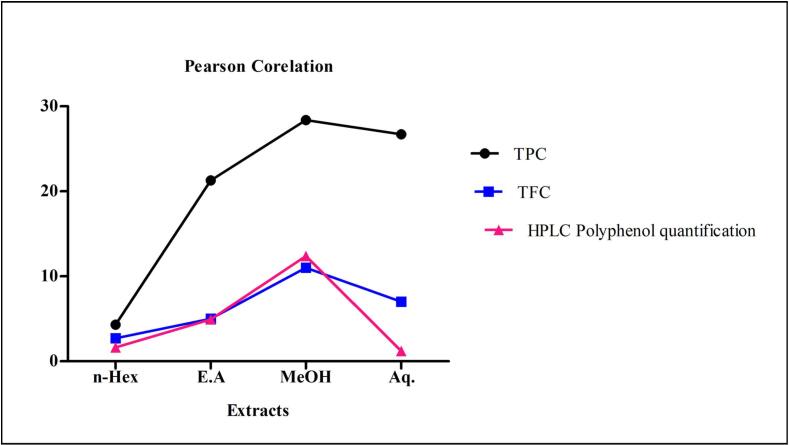
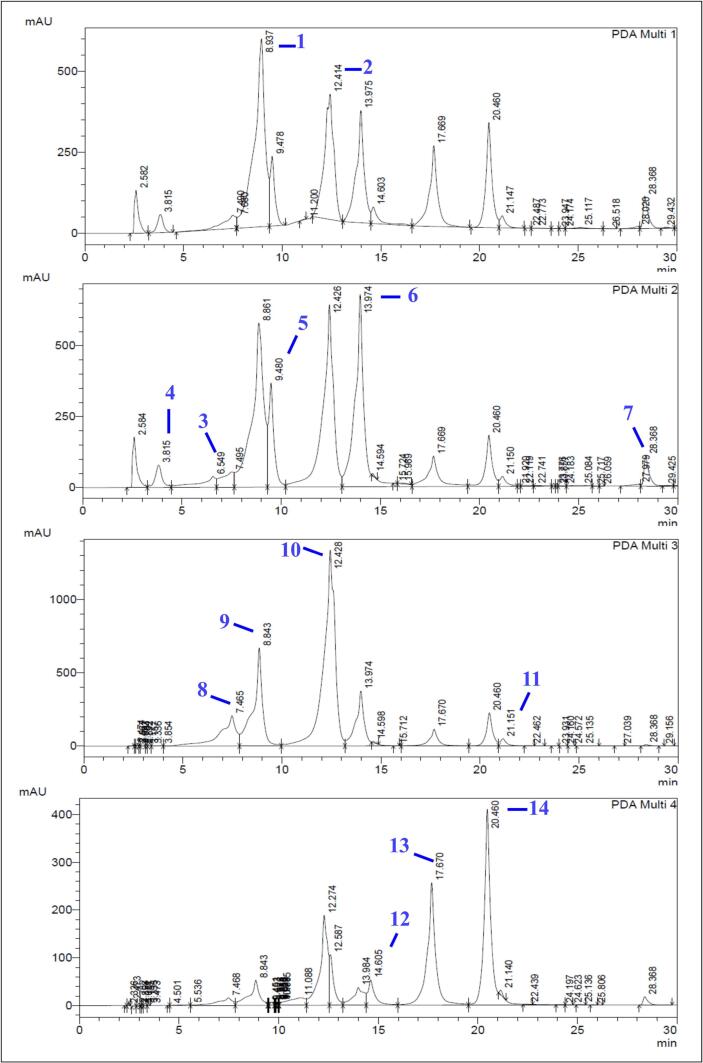
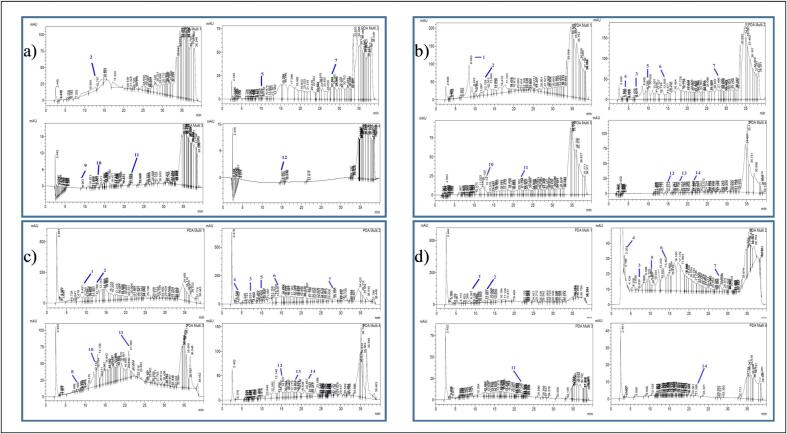
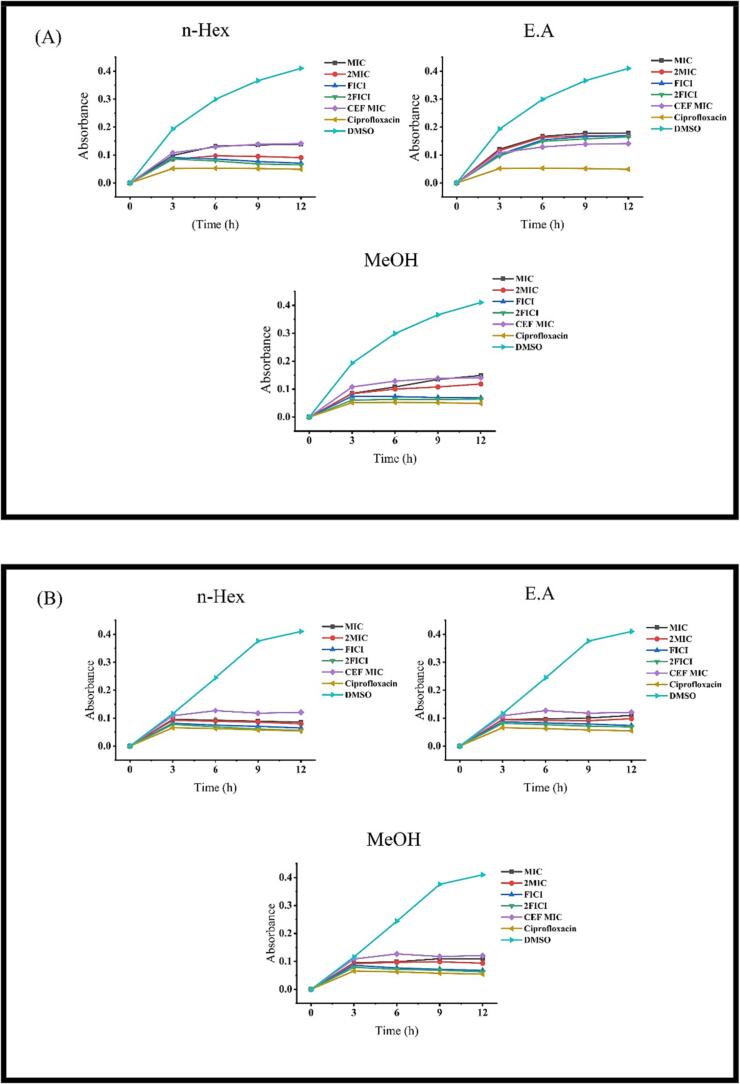
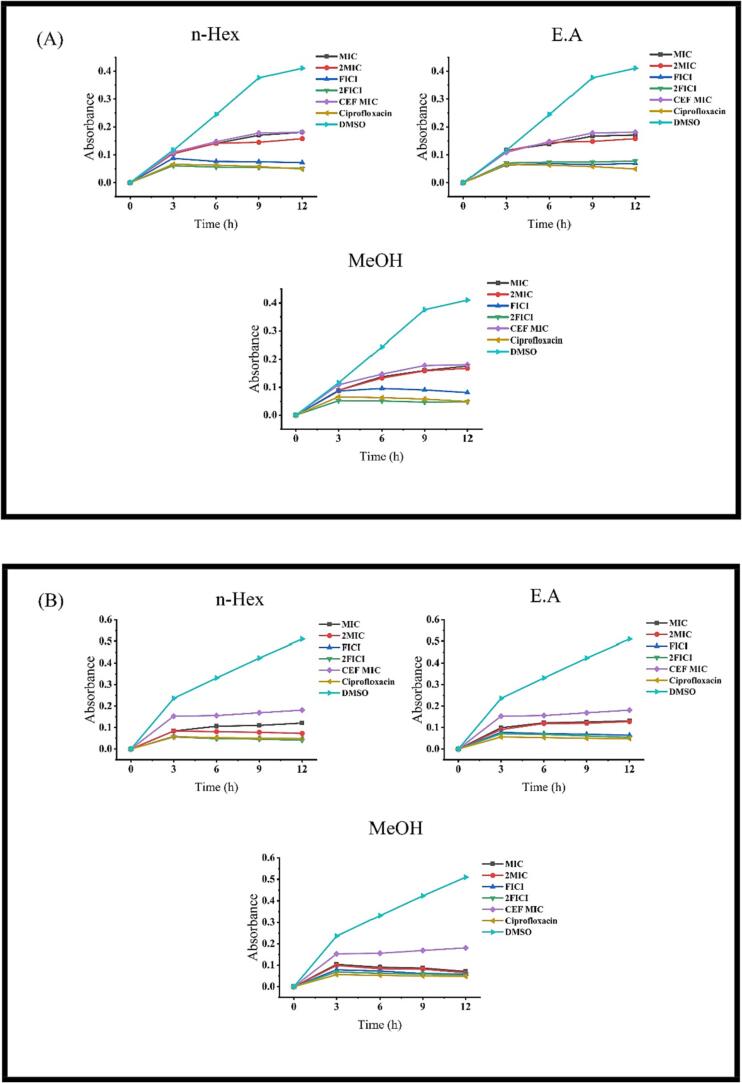
Fagonia indica Burm.f. is known for its anti-infective character and has been studied in the present work as a synergistic remedy against resistant bacterial strains. Initially, phytochemicals were quantified in n-Hexane (n-Hex), ethyl acetate (E.A), methanol (MeOH), and aqueous (Aq.) extracts by Total Phenolic Content (TPC), Total Flavonoid Content (TFC) and Reverse Phase High Performance Liquid Chromatography (RP-HPLC) analysis. Later, after establishing an antibacterial resistance profile for extracts and antibiotics against gram-positive and gram-negative strains, synergism was evaluated in combination with cefixime through time-kill kinetics and bacterial protein estimation studies. Topographic images depicting synergism were obtained by scanning electron microscopy for Methicilin-resistant Staphylococcus aureus (MRSA) and Resistant Escherichia coli (R.E. coli). Results showed the presence of maximum phenolic (28.4 ± 0.67 μg GAE/mg extract) and flavonoid (11 ± 0.42 μg QE/mg extract) contents in MeOH extract. RP-HPLC results also displayed maximum polyphenols in MeOH extract followed by E.A extract. Clinical strains were resistant to cefixime whereas these were moderately inhibited by all extracts (MIC 150-300 µg/ml) except Aq. extract. E.A and n-Hex extracts demonstrated maximum synergism (Fractional inhibitory concentration index (FICI) 0.31) against R.E. coli. The n-Hex extract displayed total synergism against R.P. a with a 4-fold reduction in cefixime dose. Time-kill kinetics showed maximum inhibition of gram-negative bacterial growth from 3 to 12 h when treated at FICI and 2FICI values with > 10-fold reduction of the extracts' dose. All combinations demonstrate > 70 % protein content inhibition with bacterial cell wall disruption in SEM images. Fortunately, FICI concentrations have low hemolytic potential (<5%). Conclusively, F. indica extracts can mitigate antimicrobial resistance against cefixime and can be investigated in detail by in vivo and mechanistic studies.
Keywords: Antibiotic; Antimicrobial potential; Bacteria; Biocompatibility profile; Cefixime-resistant strains; Eescherichia coli; Fagonia indica; Plant extract; Scanning electron microscopy; Synergism potential.
© 2023 Published by Elsevier B.V. on behalf of King Saud University.
Conflict of interest statement
The authors declare that they have no known competing financial interests or personal relationships that could have appeared to influence the work reported in this paper.
Figures


References
-
- Abdallah EM 2011. Plants: An alternative source for antimicrobials. Journal of Applied Pharmaceutical Science, (Issue): 16-20.
-
- Ahmad I., Beg A.Z. Antimicrobial and phytochemical studies on 45 indian medicinal plants against multi-drug resistant human pathogens. J. Ethnopharmacol. 2001;74(2):113–123. - PubMed
-
- Al-Dhafri K.S., Ching C.L. Isolation and characterization of antimicrobial peptides isolated from fagonia bruguieri. Appl. Biochem. Biotechnol. 2022;194(10):4319–4332. - PubMed
LinkOut - more resources
Full Text Sources
