. 2023 Dec 21;7(24):6213-6228.
doi: 10.1039/d3qm00787a. Epub 2023 Sep 27.

Good's Buffer Based Highly Biocompatible Ionic Liquid Modified PLGA Nanoparticles for the Selective Uptake in Cancer Cells

Affiliations

Good's Buffer Based Highly Biocompatible Ionic Liquid Modified PLGA Nanoparticles for the Selective Uptake in Cancer Cells

Gagandeep Singh et al. Mater Chem Front. .

Abstract

Achieving safe and efficacious drug delivery is still an outstanding challenge. Herein we have synthesized 20 biocompatible Good's buffer-based ionic liquids (GBILs) with a range of attractive properties for drug delivery applications. The synthesized GBILs were used to coat the surface of poly(lactic-co-glycolic acid) (PLGA) by nanoprecipitation-sonication and characterized by dynamic light scattering (DLS) and proton nuclear magnetic resonance (1H NMR) spectroscopy. The GBIL-modified PLGA NPs were then tested for their interaction with bio-interfaces such as serum proteins (using SDS-PAGE and LCMS) and red blood cells (RBCs) isolated from human and BALB/c mouse blood. In this report, we show that surface modification of PLGA with certain GBILs led to modulation of preferential cellular uptake towards human triple-negative breast cancer cells (MDA-MB-231) compared to human normal healthy breast cells (MCF-10A). For example, cholinium N,N-bis(2-hydroxyethyl)-2-aminoethane sulfonate (CBES) coated PLGA NPs were found to be selective for MDA-MB-231 cells (60.7 ± 0.7 %) as compared to MCF-10A cells (27.3 ± 0.7 %). In this way, GBIL-coatings have increased PLGA NP uptake in the cancer cells by 2-fold while decreasing the uptake towards normal healthy breast cells. Therefore, GBIL-modified nanoparticles could be a versatile platform for targeted drug delivery and gene therapy applications, as their surface properties can be tailored to interact with specific cell receptors and enhance cellular uptake. This formulation technique has shown promising results for targeting specific cells, which could be explored further for other cell types to achieve site-specific and efficient delivery of therapeutic agents.


Figures

Figure 1:
Figure 1:
Molecular structures of the good’s buffer-based ionic liquids (GBILs) synthesized in this study.
Figure 2.
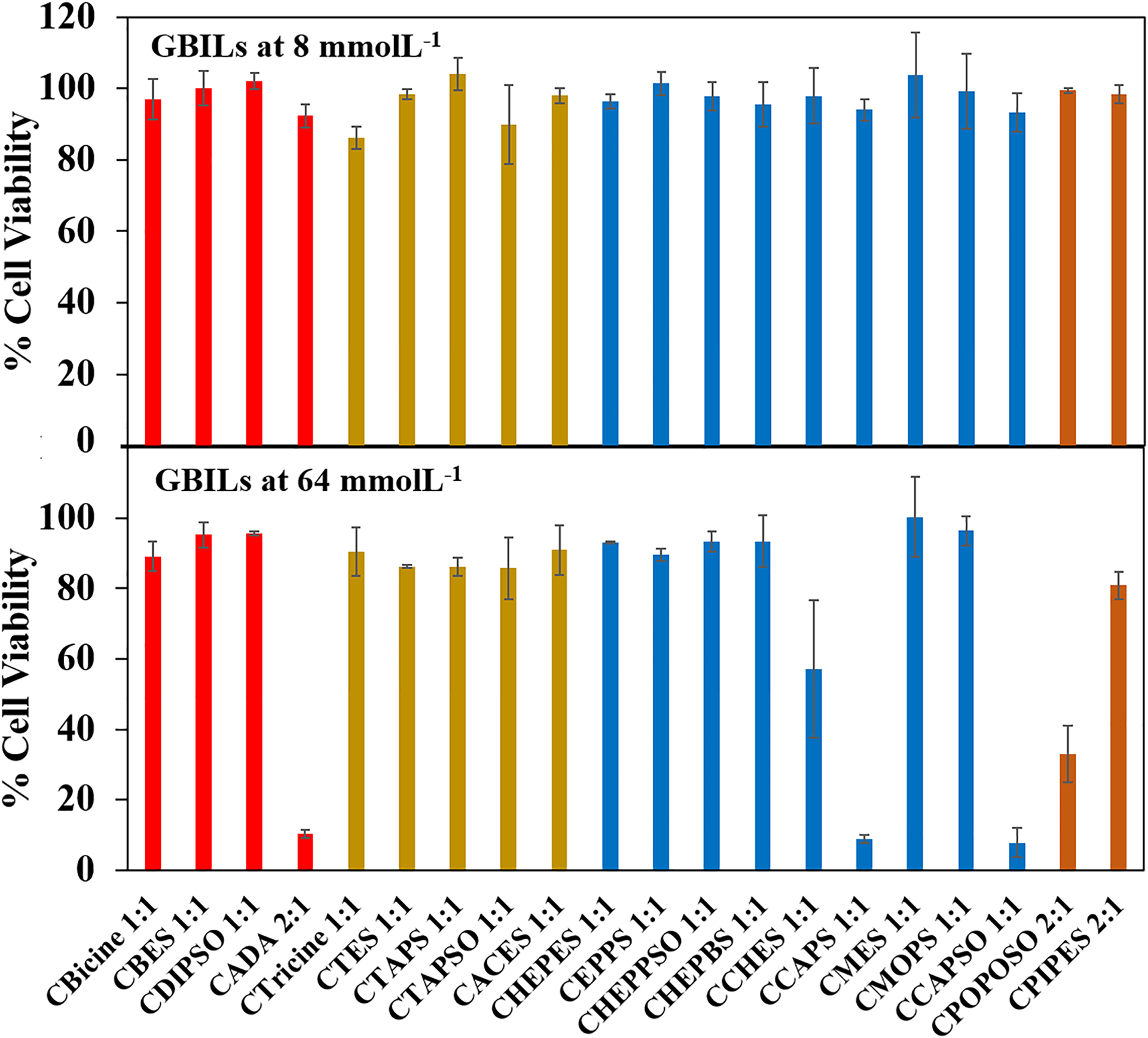
Figure 2.. Cytotoxicity profile showing high biocompatibility of GBILs towards MCF-10A cell line.
(A) At 8 mmol L−1and (B) At 64 mmol L−1 of GBILs. Different colors of the bars in the graph signify GBILs classified in different groups to understand the cytotoxicity (n = 3) dependency on the molecular structure of GBILs.
Figure 3.
Figure 3.. Good’s buffer-based ionic liquids are successfully able to coat PLGA nanoparticles.
DLS profile of different GBILs (A) Hydrodynamic diameter (colored bars) and Polydispersity index (black dots); (B) Zeta potential profile (black bars); (C) Size plot normalized with respect to PLGA NPs (n = 3).
Figure 4.
Figure 4.. The successful coating of Good’s buffer-based ionic liquids over PLGA nanoparticles using was confirmed by 1H NMR spectroscopy.
(A) 1H NMR spectra of Choline MES 1:1 in DMSO; (B) Choline MES coated PLGA NPs containing 10 μL DSS (0.2 mg mL−1) in D2O.
Figure 5.
Figure 5.. Serum protein adsorption profile of GBIL NPs in SDS-PAGE showing similar adsorption bands among different GBIL NPs.
(A) Mouse and (B) Human serum protein adsorption, using 7.5% SDS-PAGE.
Figure 6.
Figure 6.. LC-MS profile showing relative adsorption and depletion of various human serum proteins depending on the chemical identity of GBIL-NPs.
The intensity of the trypsin (used in the digestion of samples) was used to normalize the relative abundance of serum proteins adsorbed onto the bare and GBIL-coated PLGA nanoparticle surfaces; the final values were expressed as log10. Grey strips highlight the GBILs capable of reducing the adoption of immunoglobulins present in the serum which are responsible for the elimination of nanoparticles entering the blood stream.
Figure 7.
Figure 7.. LC-MS profile showing relative adsorption and depletion of various mouse serum proteins depending on the nature of GBIL-NPs.
The intensity of the trypsin (use in the digestion of samples) was used to normalize the relative abundance of serum proteins adsorbed onto the bare and GBIL-coated PLGA nanoparticle surfaces; the final values were expressed as log10. Grey strips highlight the GBILs capable of reducing the adoption of immunoglobulins present in the serum which are responsible for the elimination of nanoparticles entering the blood stream.
Figure 8.
Figure 8.. The GBIL-coated PLGA nanoparticles showing negligible hemolysis with human and mouse red blood cells (RBCs).
The synthesized nanoparticles have shown an insignificant increase in hemolysis for both Human and Mouse RBCs compared to the control PLGA nanoparticles (n=4). Triton-X100 was used as a positive control.
Figure 9.
Figure 9.. Selective uptake of GBIL-coated PLGA NPs by triple-negative breast cancer cells (MDA-MB-231).
(A) Quantitative and (B) Qualitative investigation of DiD encapsulate good’s buffer-coated PLGA nanoparticle cellular uptake by MCF-10A and MDA-MB-231 cells measured via fluorescent plate reader and FACS. FACS uptake by MCF-10A (C) Cells only (D) Bare PLGA NP at 50 μg mL−1 and (E) CBES-NP at 50 μg mL−1; Uptake by MDA-MB-231 (F) Cells only (G) Bare PLGA NP at 50 μg mL−1, (H) CBES-NP at 50 μg mL−1 (I) Confocal microscopy images of MCF-10A and MDA-MB-231 cells treated with 30 μg mL−1 CBES-coated PLGA DiD NPs at 37 °C for 12 h, fixed, stained with DAPI (nuclei) and CellBrite Green (cytoplasmic membrane) and observed under 63× oil immersion lens; scale bar: 10 μm. * p < 0.0001, ** p < 0.001, ***p < 0.005, ****p < 0.04, ns-non-significant (n = 3).

References

    1. Ferlay J, Colombet M, Soerjomataram I, Parkin DM, Piñeros M, Znaor A and Bray F, Cancer statistics for the year 2020: An overview, 2021, 149, 778–789. - PubMed
    1. Foulkes WD, Smith IE and Reis-Filho JS, Triple-negative breast cancer, N. Engl. J. Med, 2010, 363, 1938–1948. - PubMed
    1. Dropcho EJ, The neurologic side effects of chemotherapeutic agents, CONTIN. Lifelong Learn. Neurol, 2011, 17, 95–112. - PubMed
    1. Love RR, Leventhal H, Easterling DV and Nerenz DRJC, Side effects and emotional distress during cancer chemotherapy, Cancer, 1989, 63, 604–612. - PubMed
    1. Maino DM, Tran S and Mehta F, Side effects of chemotherapeutic oculo-toxic agents: a review, Clin. Eye Vis. Care, 2000, 12, 113–117. - PubMed

LinkOut - more resources