


Cadmium-induced Carcinogenesis in Respiratory Organs and the Prostate: Insights from Three Perspectives on Toxicogenomic Approach
- PMID: 38205367
- PMCID: PMC10774485
- DOI: 10.15430/JCP.2023.28.4.150
Cadmium-induced Carcinogenesis in Respiratory Organs and the Prostate: Insights from Three Perspectives on Toxicogenomic Approach
Abstract
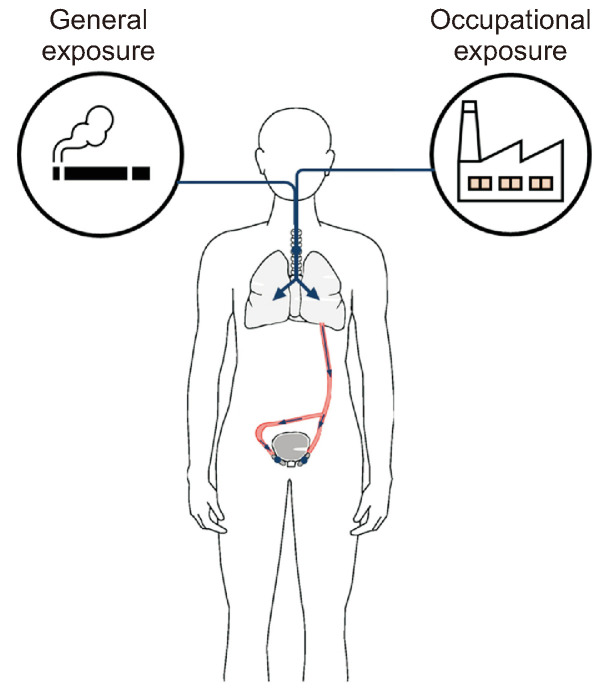
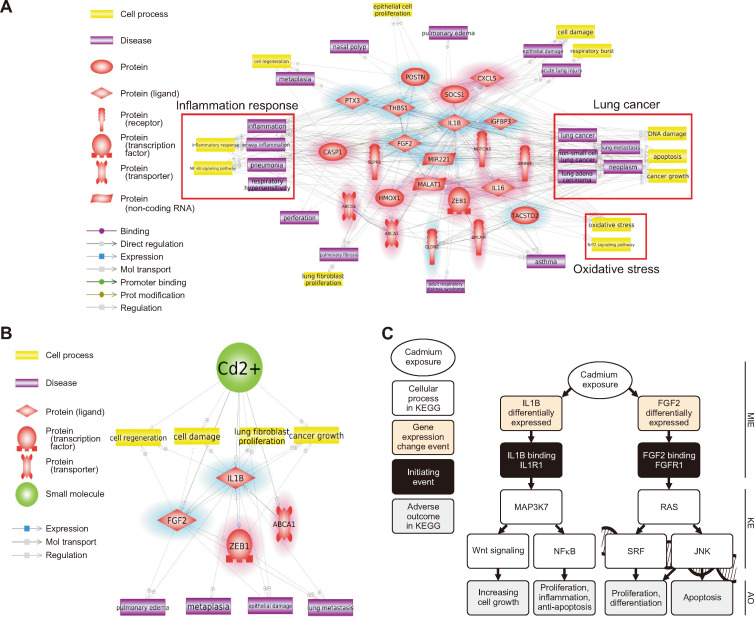
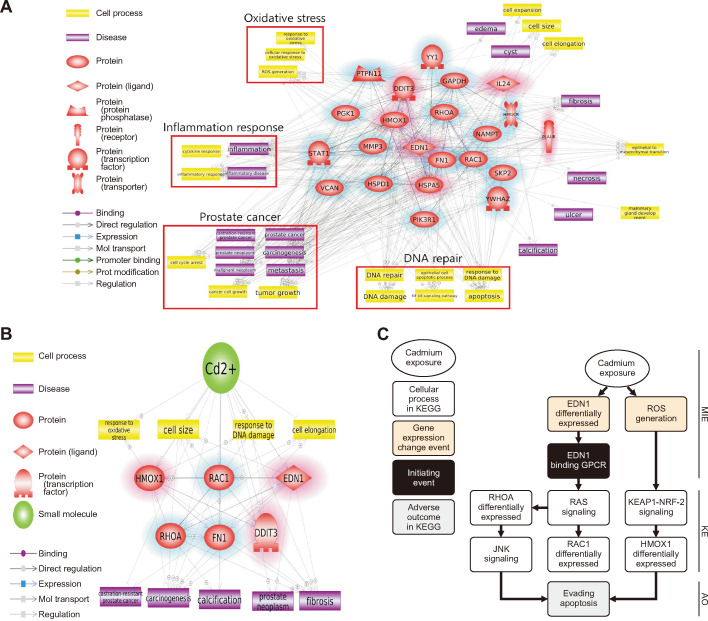
Cadmium (Cd) exposure primarily occurs through inhalation, either by smoking or occupational exposure to contaminated air. Upon inhalation, Cd ultimately reaches the prostate through the bloodstream. In this review, we investigate the carcinogenic potential of Cd in both respiratory organs and the prostate. Specifically, this review examines cellular metabolism, comprehensive toxicity, and carcinogenic mechanisms by exploring gene ontology, biological networks, and adverse outcome pathways. In the respiratory organs, Cd induces lung cancer by altering the expression of IL1B and FGF2, causing DNA damage, reducing cell junction integrity, and promoting apoptosis. In the prostate, Cd induces prostate cancer by modifying the expression of EDN1 and HMOX1, leading to abnormal protein activities and maturation, suppressing tumor suppressors, and inducing apoptosis. Collectively, this review provides a comprehensive understanding of the carcinogenic mechanisms of Cd in two different organs by adopting toxicogenomic approaches. These insights can serve as a foundation for further research on cadmium-induced cancer, contributing to the establishment of future cancer prevention strategies.
Keywords: Adverse outcome pathways; Cadmium; Carcinogenesis; Computational biology; Toxicogenetics.
Copyright © 2023 Korean Society of Cancer Prevention.
Conflict of interest statement
CONFLICTS OF INTEREST No potential conflicts of interest were disclosed.
Figures
References
Publication types
LinkOut - more resources
Full Text Sources