


Utilizing machine learning for survival analysis to identify risk factors for COVID-19 intensive care unit admission: A retrospective cohort study from the United Arab Emirates
- PMID: 38206939
- PMCID: PMC10783720
- DOI: 10.1371/journal.pone.0291373
Utilizing machine learning for survival analysis to identify risk factors for COVID-19 intensive care unit admission: A retrospective cohort study from the United Arab Emirates
Abstract
Background: The current situation of the unprecedented COVID-19 pandemic leverages Artificial Intelligence (AI) as an innovative tool for addressing the evolving clinical challenges. An example is utilizing Machine Learning (ML) models-a subfield of AI that take advantage of observational data/Electronic Health Records (EHRs) to support clinical decision-making for COVID-19 cases. This study aimed to evaluate the clinical characteristics and risk factors for COVID-19 patients in the United Arab Emirates utilizing EHRs and ML for survival analysis models.
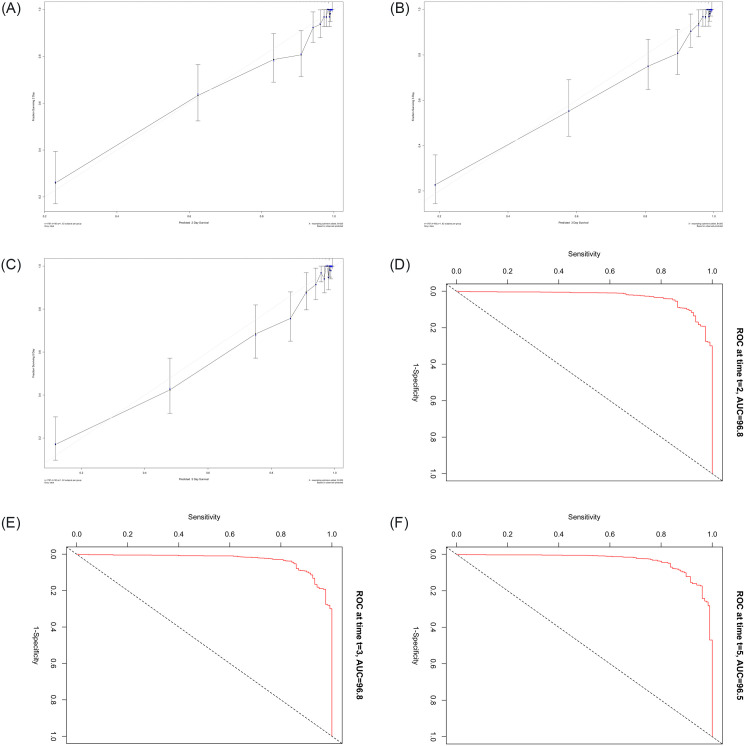
Methods: We tested various ML models for survival analysis in this work we trained those models using a different subset of features extracted by several feature selection methods. Finally, the best model was evaluated and interpreted using goodness-of-fit based on calibration curves,Partial Dependence Plots and concordance index.
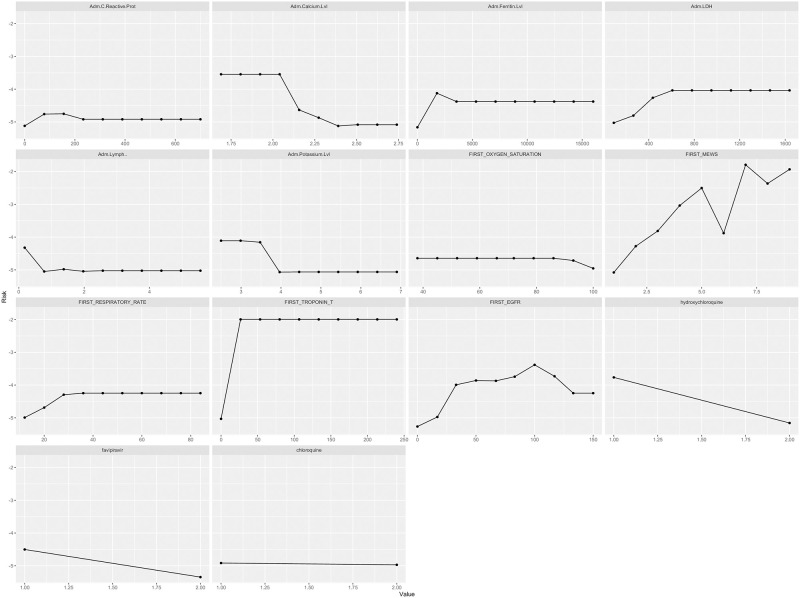
Results: The risk of severe disease increases with elevated levels of C-reactive protein, ferritin, lactate dehydrogenase, Modified Early Warning Score, respiratory rate and troponin. The risk also increases with hypokalemia, oxygen desaturation and lower estimated glomerular filtration rate and hypocalcemia and lymphopenia.
Conclusion: Analyzing clinical data using AI models can provide vital information for clinician to measure the risk of morbidity and mortality of COVID-19 patients. Further validation is crucial to implement the model in real clinical settings.
Copyright: © 2024 AlShehhi et al. This is an open access article distributed under the terms of the Creative Commons Attribution License, which permits unrestricted use, distribution, and reproduction in any medium, provided the original author and source are credited.
Conflict of interest statement
The authors have declared that no competing interests exist.
Figures
References
-
- Dyusupova A., Faizova R., Yurkovskaya O., Belyaeva T., Terekhova T., Khismetova A., et al. Clinical characteristics and risk factors for disease severity and mortality of COVID-19 patients with diabetes mellitus in Kazakhstan: A nationwide study. Heliyon. 7, e06561 (2021,3), https://www.sciencedirect.com/science/article/pii/S2405844021006642 - PMC - PubMed
-
- Nemati M., Ansary J. & Nemati N. Machine-Learning Approaches in COVID-19 Survival Analysis and Discharge-Time Likelihood Prediction Using Clinical Data. Patterns. 1, 100074 (2020,8), https://www.sciencedirect.com/science/article/pii/S2666389920300945 - PMC - PubMed
-
- Soltan A., Kouchaki S., Zhu T., Kiyasseh D., Taylor T., Hussain Z., et al. Rapid triage for COVID-19 using routine clinical data for patients attending hospital: development and prospective validation of an artificial intelligence screening test. The Lancet Digital Health. 3, e78–e87 (2021,2), Publisher: Elsevier doi: 10.1016/S2589-7500(20)30274-0 - DOI - PMC - PubMed
MeSH terms
LinkOut - more resources
Full Text Sources
Medical
Research Materials
