


Remodeling of the human skeletal muscle proteome found after long-term endurance training but not after strength training
- PMID: 38213622
- PMCID: PMC10783619
- DOI: 10.1016/j.isci.2023.108638
Remodeling of the human skeletal muscle proteome found after long-term endurance training but not after strength training
Abstract
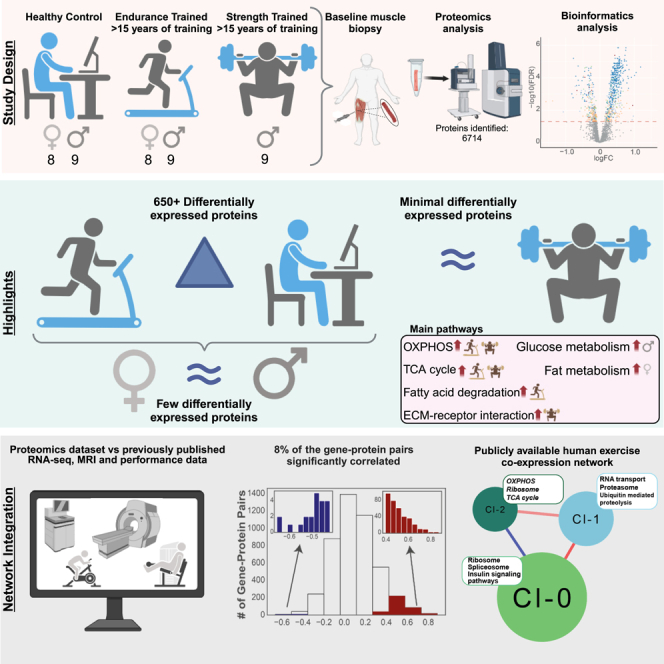
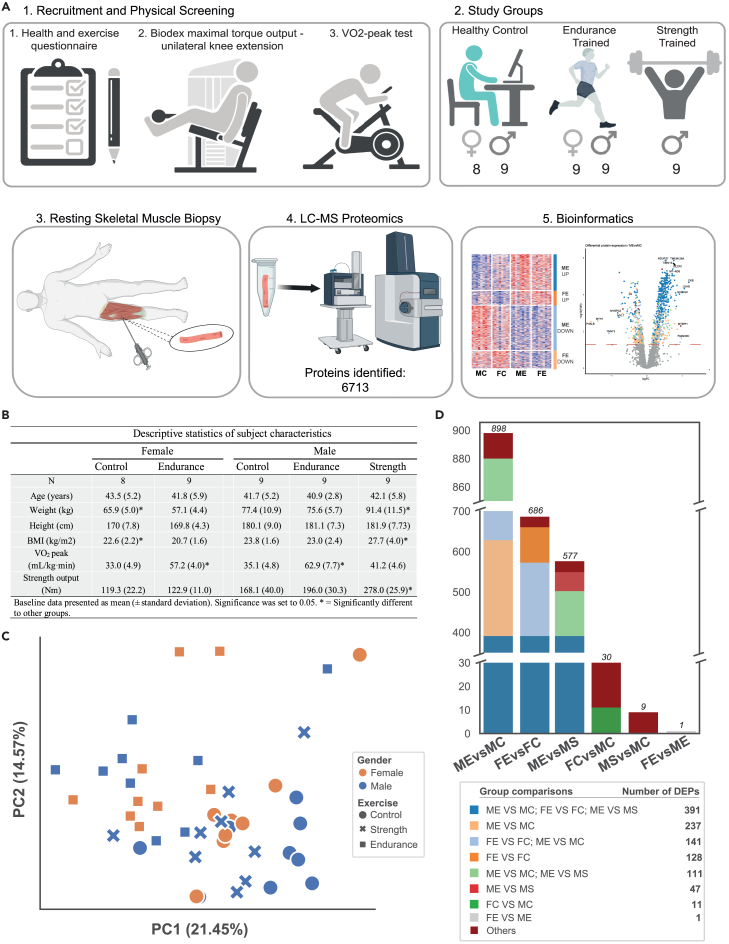
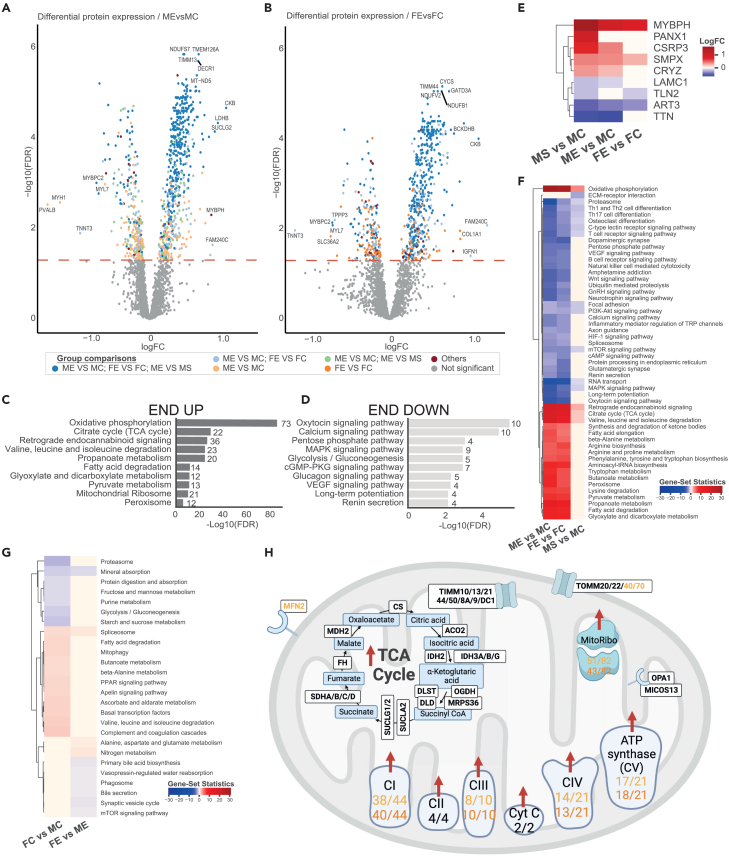
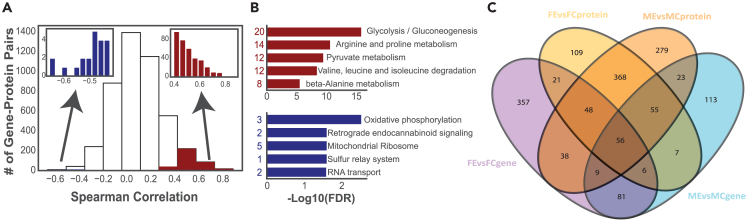
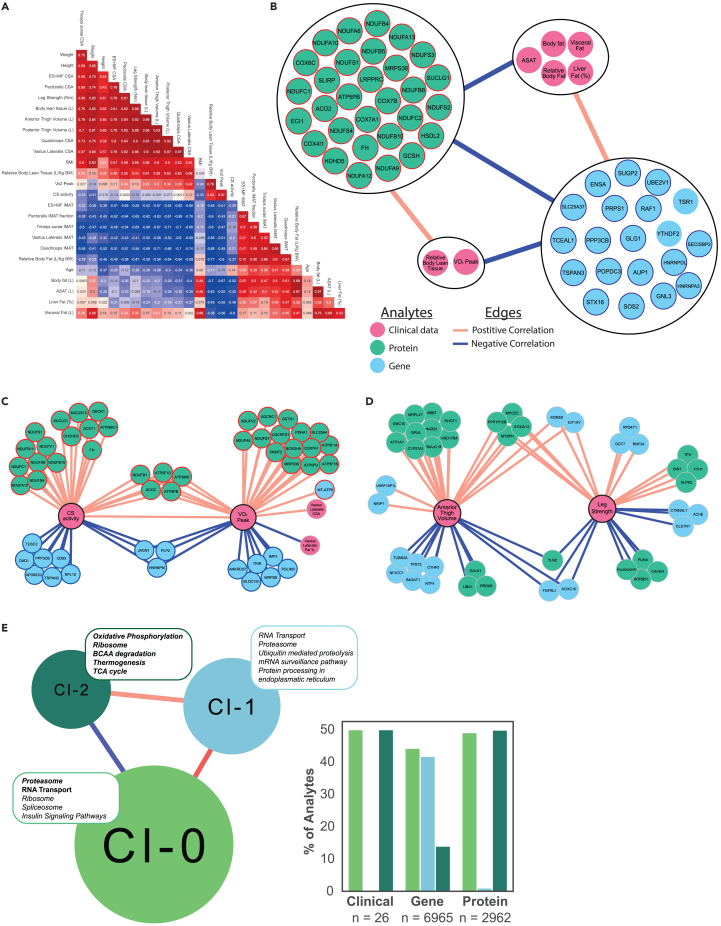
Exercise training has tremendous systemic tissue-specific health benefits, but the molecular adaptations to long-term exercise training are not completely understood. We investigated the skeletal muscle proteome of highly endurance-trained, strength-trained, and untrained individuals and performed exercise- and sex-specific analyses. Of the 6,000+ proteins identified, >650 were differentially expressed in endurance-trained individuals compared with controls. Strikingly, 92% of the shared proteins with higher expression in both the male and female endurance groups were known mitochondrial. In contrast to the findings in endurance-trained individuals, minimal differences were found in strength-trained individuals and between females and males. Lastly, a co-expression network and comparative literature analysis revealed key proteins and pathways related to the health benefits of exercise, which were primarily related to differences in mitochondrial proteins. This network is available as an interactive database resource where investigators can correlate clinical data with global gene and protein expression data for hypothesis generation.
Keywords: Biological sciences; Health sciences; Medicine; Omics.
© 2023 The Author(s).
Conflict of interest statement
The authors declare no competing interests.
Figures
References
-
- Neufer P.D., Bamman M.M., Muoio D.M., Bouchard C., Cooper D.M., Goodpaster B.H., Booth F.W., Kohrt W.M., Gerszten R.E., Mattson M.P., et al. Understanding the Cellular and Molecular Mechanisms of Physical Activity-Induced Health Benefits. Cell Metab. 2015;22:4–11. - PubMed
-
- Egan B., Zierath J.R. Exercise Metabolism and the Molecular Regulation of Skeletal Muscle Adaptation. Cell Metab. 2013;17:162–184. - PubMed
-
- Baar K., Esser K. Phosphorylation of p70(S6k) correlates with increased skeletal muscle mass following resistance exercise. Am. J. Physiol. 1999;276:C120–C127. - PubMed
-
- Coffey V.G., Zhong Z., Shield A., Canny B.J., Chibalin A.V., Zierath J.R., Hawley J.A. Early signaling responses to divergent exercise stimuli in skeletal muscle from well-trained humans. FASEB J. 2006;20:190–192. - PubMed
LinkOut - more resources
Full Text Sources
