


Current evidence on the efficacy of mental health smartphone apps for symptoms of depression and anxiety. A meta-analysis of 176 randomized controlled trials
- PMID: 38214614
- PMCID: PMC10785982
- DOI: 10.1002/wps.21183
Current evidence on the efficacy of mental health smartphone apps for symptoms of depression and anxiety. A meta-analysis of 176 randomized controlled trials
Abstract
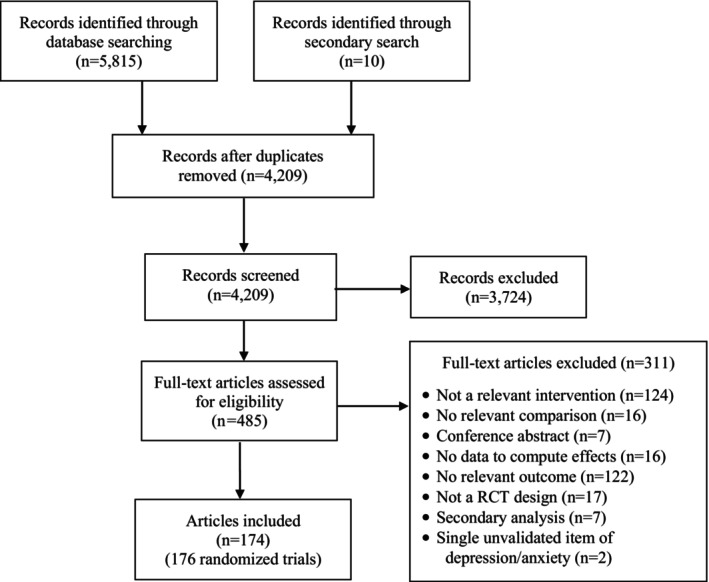
The mental health care available for depression and anxiety has recently undergone a major technological revolution, with growing interest towards the potential of smartphone apps as a scalable tool to treat these conditions. Since the last comprehensive meta-analysis in 2019 established positive yet variable effects of apps on depressive and anxiety symptoms, more than 100 new randomized controlled trials (RCTs) have been carried out. We conducted an updated meta-analysis with the objectives of providing more precise estimates of effects, quantifying generalizability from this evidence base, and understanding whether major app and trial characteristics moderate effect sizes. We included 176 RCTs that aimed to treat depressive or anxiety symptoms. Apps had overall significant although small effects on symptoms of depression (N=33,567, g=0.28, p<0.001; number needed to treat, NNT=11.5) and generalized anxiety (N=22,394, g=0.26, p<0.001, NNT=12.4) as compared to control groups. These effects were robust at different follow-ups and after removing small sample and higher risk of bias trials. There was less variability in outcome scores at post-test in app compared to control conditions (ratio of variance, RoV=-0.14, 95% CI: -0.24 to -0.05 for depressive symptoms; RoV=-0.21, 95% CI: -0.31 to -0.12 for generalized anxiety symptoms). Effect sizes for depression were significantly larger when apps incorporated cognitive behavioral therapy (CBT) features or included chatbot technology. Effect sizes for anxiety were significantly larger when trials had generalized anxiety as a primary target and administered a CBT app or an app with mood monitoring features. We found evidence of moderate effects of apps on social anxiety (g=0.52) and obsessive-compulsive (g=0.51) symptoms, a small effect on post-traumatic stress symptoms (g=0.12), a large effect on acrophobia symptoms (g=0.90), and a non-significant negative effect on panic symptoms (g=-0.12), although these results should be considered with caution, because most trials had high risk of bias and were based on small sample sizes. We conclude that apps have overall small but significant effects on symptoms of depression and generalized anxiety, and that specific features of apps - such as CBT or mood monitoring features and chatbot technology - are associated with larger effect sizes.
Keywords: Smartphone apps; chatbot technology; cognitive behavioral therapy; depression; generalized anxiety; mood monitoring; panic; post-traumatic stress; social anxiety.
© 2024 World Psychiatric Association.
Figures
References
-
- Liu Q, He H, Yang J et al. Changes in the global burden of depression from 1990 to 2017: findings from the Global Burden of Disease study. J Psychiatr Res 2020;126:134‐40. - PubMed
-
- Cuijpers P, Donker T, Weissman MM et al. Interpersonal psychotherapy for mental health problems: a comprehensive meta‐analysis. Am J Psychiatry 2016;173:680‐7. - PubMed
Grants and funding
LinkOut - more resources
Full Text Sources
Medical
